From Jinju into a Japanese merchant's hands
In 1597, Japanese forces returned to the Korean peninsula in a second wave of invasion. In the chaos they seized a Confucian scholar from Jinju named Jo Wan-byeok (趙完璧), shipped him to Japan, and sold him into slavery.
His buyer was Suminokura Ryōi (角倉了以), who ran one of the fleets of red-seal ships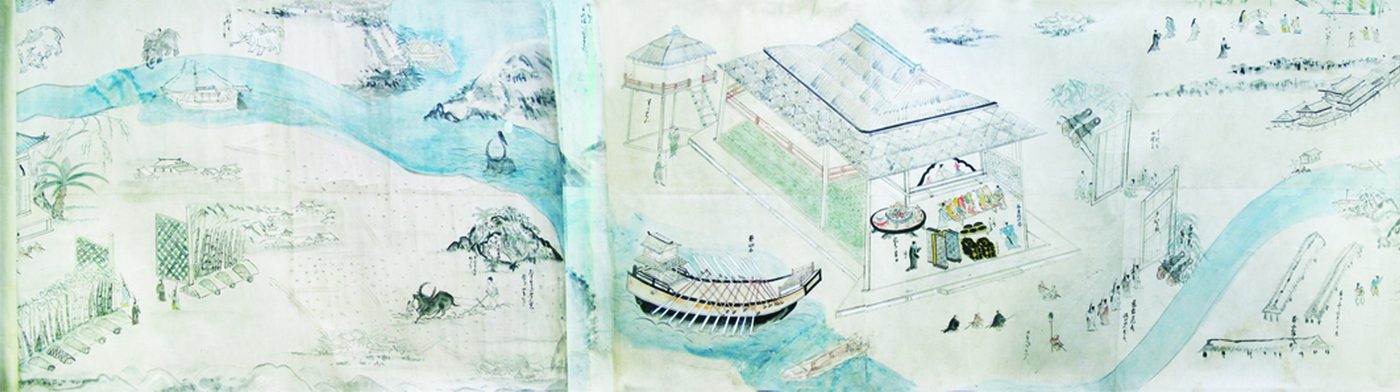 PEOPLE · A COMMUNITYThe Japanese Merchants1602 to 1647 · and sinceThe Japanese community at Hội An had a date it opened and a date it closed, which is rare in this archive. The bakufu licensed its ships from 1602 and called its subjects home in 1635. A few of them never boarded, and their graves are still there, kept by Vietnamese families., merchant vessels the Tokugawa shogunate licensed to trade overseas.
He read and wrote classical Chinese well. Suminokura Ryōi noticed, and kept him close, not as a servant but as help with the paperwork of trade. A purchased slave became the man who could write for his owner.
From that point his life followed another man's shipping routes.
Three voyages to Đại Việt, never to Hội An
Between 1604 and 1606, Suminokura Ryōi's ship sailed to Đại Việt to trade three times, and each time it carried Jo Wan-byeok.
It never called at Hội An. It put in at Hưng Nguyên (興元縣), a river port in Nghệ An, then held by the Trịnh lords of Đàng Ngoài, north of the line dividing Đại Việt from the Nguyễn lords'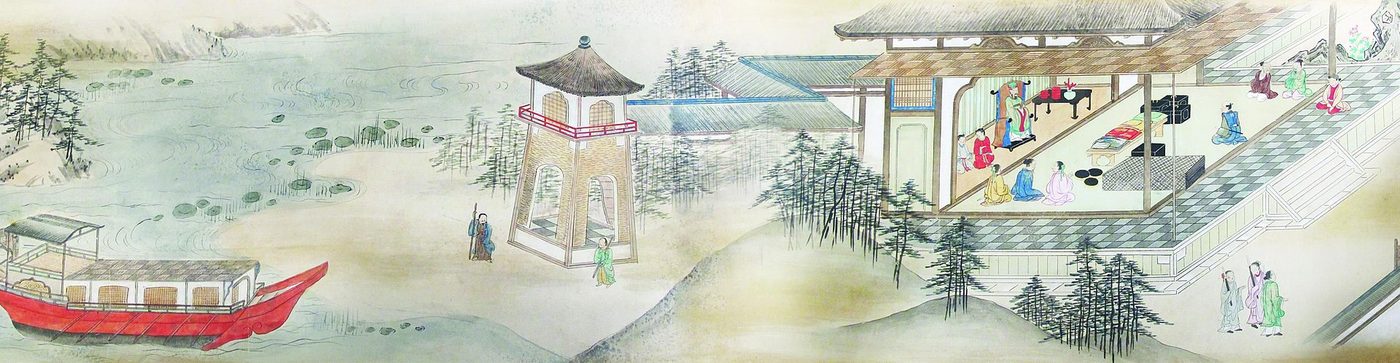 ERA · ĐÀNG TRONGThe Nguyễn Lords1558 – 1777Nine lords held the southern realm for more than two hundred years with a government that lived off the sea: a duty on every trading ship that put in, and each year seventy men in small fishing boats sent three days and three nights out to the islands to bring back what the water had given up. When the port could no longer keep it, the whole machinery fell in three years. Đàng Trong.
One Japanese researcher lists Hưng Nguyên alongside Hội An, Phố Hiến, and Thanh Hà: four ports where red-seal shipPEOPLE · A COMMUNITYThe Japanese Merchants1602 to 1647 · and sinceThe Japanese community at Hội An had a date it opened and a date it closed, which is rare in this archive. The bakufu licensed its ships from 1602 and called its subjects home in 1635. A few of them never boarded, and their graves are still there, kept by Vietnamese families. traders called, stayed roughly six months waiting out the season, traded, and sailed home.
Another Korean name had reached Hưng Nguyên before he did. In 1597, in Beijing, the Đại Việt envoy Phùng Khắc Khoan shared a guesthouse with the Korean envoy Yi Su-gwang (李睟光) for some fifty days, and the two traded poems. Phùng Khắc Khoan carried Yi Su-gwang's poems home, and Confucian scholars in Hưng Nguyên passed them from hand to hand.
When word spread that Jo Wan-byeok was Korean, the official who oversaw the port, Văn Lý Hầu (文理候), invited him to a banquet and produced Yi Su-gwang's poems to ask about their author. Neither side spoke the other's language, so they wrote in Chinese characters instead, the brush-conversation (筆談) that literate people across East Asia fell back on when they had no spoken tongue in common.
One sheet asked him about the Đại Việt custom of taking several wives. He wrote his answer, and the sheet went round the table. Another came back asking something else, how people built their houses, which season brought which wind, what grew there that did not grow at home. His impressions, the record says, ran two ways at once: familiar, because both sides read the same script, foreign, because the customs were nothing alike.
By his own account, it was the fullest description of Đại Việt he was able to give.
Evidence of a port, not of a man
In 1609, another Suminokura ship also sailed to Hưng Nguyên, this one under Suminokura Soan, a relative of Suminokura Ryōi. On the way home it wrecked at sea, and 105 sailors were driven ashore.
The king of Đại Việt ordered three nobles to take in the shipwrecked men between them, supplying food, clothing, and a new vessel to carry them home. One of the three was Văn Lý Hầu (文理候), the same official who had once hosted Jo Wan-byeok at a banquet.
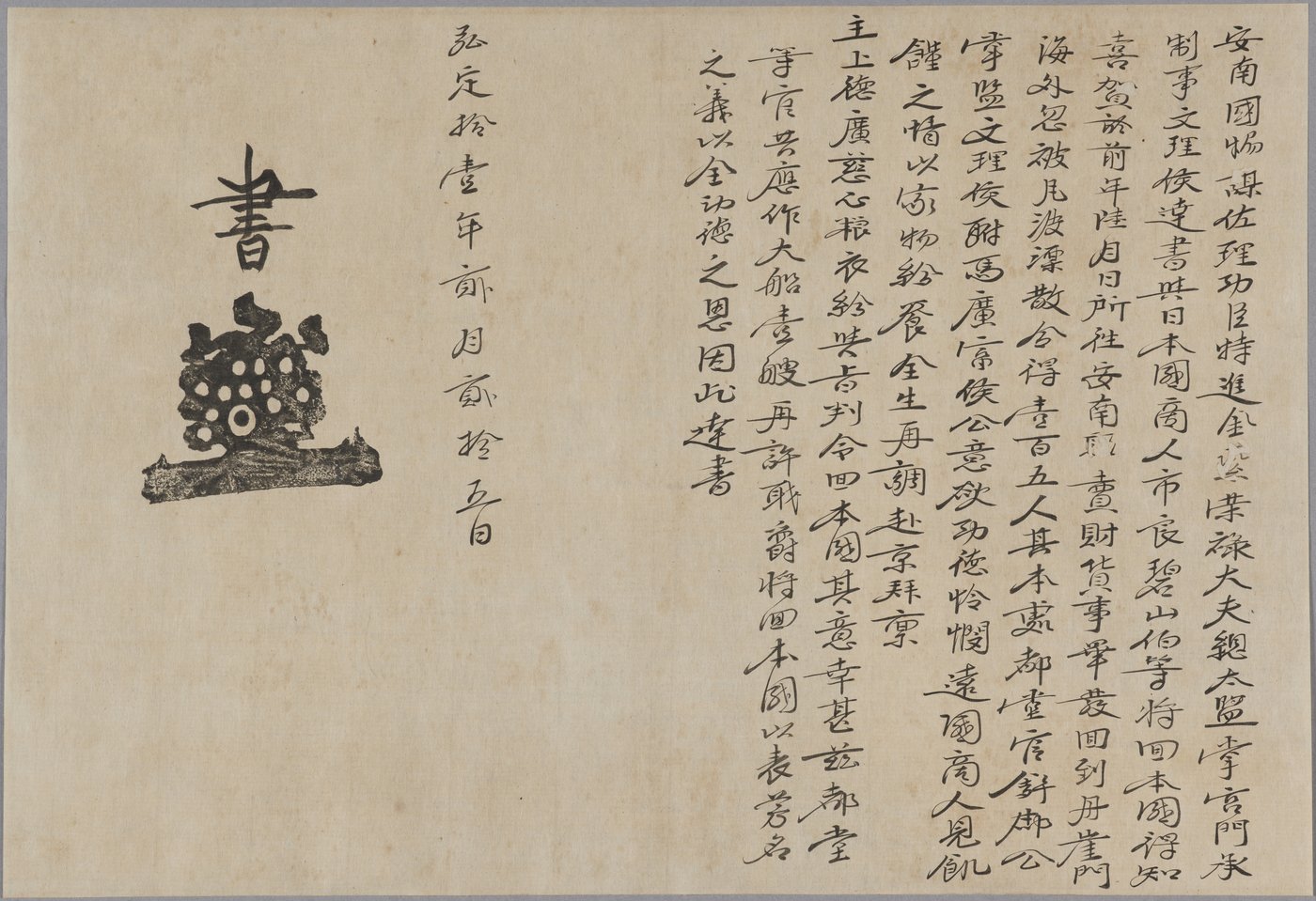
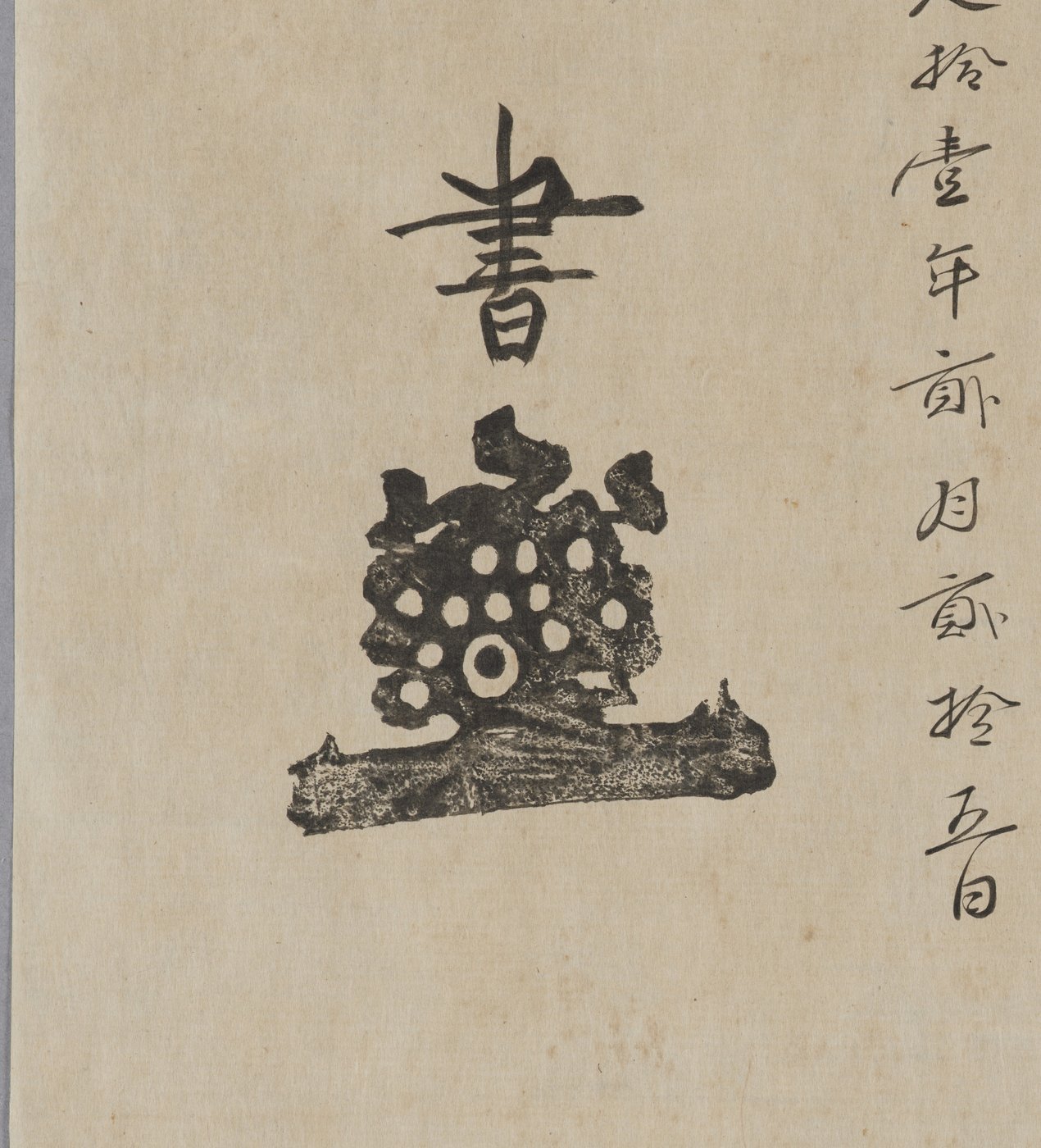
The letter he wrote describing it is still kept in Japan today, the only surviving sheet of ink and paper that names the port of Hưng Nguyên.
Three men wrote down his story
After those three voyages, ten years after his capture, Jo Wan-byeok was freed and went home to Jinju.
He told his story to people he knew. It reached Kim Yun-an, a station official in Jinju, and through him three scholars of the day: Jeong Sa-sin, Yi Jun, and Yi Su-gwang.
Each of the three wrote the story down separately, each under the same title: The Tale of Jo Wan-byeok (趙完璧傳).
None of the words about him were his own. All three versions came from men who had only heard him tell it.
Yi Su-gwang's version survives inside the body of work he left behind, the Jibong-jip (芝峰集). His two sons gathered the family's manuscripts and had them cut into woodblocks at Uiryeong in 1633. The Tale of Jo Wan-byeok sits in volume 23, among their father's own poems and essays.
One line is an exception. Somewhere in that same book, Yi Su-gwang set down Jo Wan-byeok's own words directly, without paraphrase:
In the Japanese capital there is a shrine to Xu Fu, kept, they say, by his own descendants.
A modern literary scholar groups the Tale of Jo Wan-byeok with the novel Tale of Choe Cheok (崔陟傳), stories of Koreans scattered by war who found their way home again, a genre that flourished after the wars of the late sixteenth and early seventeenth centuries.
Read alongside those novels, his story offered readers the same reassurance the fiction did: that someone gone far away could still come home.
The first Korean to see it firsthand
In 2016, a Korean scholar devoted an entire paper to his voyages alone.
Nam Mi-hye published "A Study on the AnnamA NAME IMPOSED FROM THE NORTHAn Nam“An Nam” was the name the Tang court imposed on Việt Nam in order to administer it during the northern domination. Westerners, and later the French, took it up — for the whole country, or for Trung Kỳ alone, the central region where Hội An lies. That is why European maritime records of the 16th–18th centuries usually file this port under the “Royaume d'Annam”, the Kingdom of An Nam. Experience of Cho Wan-byuk as a Captive in the Seventeenth Century" in the journal of the Institute of Korean Studies at Kookmin University. The paper reread all three versions of the Tale of Jo Wan-byeok and fixed the place he had gone: Hưng Nguyên district, Nghệ An, not Hội An.
The paper's own conclusion was that Jo Wan-byeok was the first Korean known to have witnessed, and even taken part in, private ships trading abroad, something the Joseon court of his day still forbade its own subjects from doing.
He never reached Hội An. But he went, and looked, earlier than any other Korean whose account survives.
- Nam Mi-hye (南美惠), “17세기 피로인 조완벽의 안남 체험” (Trải nghiệm An Nam của tù binh Jo Wan-byeok thế kỷ 17), Hàn Quốc Học Luận Tùng 45, Viện Nghiên cứu Hàn Quốc học, Đại học Kookmin, 2016
- “이수광” (Yi Su-gwang) — 우리역사넷 (Mạng Lịch sử Chúng ta), Ủy ban Biên soạn Lịch sử Quốc gia Hàn Quốc
- “안남국 문리후의 서간” (Thư của Văn Lý Hầu nước An Nam), 1610 — e國寶, Bảo tàng Quốc gia Kyushu
- 芝峯集 (Chí Phong Tập) — mục lục và đề mục xuất bản, 한국학종합DB
- “전란의 시대를 살아간 한 부부의 기적적인 귀환서사, 『최척전』” (Chuyện đoàn tụ kỳ diệu của một cặp vợ chồng qua thời chiến loạn — Truyện Thôi Sước) — Kyujanggak, Đại học Quốc gia Seoul
- “Châu Ấn thuyền trong lịch sử Hội An” — Báo và Phát thanh, Truyền hình Đà Nẵng, 2022
- 번역:지봉유설 (bản dịch Chí Phong Loại Thuyết), quyển 2 — Wikisource tiếng Hàn
- “조완벽” (Jo Wan-byeok) — Wikipedia tiếng Hàn
- 文理侯書簡 (P14983) — e-Museum — National Institutes for Cultural Heritage / Bảo tàng Quốc gia Kyushu, Bản quyền tác giả
- 文理侯書簡 (P14983) — e-Museum — National Institutes for Cultural Heritage / Bảo tàng Quốc gia Kyushu, Bản quyền tác giả