
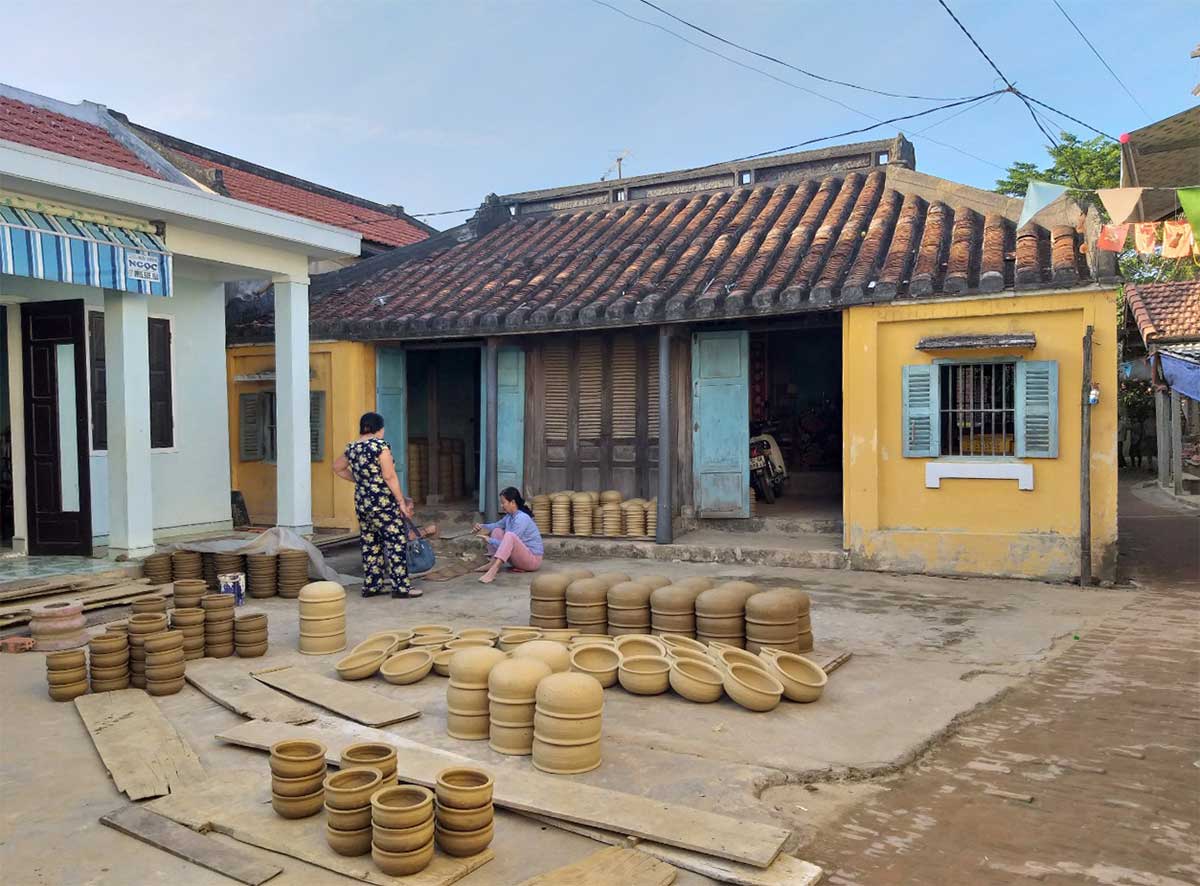
A Village on the River Bend
In 1471 the Lê court created Thừa Tuyên Quảng Nam, the administrative province that opened the region to Vietnamese settlement, and migrants from the north moved south in growing numbers. Sometime in the sixteenth century eight founding clans settled a stretch of the Thu Bồn river and founded Thanh Hà village: Nguyễn Viết, Nguyễn Văn, Nguyễn Kim, Nguyễn Đức, Võ Văn, Võ Đình, Ngụy and Bùi, families with roots in Thanh Hóa and Nghệ An.
No document fixes the year the pottery craft itself began. Archaeological dating places it closer to the seventeenth century, a generation or more after the village existed. Production started at the Thanh Chiếm hamlet and later moved to Nam Diêu, a site bordered by the river on three sides, close enough to haul clay in and finished pots out by water.
A 1919 French-language study, part of the same survey that has supplied other entries in this record, noted that the old market quarter on Thanh Hà's land once carried its own seal, stamped Thanh-Ha-Xa Minh-Huong-Pho. The village today sits in Thanh Hà ward, three kilometres west of the old quarter.
Seven Jars for a Mandarin
The earliest paper trail is a ledger, not a chronicle. A 1747 account book kept by Minh Hương village records a purchase: officials sent someone to Thanh Hà to buy seven jars for growing prized flowers, a gift for the Cai Án cum Tri Tàu Vụ, an official overseeing foreign shipping. Nobody sends a common jar to a mandarin.
By the middle of the eighteenth century Thanh Hà pottery already had a name worth choosing when the gift had to be right. The heritage centre's own account of the hamlet's name, Nam Diêu, reads it the same way: ware of the south, set apart from the kilns of the northern delta the settlers had left behind.
Clay and Fire
The clay is a yellow riverbank clay, dug from paddy fields fifty to a hundred centimetres down, plastic enough that potters never needed to blend it with a glaze base. Workers cut and trod it by hand and foot until it took on the texture of dough.
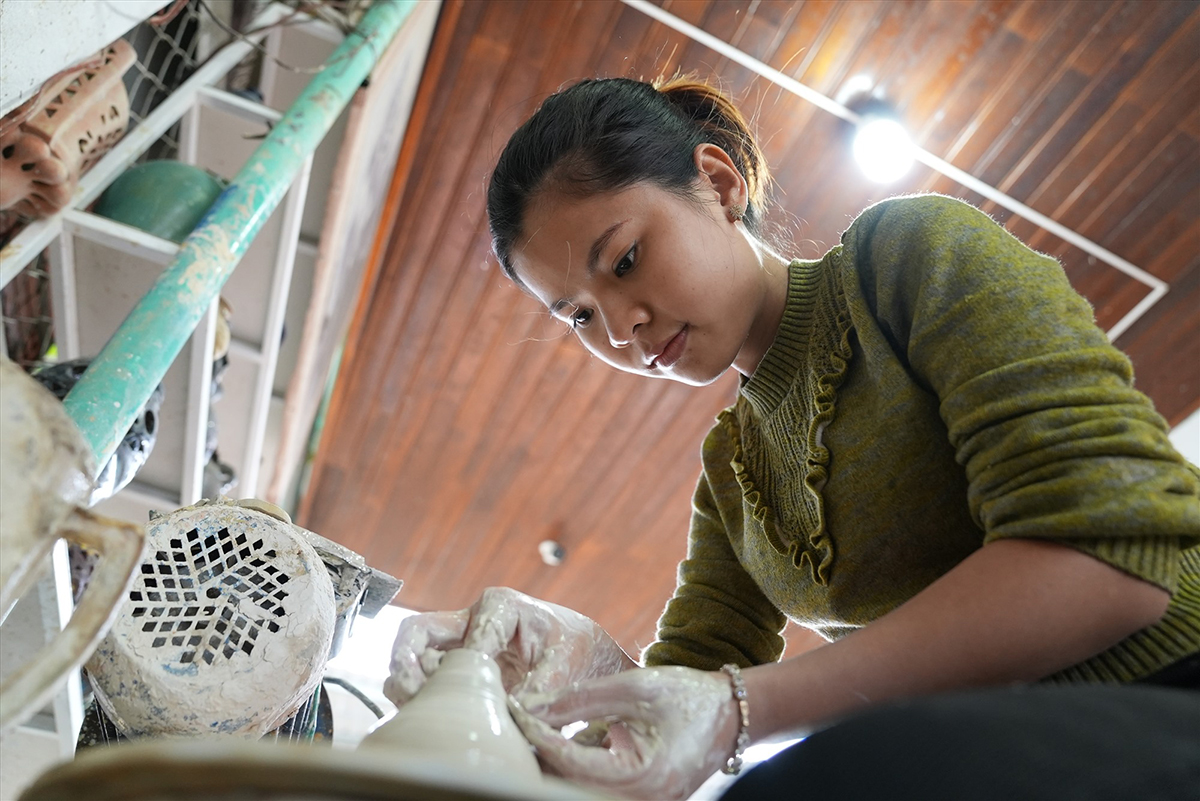 Photograph · báo Quảng Nam, via hoianheritage.net
Throwing was work for two women at one wheel. The younger stood and drove the wheel round with her foot while turning a fresh lump of clay onto it, the older sat and shaped the piece as it spun. Men handled the clay before the wheel and the fire after it. What came out of the kiln stayed unglazed, red or brown or near black depending on the heat, and rang when struck.
More than forty shapes came off wheels like this: wide-mouthed jars, round-bottomed pots, storage jugs for fish sauce. Every one was distinct, all of them the work of the same trained hands. Only the glazed roof tiles, the kind fine enough for temple eaves, needed a coat of glaze fired from copper, lead, red ochre and kaolin, brushed on before a second firing. Kilns had no thermometer. A potter judged the heat by the colour of the smoke rising from the flue, and set a small test piece, an "om thăm," by the draft hole. As the test piece finished, so had the load inside.
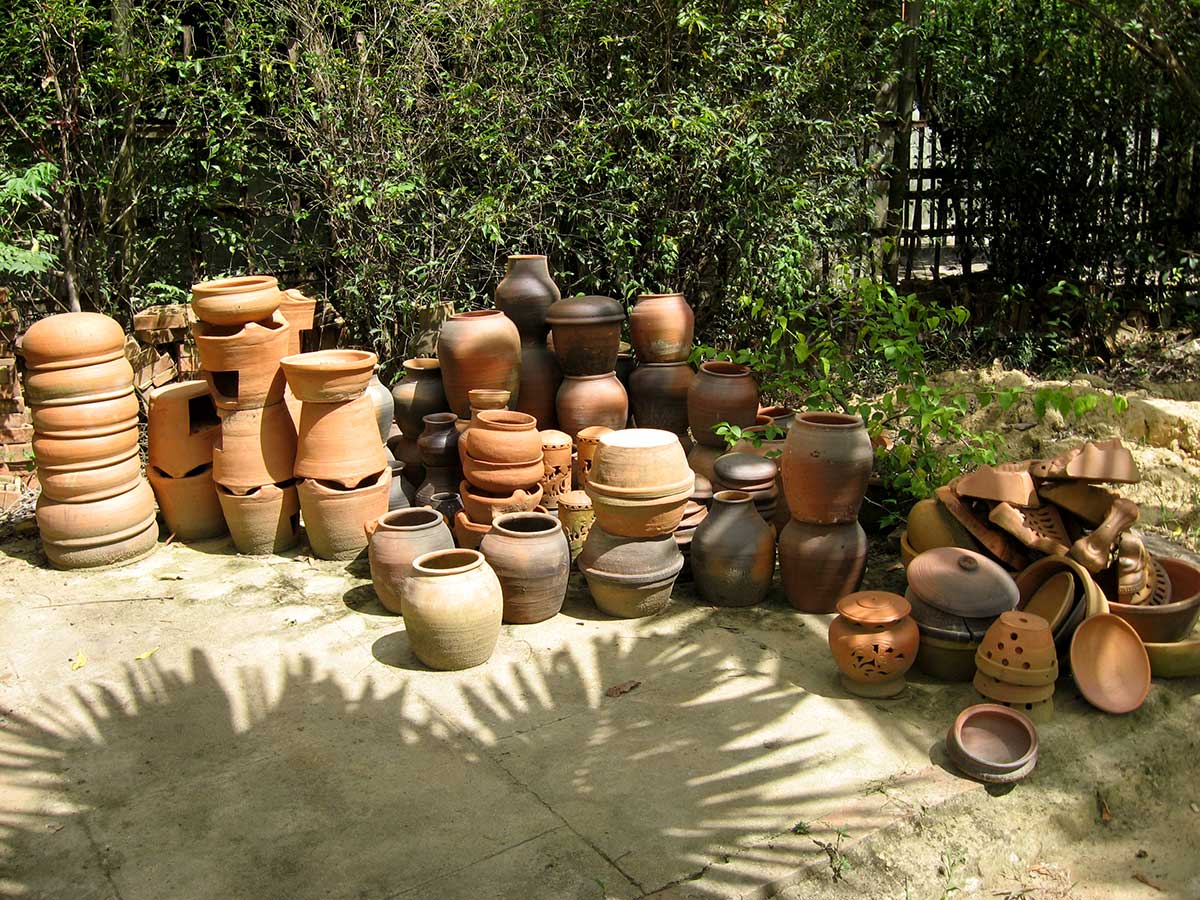 Photograph · Thị Ngà · Trung tâm Quản lý Bảo tồn Di sản Văn hóa Hội An
Brick and Tile for the Port
In 1803 Emperor Gia Long, preparing to build a royal shrine, ordered every province to send building material native to it — ironwood from Nghệ An, planking from Gia Định, paving stone from Thanh Hóa, and brick and tile from Quảng Nam. A later Nguyễn gazetteer gave Thanh Hà its own line: "pottery ware, produced in Thanh Hà, Diên Phước district, made by specialist households."
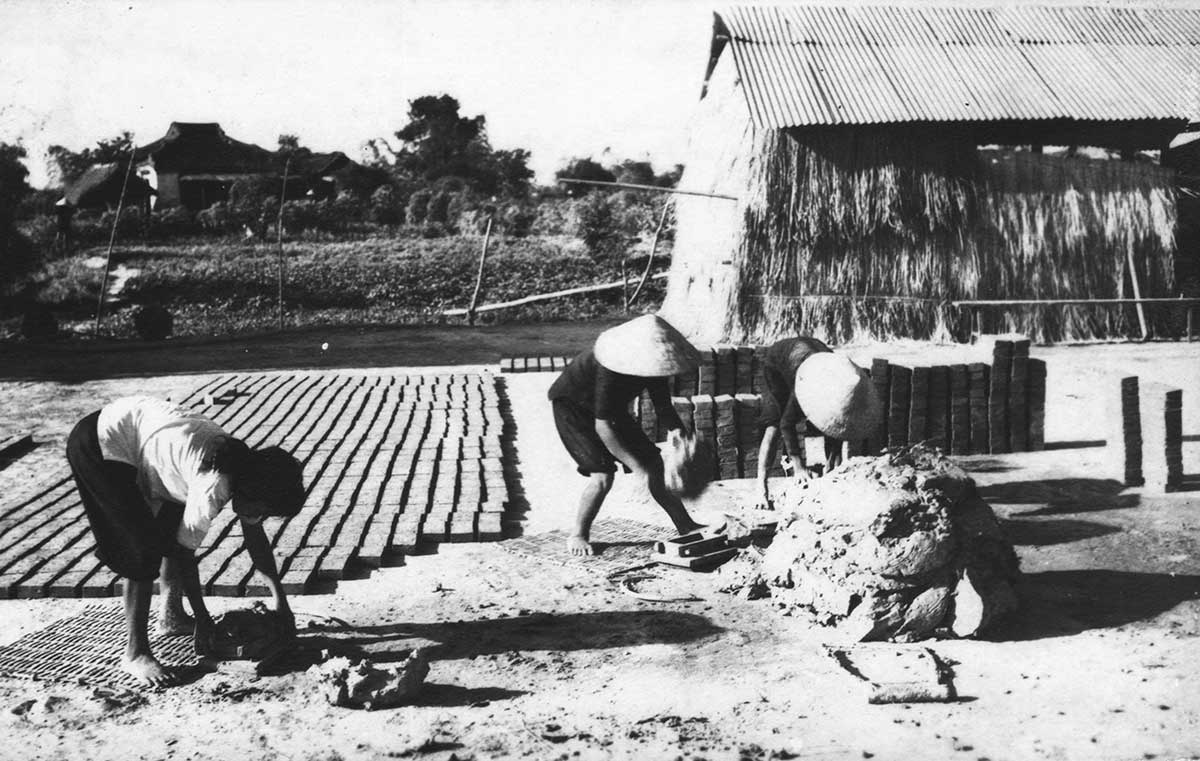 Archival photograph · Trung tâm Quản lý Bảo tồn Di sản Văn hóa Hội An
The bricks the village fired and the tiles it lofted onto roofs went straight into the houses rising along Hội An's streets, and into other towns further up the coast. Nobody in the record separates which came first, the built town or the kiln village behind it.
Potters Called to the Capital
Thanh Hà's best craftsmen did not all stay in the village. A genealogy kept by the Nguyễn Văn clan records that Nguyễn Văn Đông, and later his grandson Nguyễn Văn Bình, worked as tilers at the Long Thọ works inside the citadel at Huế. The Long Thọ works drafted in Bình's younger brother, Nguyễn Văn Lò, to take his place, and he stayed more than eight years. The Nguyễn Viết clan's own genealogy names Nguyễn Viết Ca as a head of the imperial craftsmen's office.
The court also issued rank to those who mastered the hardest technique. Bùi Phước Thạnh received the rank of chánh cửu phẩm tượng mục in the tenth year of Minh Mạng, 1829, for his skill firing glazed roof tile. The court ranked Bùi Phước Châu tòng cửu phẩm in the second year of Thiệu Trị, 1842, and gave Võ Văn Hòa the same rank in the fourteenth year of Tự Đức, 1861.
That glazed-tile technique, rare among Vietnamese craftsmen at the time, has since died out in the village. A trade built on baked earth carried its own men into the emperor's household.
Two Feasts a Year
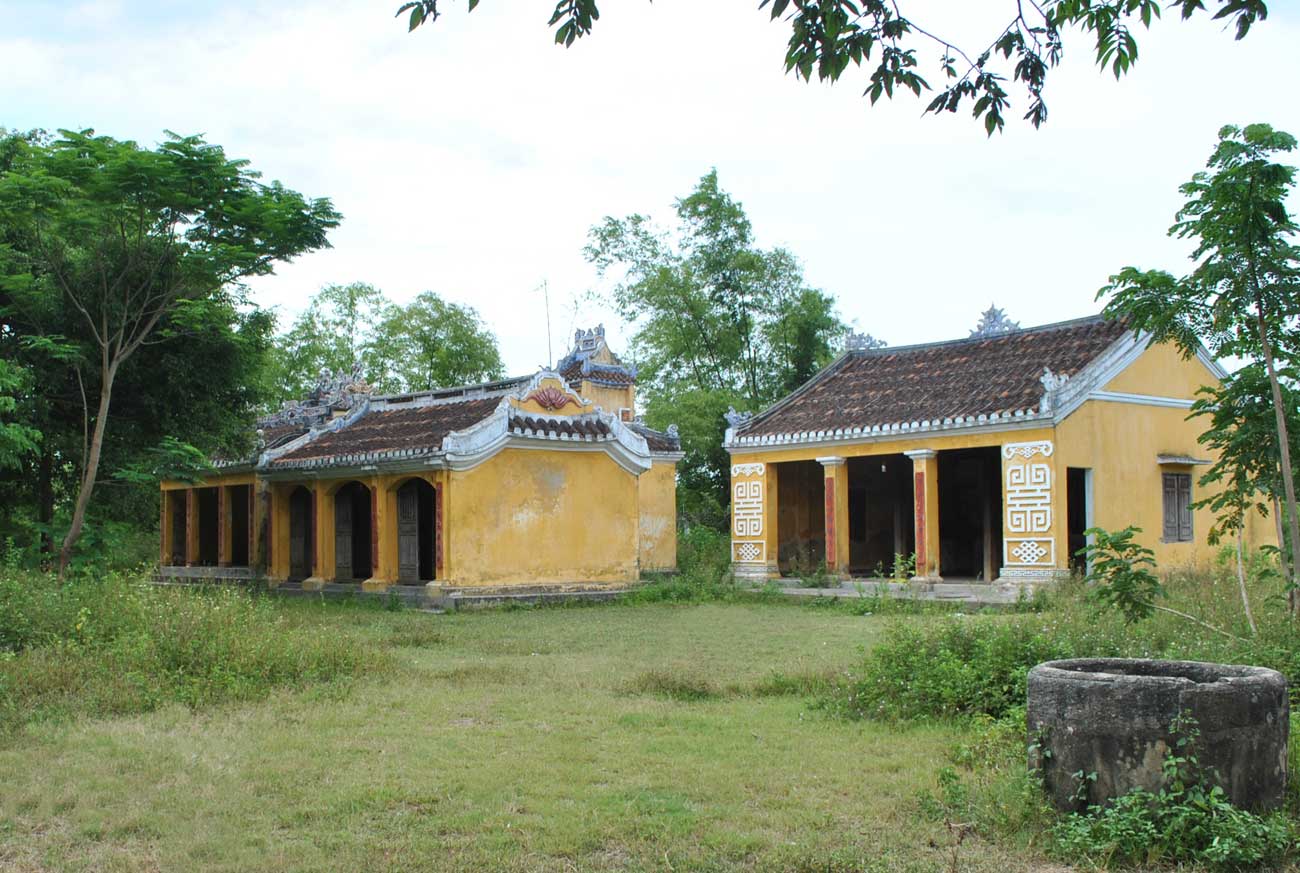 Photograph · Hồng Việt · Trung tâm Quản lý Bảo tồn Di sản Văn hóa Hội An
At the centre of the potters' hamlet stands a shrine complex built for the craft alone, the Tổ Nghề temple of Nam Diêu, ranked a provincial relic in 2008. Twice a year, on the tenth day of the first lunar month and the tenth of the seventh, the whole hamlet's potters gather there for a spring and an autumn rite honouring the craft's founders and the guardian spirits of the settlement.
The spring rite carries a custom of its own, tống Long Chu: villagers set a small dragon boat adrift on the Thu Bồn, carrying off whatever bad luck the year might have stored up. A young thrower who has just finished training presents himself at the shrine once, a formal announcement to the ancestors that he has entered the trade.
In the middle of the twentieth century, before and after each rite, a travelling opera troupe run by a man named Quỳnh performed classical pieces for the hamlet — stories of loyal generals and rival kingdoms, the kind villages across central Vietnam once staged at festival time.
The Pottery Traders
By the late nineteenth century Hội An's port was losing its place as the region's trading centre to Đà Nẵng. The pottery village did not sit still for it. Its position close to the river let well-off potters buy river junks, ghe bầu, and carry pottery as far as Quảng Bình and Quảng Trị, down into Quảng Ngãi, trading it for rice and seafood and even for stoneware jars from Châu Ổ that Thanh Hà itself did not make.
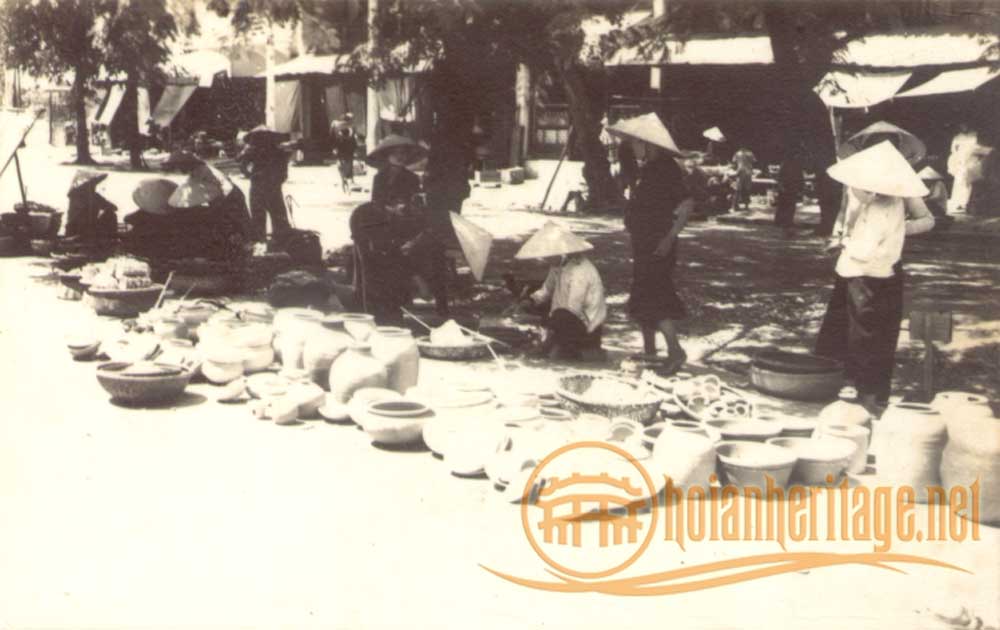 Archival photograph · Trung tâm Quản lý Bảo tồn Di sản Văn hóa Hội An
People in the village named that run of prosperity with four words, thượng gia hạ thuyền — house above, boat below. Kilns changed hands on paper the same way. In 1866 five men of the Nguyễn Kim clan sold a kiln outright to Nguyễn Viết Quý and his wife for 105 quan. In 1937 Phan Thị Phước sold the kiln her parents had left her at Nam Diêu for ten silver đồng. That kiln is gone now, its ground long since fallen into the river.
Clay Pots Against Aluminium
By the middle of the twentieth century Thanh Hà's competition was not another kiln village but a different material altogether: cheap, durable aluminium and plastic households could buy instead of earthenware. War made production harder still. Stoneware firing stopped outright, and only a handful of households kept a kiln running at all.
Quỳnh's opera troupe, which had performed at every spring and autumn rite for years, folded in 1975. There was no longer a living to spare for it while the trade itself was going dark.
Tourists Relit the Kilns
Tourism reached Hội An in the 1990s and brought the village an unfamiliar market: souvenirs and decorative ware bought by visitors rather than households. In 2001 the city began setting aside sixty per cent of admission revenue from the pottery village for the potters themselves, a fund that drew back workers who had left the trade for other work. In 2004 potters revived the opera troupe that had gone silent in 1975, staging a performance for the hamlet again.
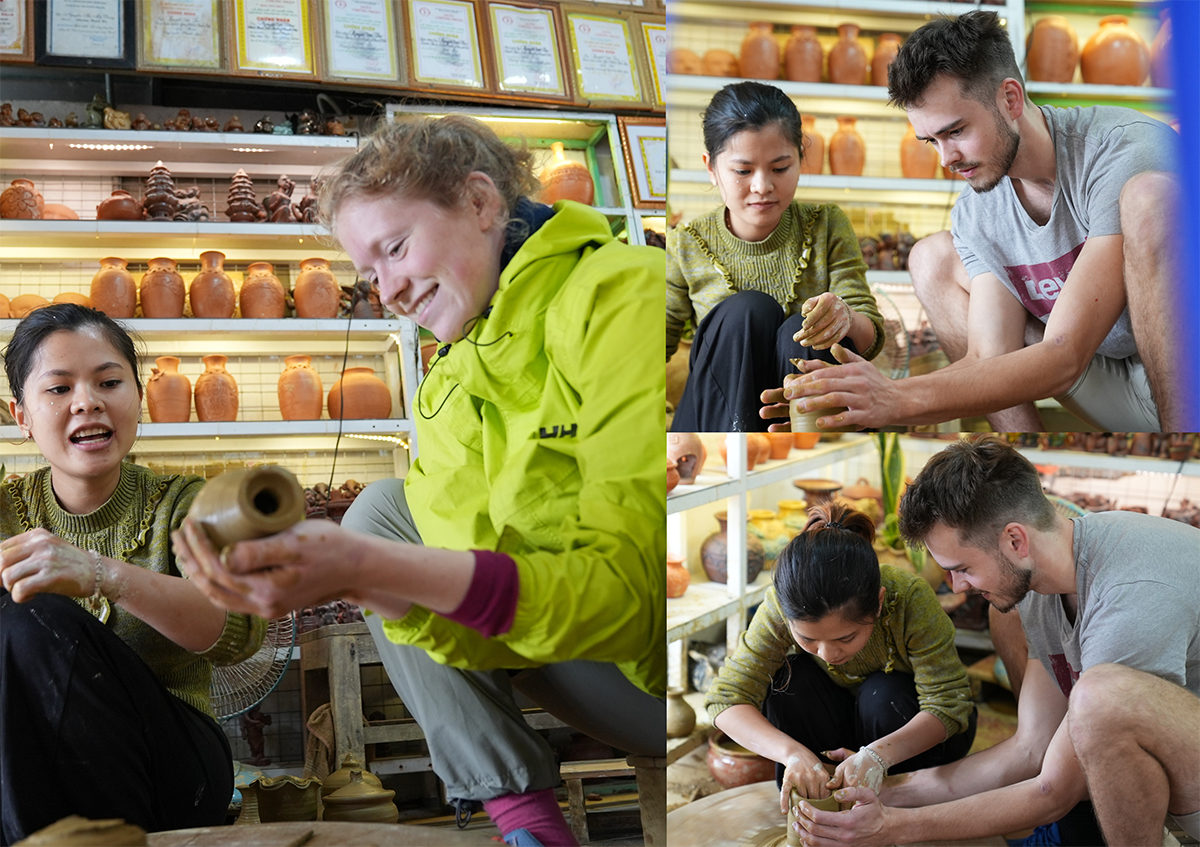 Photograph · Đ.T · báo Quảng Nam
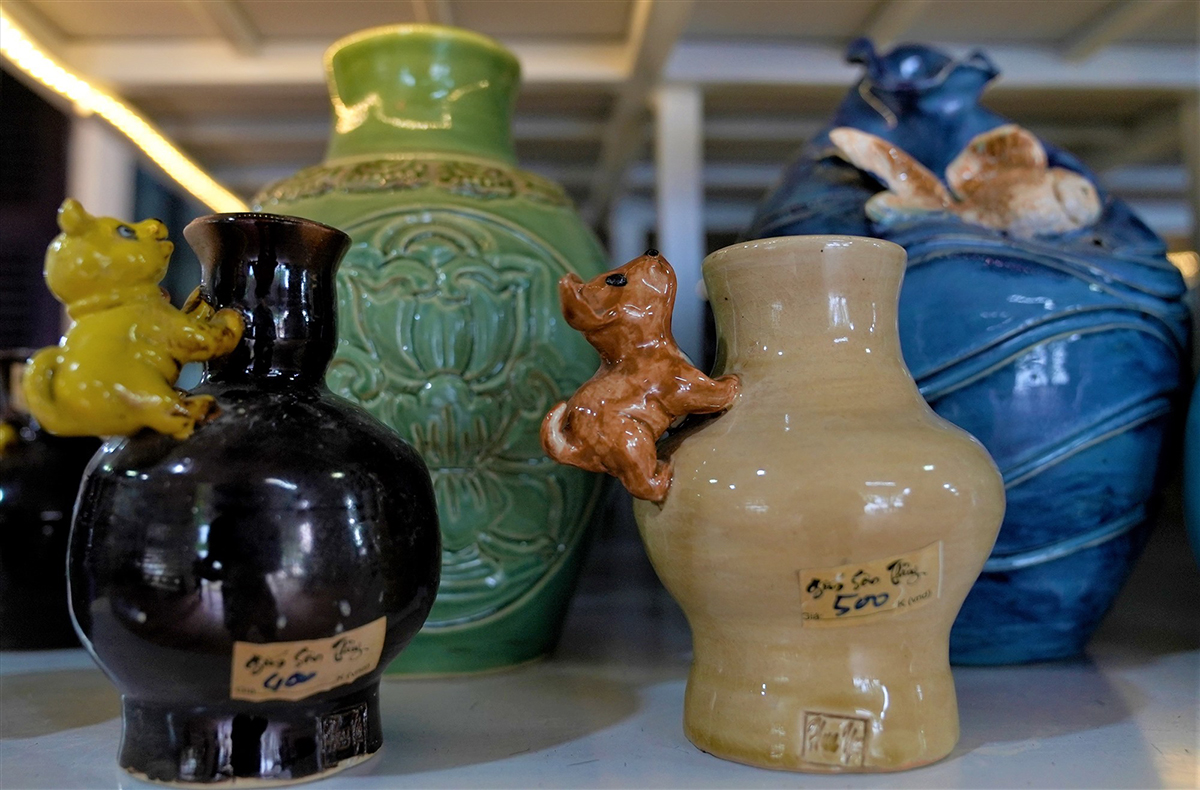
Sometime in that same stretch of the 1990s a wholly new line appeared: con thổi, small figures shaped as the twelve zodiac animals or a boy herding a buffalo, made for visitors to carry home. They are not, as some tourist accounts claim, a five-hundred-year-old toy. The record that certifies the craft as national heritage dates con thổi to the late 1990s, a child of the very tourism that saved the trade that made it.
Recognition, One Rank at a Time
Official standing came to Thanh Hà in stages. In 1993 Xuân Mỹ, the village's communal house built in the late eighteenth century, was listed as a national relic. In 2014 the province recognised the pottery craft itself as a provincial craft village. On 27 August 2019 the Ministry of Culture, Sports and Tourism signed Decision 2965/QĐ-BVHTTDL, entering the pottery craft of Thanh Hà on the National List of Intangible Cultural Heritage. Three certificates, three different years, naming the same hamlet each time.
A Glaze Brought Back by One Man
Thanh Hà once worked three lines of ware — plain red earthenware, stoneware, and a glazed line harder than either. Nguyễn Viết Lâm grew up hearing from his great-grandmother that the glazed line had all but disappeared: the technique was the hardest of the three, the finished pieces cost more, and buyers thinned out until the knowledge nearly went with them.
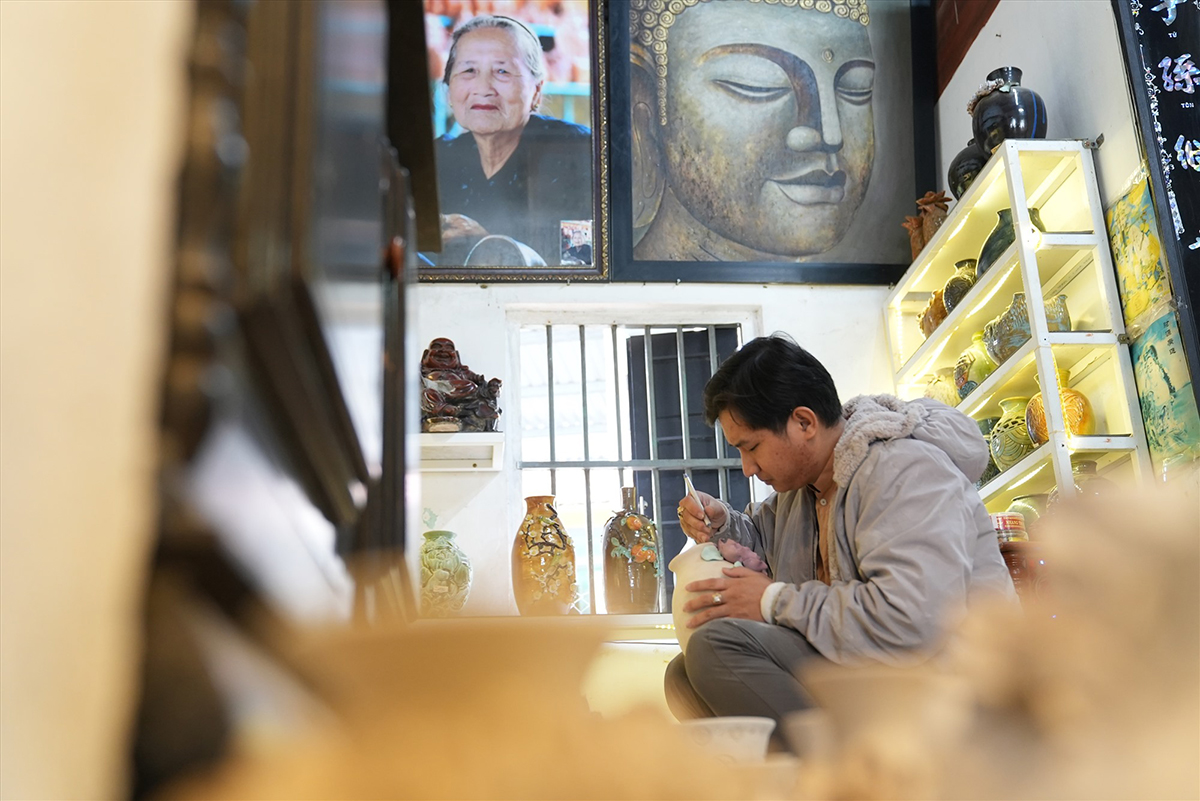 Photograph · Đ.T · báo Quảng Nam
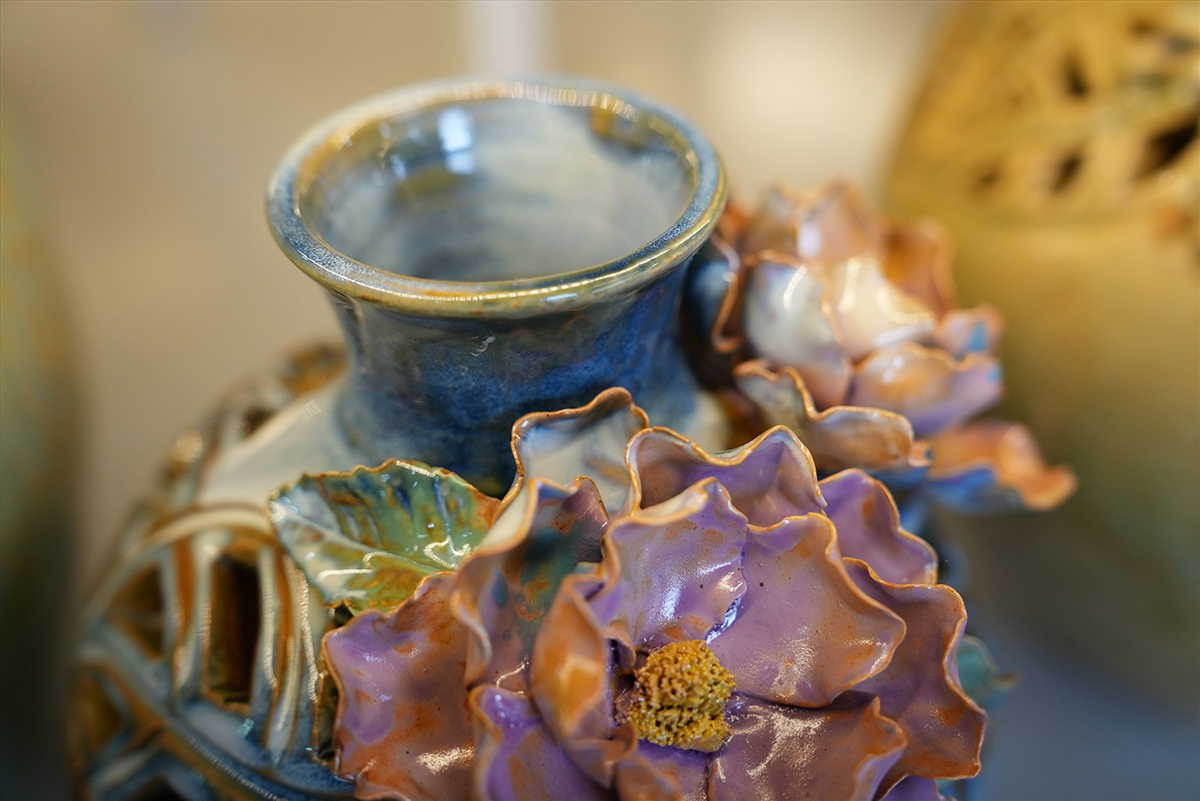
In 2015, straight out of upper secondary school, Lâm skipped further study and went back to his family's clay and kiln instead. He and his father travelled to other pottery villages to learn what they could, and a Japanese acquaintance eventually taught them a glazing method, which Lâm adapted until he had worked out a formula close to what the old glaze was said to look like. In 2022 the OCOP programme certified a glazed vase he made as a three-star product.
 Photograph · Đ.T · báo Quảng Nam
His family's workshop, Sơn Thủy, now carries more than two hundred glazed designs and sells over five hundred pieces a year, with buyers as far as the United States and France. A technique that had died with its market found a market again through someone unwilling to let it stay dead.
The Kilns Still Fire Each Morning
Thirty-two households in Thanh Hà still work clay today, with a hundred and thirty-four people among them. The city supports sixty-eight of those workers directly from ticket revenue, six million đồng a month for the six workers graded A, four point two million for the other sixty-two. In 2023 more than five hundred and fifty thousand visitors came through the village, generating close to nineteen billion đồng in admission fees.
 Photograph · Đ.T · báo Quảng Nam
Five potters hold the title of Meritorious Artisan. One of them, Nguyễn Thị Được, has since died. She left behind a household where four generations of her family still live and work under one roof, passing the trade hand to hand. Clay still arrives by boat from Điện Bàn and Duy Xuyên, the way it did a century ago. And the wheel still turns left to right, the direction the village's first women potters gave it.
- Hồng Việt, "Vài nét về làng gốm Thanh Hà trong lịch sử" — Trung tâm Quản lý Bảo tồn Di sản Văn hóa Hội An
- Trần Văn An, "Một số tư liệu Hán Nôm về làng gốm Thanh Hà - Hội An" — Trung tâm Quản lý Bảo tồn Di sản Văn hóa Hội An
- Thị Ngà, "Làng gốm Thanh Hà – Hội An thế kỷ XIX đầu thế kỷ XX" — Trung tâm Quản lý Bảo tồn Di sản Văn hóa Hội An
- Trương Hoàng Vinh, "Giá trị văn hóa phi vật thể đặc trưng của làng gốm Thanh Hà" — Trung tâm Quản lý Bảo tồn Di sản Văn hóa Hội An
- Trương Hoàng Vinh, "Làng gốm Thanh Hà - những đối tượng bảo tồn" — Trung tâm Quản lý Bảo tồn Di sản Văn hóa Hội An
- Thị Ngà, "Làng nghề gốm Thanh Hà, Hội An - Nét đặc trưng từ một làng nghề gốm truyền thống ở miền Trung" — Trung tâm Quản lý Bảo tồn Di sản Văn hóa Hội An
- H.Đạo - V.Tây, "Nghệ nhân trẻ khôi phục dòng gốm men Thanh Hà" — báo Quảng Nam, đăng lại trên hoianheritage.net
- Khiếu Thị Hoài, "Nghề gốm Thanh Hà – Trao truyền sáng tạo và thăng hoa" — Trung tâm Quản lý Bảo tồn Di sản Văn hóa Hội An
- "Nghề gốm Thanh Hà" — Cục Di sản văn hóa, Bộ Văn hóa, Thể thao và Du lịch
- Dr Albert Sallet, "Le Vieux Faifo" — Bulletin des Amis du Vieux Huế, 1919