

A Commune Almost Afloat on Water
Cẩm Thanh sits at the lower reach of the Thu Bồn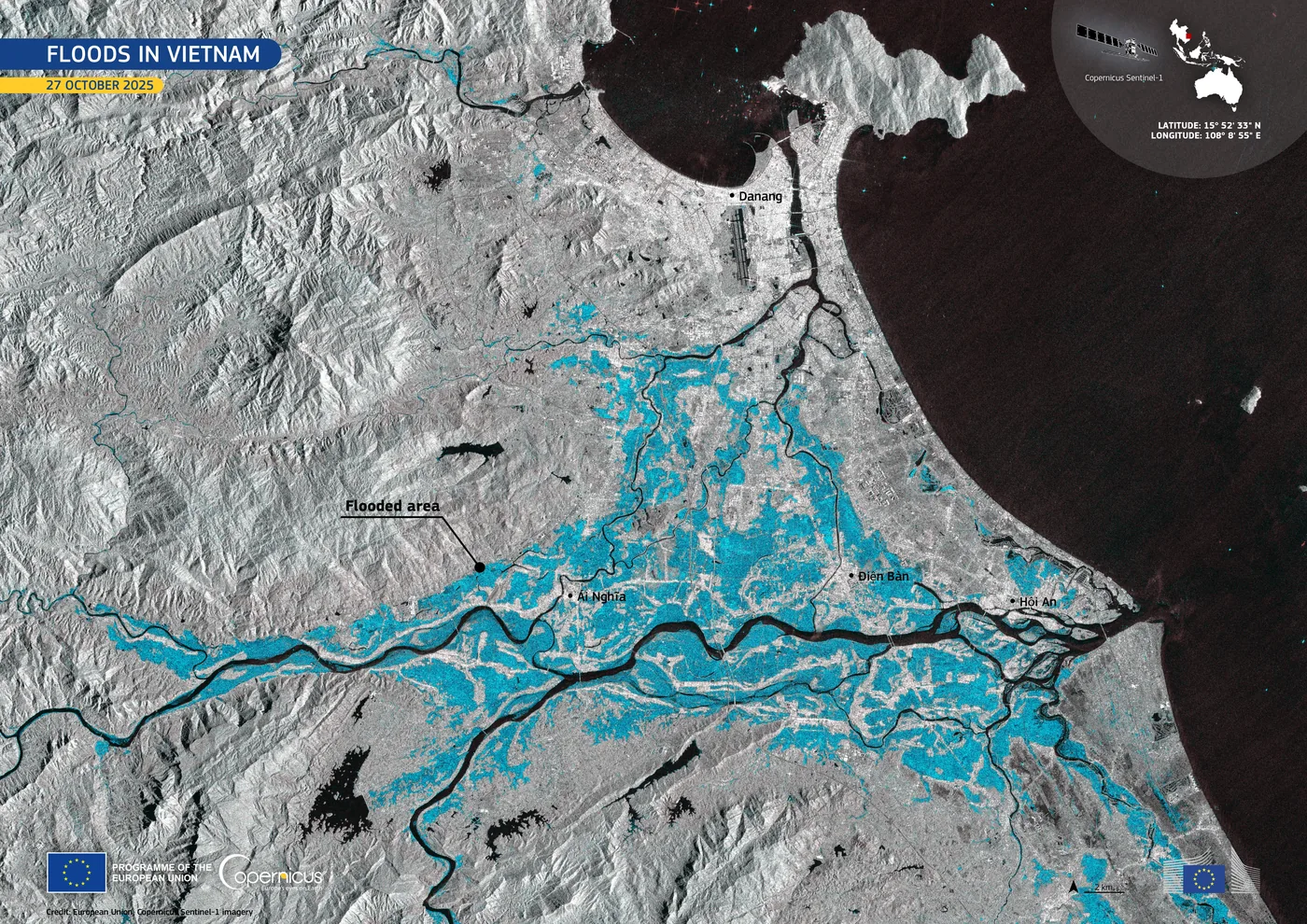 PLACE · RIVERThe Thu Bồn RiverSince the plain existed · to nowAbout 20 km³ of water reaches the sea down the Thu Bồn each year, more than any other river in central Vietnam, and 80 to 90 per cent of it arrives between September and December. The old town of Hội An stands on a sand ridge that the same river built. River, just before it meets the sea at Cửa Đại. A 2019 government yearbook put the commune at 970.42 hectares, 348.69 hectares of it open water, divided into six hamlets with 9,261 residents. Brackish water rises and falls with the tide every day, and on that ground nipa palm grows as forest rather than scattered along a bank the way it does on most other rivers. The nipa-palm forest here sits inside the buffer zone of the Cù Lao Chàm
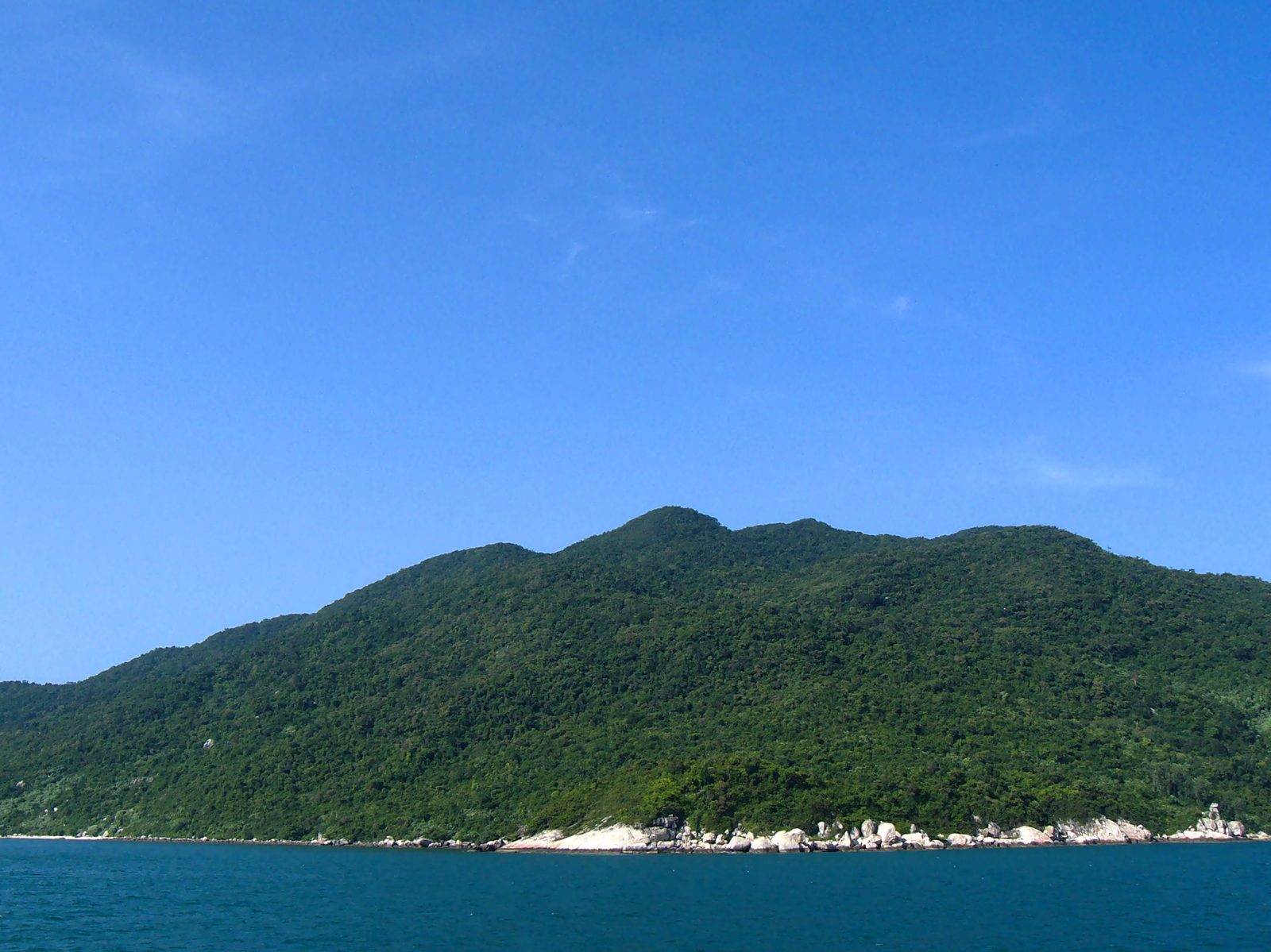 PLACE · ISLANDSCù Lao ChàmInhabited from ~3,100 BP · biosphere reserve 2009Eight islands stand off Cửa Đại, screening the trading port of Hội An for centuries. Twenty kilometres out to sea, a fifteenth-century cargo ship lay undisturbed until fishermen's nets began pulling up plates still glazed whole. biosphere reserve.
 photograph · Đà Nẵng Tourism Promotion Centre (danangfantasticity.com), 2025
The heritage dossier compiled by the Hội An Centre for Cultural Heritage Management and Preservation ventures only a guess: the craft of building houses from bamboo and coconut leaf in Cẩm Thanh took shape no later than the early twentieth century. No firmer date survives. Nobody wrote down the day a craft began, only the day it finally got a name.
The forest supplied the material. The tide gave people a reason to build on higher ground. The craft began there, and nowhere else.
A Standing Frame, a Woven Roof
A bamboo-and-coconut house goes up in two distinct stages. The frame comes first: columns, rafters, purlins and ridge beams, all split from bamboo and raised into a structure that stands on its own before any roofing goes on. The covering comes after, roof and wall panels and doors, all woven or fitted from dried coconut leaf. The two stages meet with rattan cord, later replaced by nylon, and nowhere in the house is there a nail or a drop of glue.
 photograph · Hội An Cultural Heritage Conservation Centre (hoianheritage.net), 2024
Coconut leaf for roofing has to be cut in season, twice a year in the first and sixth lunar months, old enough not to rot quickly once it is in place. A roof built the right way lasts fifteen to twenty years before it needs replacing.
 photograph · Chester Ho, via Wikimedia Commons · CC0 1.0
The layering method is called "lợp nợm": a worker sets two dried coconut-leaf panels face to face, one above the other and running the same way, lashes them to a purlin, then moves to the next pair right beside it, working panel by panel across the whole roof. The heritage dossier records the method in detail. A second technique from the same period, called "dừa chà", has died out completely, and no craftsman left can demonstrate it, nor does any page anywhere record how it was done.
 photograph · Đà Nẵng Tourism Promotion Centre (danangfantasticity.com), 2025
The craft grew its own material economy around it. A community survey by the Heritage Centre counted more than 24 kinds of building product: coconut-leaf panels, bamboo ceiling lining, bamboo screens, roofing thatch, bamboo guttering, windows, fold-down shutters, wall panels. It counted more than 40 kinds of tool besides, most of them ordered from blacksmiths in Cẩm Châu and Sơn Phong, while simpler pieces such as thatch hooks and levelling blocks the craftsmen made themselves.
No nails, no glue. A craft that keeps itself supplied.
Learning the Craft at Twelve
The bamboo-and-coconut craft of Cẩm Thanh has no patron figure and no guild that ever put its name to it. It passes inside the family, from father to son. The heritage dossier records one case in detail: Trần Bừa learned the craft from his father, Trần Ruộng, at the age of twelve, and before Trần Ruộng it was his own father, Trần Văn Huynh. Three generations, one craft.
 photograph · Đà Nẵng Tourism Promotion Centre (danangfantasticity.com), 2025
The craft has lived not because of one founding master, but because, generation after generation, a father agreed to teach his son the year he was finally strong enough to hold a bill hook.
When the Whole Coast Lived Under Bamboo and Coconut
The elders of the commune put it at about sixty years ago: Cẩm Thanh then had dozens of households working full-time as bamboo-and-coconut builders. Many more people could raise a house for their own family besides. Before 1975 the craft was the norm across the whole coastal strip around Hội An, from Cẩm Thanh and Cẩm Châu to Thanh Hà, Cẩm Kim and Cẩm Nam. Residents there had, in practice, no other material to build a house with.
At the same time, the Bảy Mẫu coconut forest carried a second, separate role. Through the resistance wars against French and American forces, the forest served as a revolutionary base for the Quảng Nam Provincial Party Committee and the Hội An Municipal Party Committee. That is a layer of the forest's history that stands beside the craft's story, not folded into it.
 archival photograph · Hội An Cultural Heritage Conservation Centre (hoianheritage.net)
One forest, two different jobs: cover for soldiers inside enemy-held territory, and a roof for a family.
A Craft Nearly Killed by Cheap Houses
By the 1990s the craft looked finished. Industrial building materials arrived, cheaper and more durable than bamboo and coconut leaf, just as rural incomes were rising and demand for leaf-roofed houses kept falling. Longtime craftsmen left the trade to make a living elsewhere, and only a handful stayed.
The craft came back for a reason that had nothing to do with why it began: tourism. The nipa-palm forest, once valued only for its leaf, became a place visitors paid to be rowed through. The forest itself had shrunk to 84.69 hectares by 2010 before growing back to 106.01 hectares by 2024. In 2021 the craft counted 35 households and more than 125 workers, with revenue that had reached 16 billion đồng in 2018 before the Covid-19 pandemic cut it to 4.5 billion đồng in 2021.
 photograph · Hội An Cultural Heritage Conservation Centre (hoianheritage.net), 2024
What once emptied the craft out was people no longer needing a bamboo house to live in. Now it is people wanting one to look at.
Twenty Years for One Dossier
In 2003 the Hội An Centre for Cultural Heritage Management and Preservation began compiling a dossier and formal record for the bamboo-and-coconut craft of Cẩm Thanh. That dossier took more than twenty years to reach its destination. On 21 February 2024 the Ministry of Culture, Sports and Tourism issued Decision No. 380/QĐ-BVHTTDL, recognising the Cẩm Thanh bamboo-and-coconut house-building craft as a National Intangible Cultural Heritage, the seventh such heritage recognised in Hội An City.
The heritage record runs 37 pages, alongside a 27-minute documentary tracing how the craft took shape and grew. Paperwork cannot rebuild a house that has already collapsed, but it does keep a name, a technique, a material on record for later.
From a record opened in 2003 to a decision signed in 2024, the dossier moved slower than the craft itself, but it got there.
From a Roof to a Souvenir
Few bamboo-and-coconut houses go up to be lived in today. Most now serve as restaurants, cafés and guesthouses along the edge of the coconut forest. Alongside that shift, some workshops have moved the same skill in a different direction: tables, chairs, cabinets, beds, cups and trays woven from bamboo. At first craftsmen made these only for use inside the house. Once tourists started asking for them, workshops turned the same items into goods for sale. A Heritage Centre survey counted around 40 kinds of this handicraft product, a very different number from the 24 kinds of building material the craft started with.
 photograph · Đặng Trương / Báo Quảng Nam, 2024
The craft is travelling the opposite road from the one it started on. Bamboo and coconut leaf once went up to make a roof over people's heads. Now they are woven into something to carry home.
- Lê Thị Ngọc Hương, Trung tâm Quản lý Bảo tồn Di sản Văn hóa Hội An, "Nghề làm nhà tre, dừa Cẩm Thanh: Quá trình xây dựng hồ sơ công nhận Di sản văn hóa phi vật thể Quốc gia" — hoianheritage.net, 2024
- Trung tâm Quản lý Bảo tồn Di sản Văn hóa Hội An, "Điểm đặc trưng, độc đáo của nghề làm nhà tre dừa Cẩm Thanh" — hoianheritage.net
- Báo Nhân Dân, "Công bố thêm 26 di sản văn hóa phi vật thể quốc gia"
- Báo Công Thương, "Quảng Nam có thêm 2 di sản văn hóa phi vật thể quốc gia"
- VietnamPlus (Thông tấn xã Việt Nam), "Hoi An sees revival of traditional bamboo-coconut huts", 2024
- "'Quẩy' thuyền thúng - trò chơi cực chill của du lịch Quảng Nam" — congluan.vn
- Điểm đặc trưng, độc đáo của nghề làm nhà tre dừa Cẩm Thanh — Lê Thị Ngọc Hương, Trung tâm Quản lý Bảo tồn Di sản Văn hóa Hội An, chưa rõ, dùng có ghi công