
A Twenty-Centimetre Gap
In 1999, less than a year after Hội An's old quarter entered the UNESCO World Heritage list, the city's heritage centre first raised the question of a full restoration of the bridge. Nobody moved on it. The safer habit held: patch whatever failed each storm season, prop the frame with new timber braces before the rains came. In 2000 the city brought in a specialist known as the "lamp genie", Nguyễn Cẩm Lũy. He looked the bridge over and gave up too.
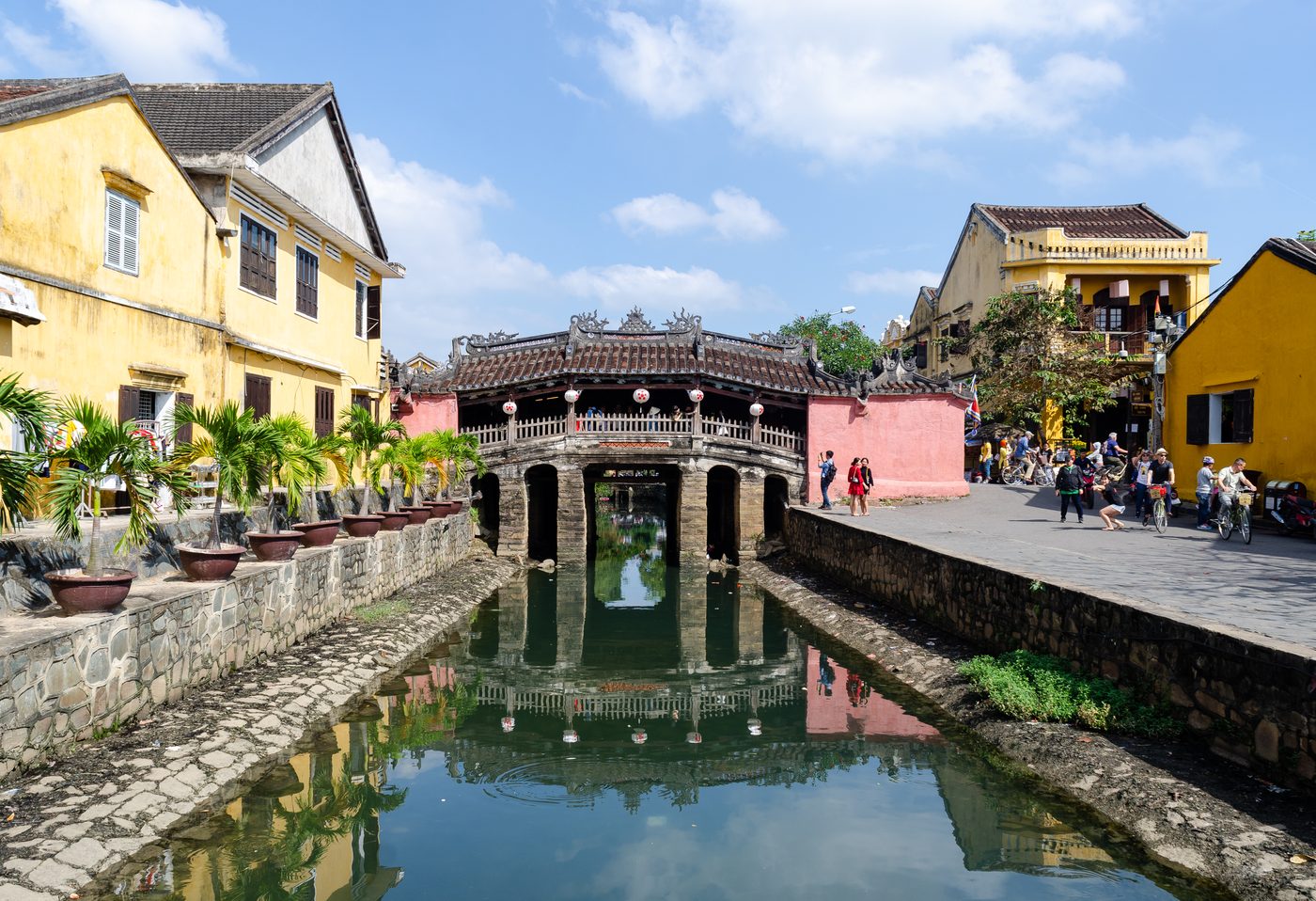 Photograph 2020 · Steffen Schmitz · CC BY-SA 4.0
The propping bought time but cost ground. In August 2016 the Quảng Nam provincial government and Hội An city convened an international workshop, bringing in specialists from Vietnam and abroad to weigh how a full dismantling might be done. No agreement came out of it. When a later survey team measured the joint where the bridge structure met the small shrine built onto it, the two showed signs of having pulled apart by nearly twenty centimetres.
A four-hundred-year-old structure could not keep living on temporary fixes.
Numbering Every Beam
On the morning of 28 December 2022, more than a hundred delegates gathered for the ground-breaking, among them Japan's Consul General in Đà Nẵng and the chief representative of the JICA Vietnam office. The Quảng Nam Provincial People's Council had approved the investment more than a year earlier, on 19 April 2021, with the Hội An People's Committee as project owner and the city's heritage centre assigned to manage the work. The budget ran past 20.2 billion đồng, split evenly between the province and the city.
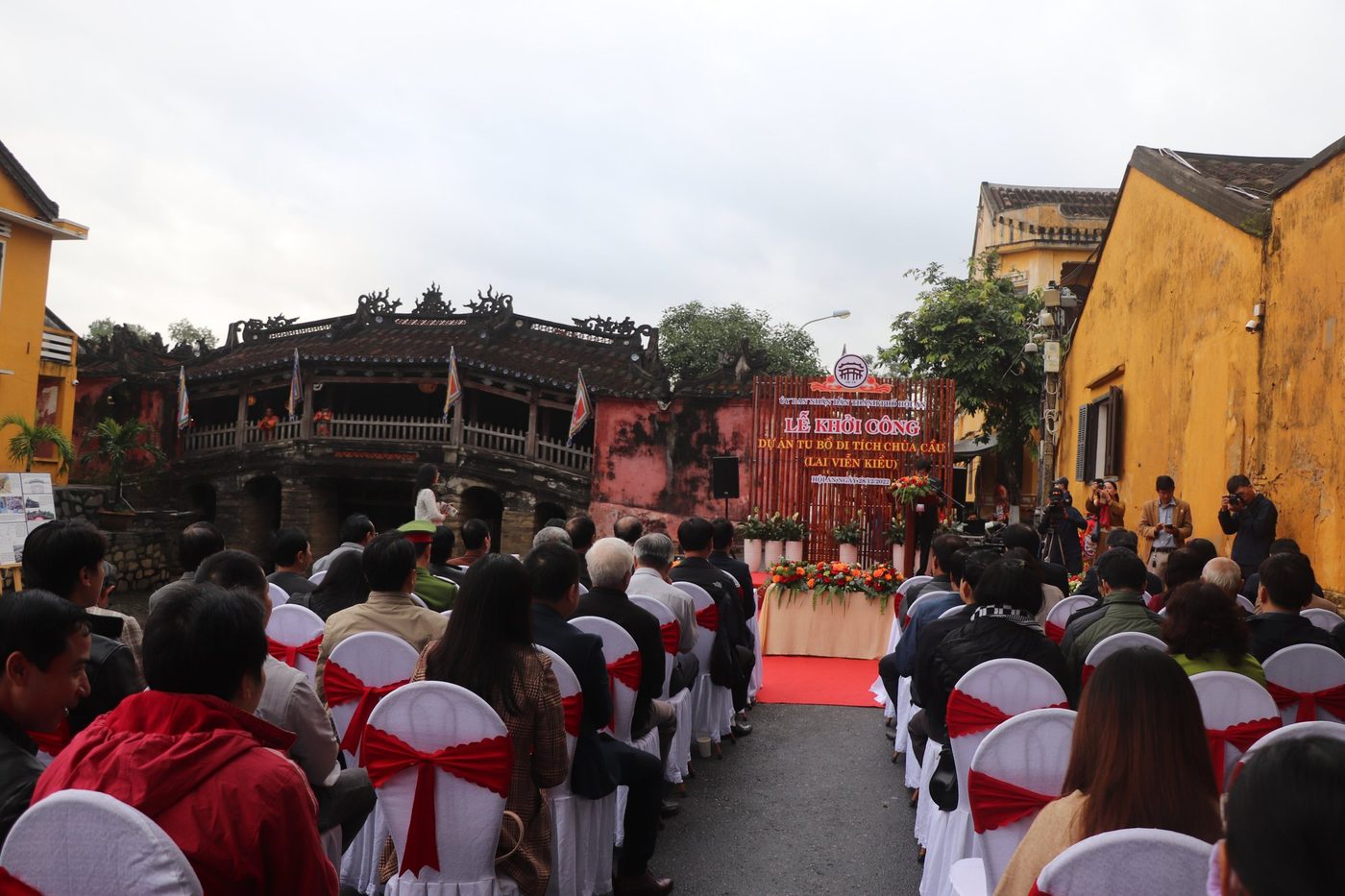 Người Lao Động newspaper · 2022
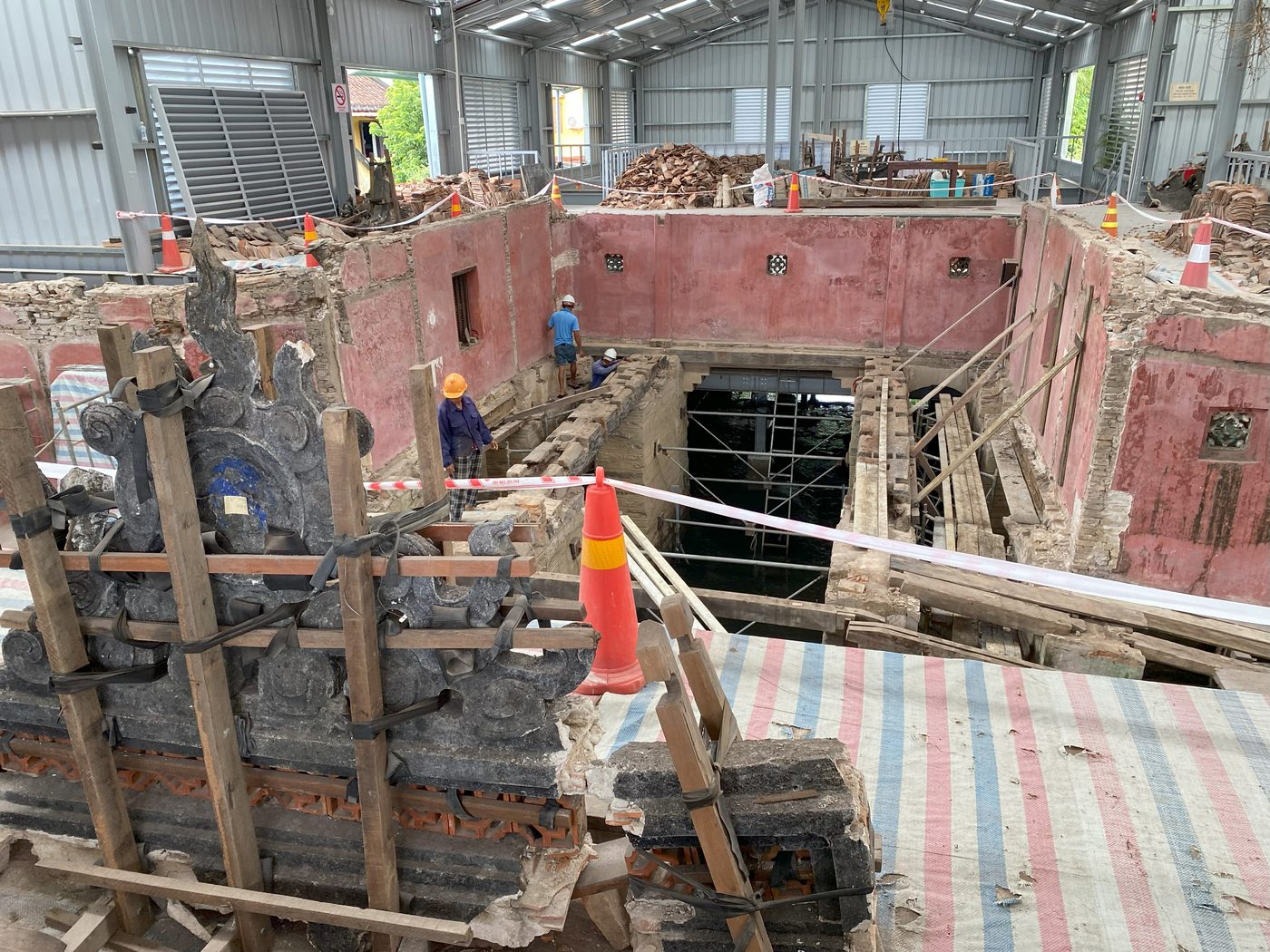
Taking the bridge apart was not simply a matter of lifting it off its piers. Workers removed each roof tile and each timber piece one at a time, numbered it, measured and photographed it, then sorted it: sound enough to reinforce and reuse, or too far gone to save. Before the structure became a pile of loose timber inside its work shed, a survey team had already scanned the whole monument in 3D. There would be something to check the rebuilding against.
The plan called for a year's work.
Curved or Straight
On the morning of 22 December 2023, with the project nearly finished, a small consultation meeting between people who had spent their working lives with the bridge brought the whole thing to a halt. Nguyễn Thượng Hỷ, a former head of technical affairs at the Quảng Nam Monuments Management Centre, pointed at the drawings. Workers were rebuilding the walkway with a raised curve in the middle. No record proved the original had ever curved that way.
Trần Văn An, a former deputy director of the heritage centre, said no photograph or document settled the question either way. Eight restorations over four centuries had blurred the original shape a little more each time workers replaced a broken piece. Trần Bá Tú, deputy director of the province's construction department and head of its architects' association, put it more bluntly. Looking at the file, he said, felt "not quite professional."
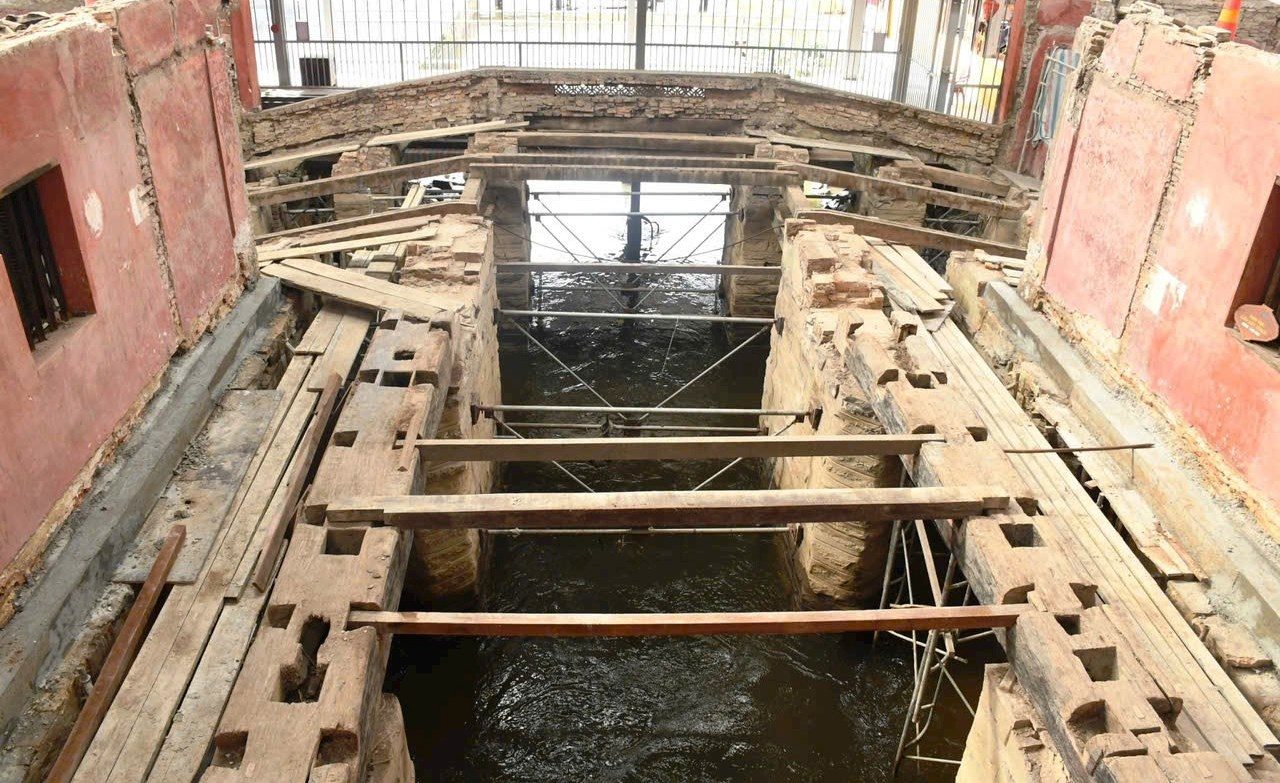 Thanh Niên newspaper · 2023
Nguyễn Văn Sơn, the city's chairman, sat through the meeting and then ordered the walkway plan paused for a fresh assessment, accepting that the deadline would slip.
The finish date moved into the following year.
From Elder to Youngster
On 25 July 2024 the work shed came down. Hội An saw its bridge for the first time in nineteen months. Three days later a newspaper headline caught the mood of the town: the monument had gone from an "old elder" to a shiny "young brother."
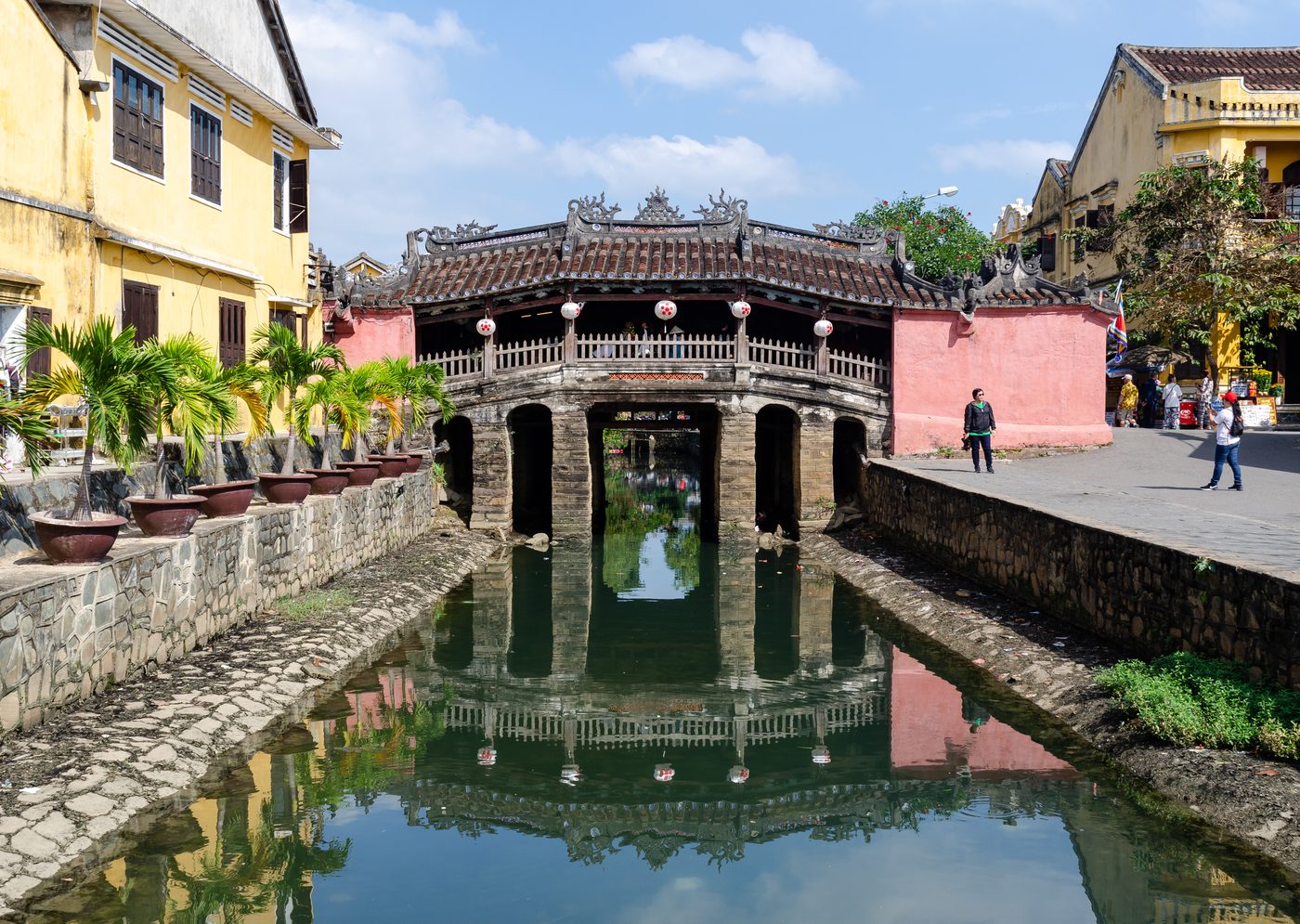 BEFORE · JAN 2020
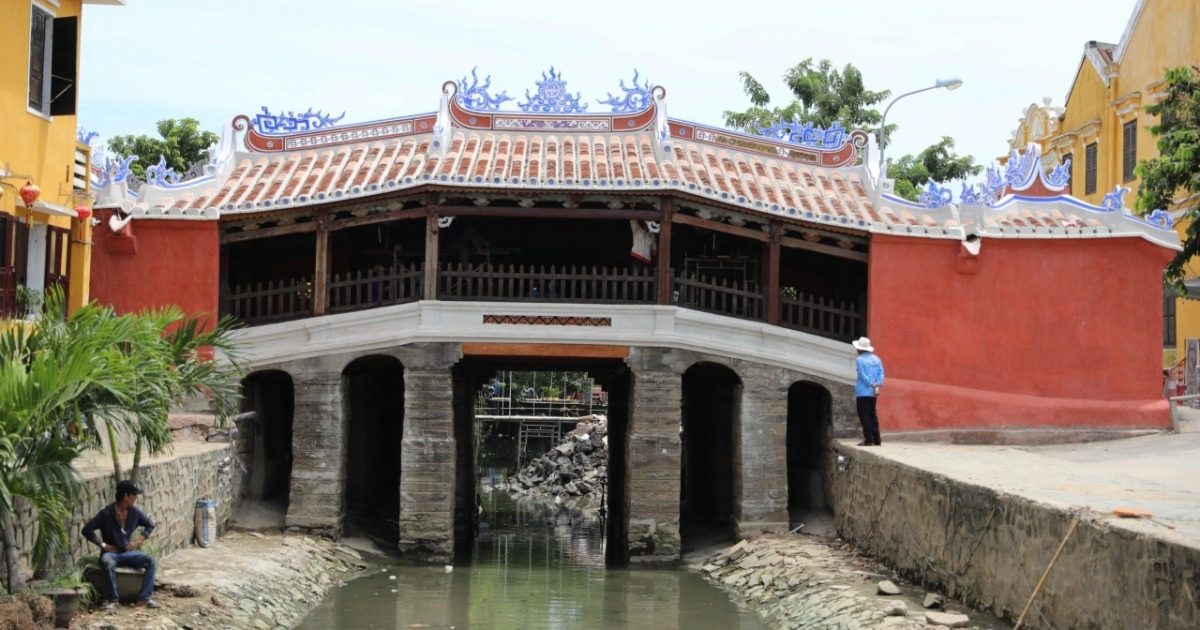 AFTER · JUL 2024
Nguyễn Đức Minh, a former deputy director of the heritage centre, scored the result six out of ten in a newspaper interview. The roof tiles and the wall colour were too dark, he said, and the building had not yet found its character. Nguyễn Sự, a former party secretary of Hội An, took a gentler view: freshly laid tiles always look new, and a few rainy seasons would bring the old tone back. A group of foreign visitors who knew the town well said the new look let them down. Trần Phước Thảo, who lives on the street beside the bridge, said only that anything newly built needs time to match its surroundings.
Nguyễn Văn Sơn, the city's chairman, acknowledged that no major restoration leaves a monument unchanged, so long as the original elements survive underneath. He assigned the heritage centre to repaint the walls: lighter at front and back, darker on the sides.
Nobody asked for the work to be undone, only for a different coat of paint.
A Memo Before the Deadline
On 29 July 2024, a day after the argument broke into print, the Department of Cultural Heritage sent an official memo. It went to Quảng Nam's Department of Culture, Sports and Tourism and to the Hội An heritage centre. The memo noted that newspapers had reported differing opinions about the monument's exterior colour, and asked both bodies for a detailed account of the legal and technical procedures behind the restoration.
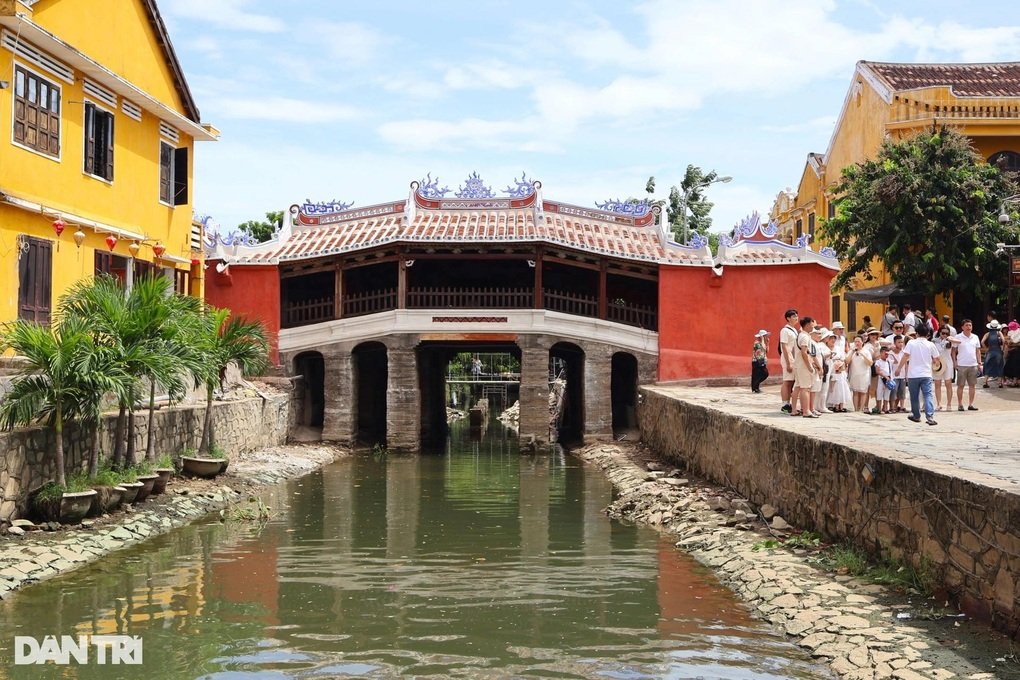
The deadline was 31 July 2024, two days after the memo went out. That gave the department time to pass a report up to the Ministry of Culture, Sports and Tourism. It also asked the local authorities to publish the scientific method used to determine the monument's original colours, for anyone who wanted to see it.
Repainting a bridge had become a matter for report all the way to the ministry.
Still Worth an Argument
The same day the Department of Cultural Heritage's deadline fell, Nguyễn Sự wrote a newspaper column. He admitted he had once opposed the whole idea. Thirty years earlier, when dismantling was first proposed, he had feared the bridge would come back changed, patched together wrong the way a chin ends up wearing a stranger's beard.
He wrote that the days of argument were not a bad sign. A monument nobody praised when it looked good and nobody criticised when it looked wrong, one that could turn old or new without a single voice raised, would be the real cause for worry.
People only speak up for what they still love.
Finished, Not Settled
On the afternoon of 3 August 2024, timed to the twentieth Hội An–Japan Cultural Exchange festival, the city and the province held the reopening ceremony. Nineteen months of dismantling, numbering and rebuilding were done. Phạm Phú Ngọc, the heritage centre's director, reported the results of the project to the crowd on the town's behalf.
Phan Thái Bình, Quảng Nam's vice-chairman, told the gathering that different opinions about a restoration's result were normal, a sign of how much people loved the heritage.
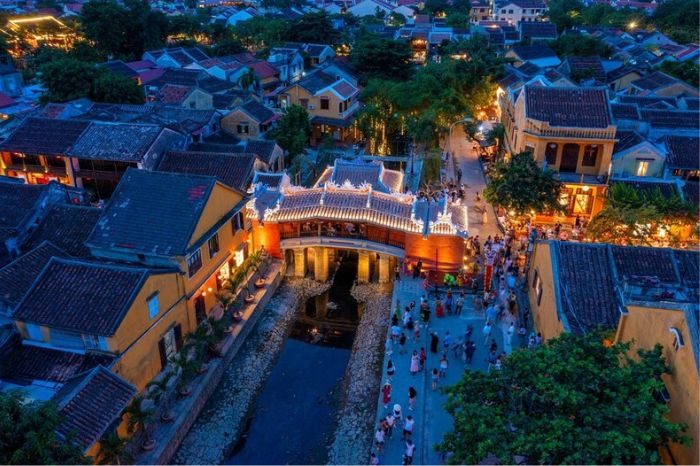 Đại Việt Tourist
The bridge was open again. The talk about it was not finished.
- Phạm Phú Ngọc – Trần Thanh Hoàng Phúc, “Quan điểm, giải pháp tu bổ Chùa Cầu” — Thông tin nghiên cứu bảo tồn di sản, Tập 03(55) 2021
- “Đại trùng tu chùa Cầu, Hội An: Nhiều ý kiến trái chiều” — Sài Gòn Giải Phóng, 30/07/2024
- “Hoi An's Cau Pagoda reopened after restoration” — VietnamPlus, 04/08/2024
- Nguyễn Thượng Hỷ, “Góp thêm giải pháp về tu bổ Chùa Cầu” — hoianheritage.net, 09/11/2023
- “Diện mạo Chùa Cầu sau khi trùng tu” — hoianheritage.net, 26/07/2024
- “Khảo sát, số hóa dữ liệu di tích Chùa Cầu” — hoianheritage.net, 07/03/2023
- “Những hình ảnh lịch sử của Chùa Cầu Hội An” — Tuổi Trẻ, 31/07/2024
- “Cục Di sản văn hóa yêu cầu Quảng Nam báo cáo về trùng tu Chùa Cầu” — Tuổi Trẻ, 30/07/2024
- “Tranh cãi vì sau trùng tu, 'cụ di tích' Chùa Cầu Hội An thành 'anh trai' bóng sáng” — Tuổi Trẻ, 28/07/2024
- Nguyễn Sự, “Lời nhắc nhở từ trùng tu Chùa Cầu” — Tuổi Trẻ, 31/07/2024
- “Chùa Cầu Hội An cong hay thẳng?” — Tuổi Trẻ, 22/12/2023
- “'Đại phẫu' Chùa Cầu Hội An sau thời gian dài xuống cấp” — Tuổi Trẻ, 28/12/2022
- “Khánh thành Chùa Cầu, chủ tịch Hội An cảm ơn bà con Hội An” — Tuổi Trẻ, 03/08/2024
- Cục Di sản văn hóa yêu cầu Quảng Nam báo cáo về việc trùng tu Chùa Cầu — Ngô Linh, báo Dân trí, Bản quyền tác giả