


Across the River from the Port
Facing Hội An's old quarter, across the Thu Bồn river, sits the land once known as châu Kim Bồng. Under the Nguyễn lords it belonged to tổng Mỹ Khê, in Duy Xuyên district. Most of that land is now Cẩm Kim commune, part of Hội An city. Four family lines still live there, Nguyễn, Phan, Huỳnh and Trương, and their descendants say the trade's first ancestor came south from Thanh Hóa and settled the ground sometime in the sixteenth century.
Water surrounds the Kim Bồng land on three sides, and the rising international port of Hội An stood right across it. Timber came downriver, and buyers waited on the far bank. That single fact rooted a building trade and a household-furniture trade there fast. The work began small: thatch houses, then timber-framed houses of the kind called tam gian nhị hạ, boats to move about the river. It never left again.
One Trade, Four Branches
Through the late sixteenth and into the seventeenth century, Hội An grew into the busiest international port in Đàng Trong, and the carpentry trade at Kim Bồng grew with it. The city's own heritage centre records four branches of the trade. Building carpentry and fine carving centred on the hamlets of Trung Châu and Phước Thắng. Boatbuilding centred on Đông Hà and Ngọc Thành, household furniture on Trung Hà and Vĩnh Thành. Some carpenters worked alone, taking on small repairs. Others ran a proper workshop, a handful of family hands at the small end, several dozen hired villagers at the large end.
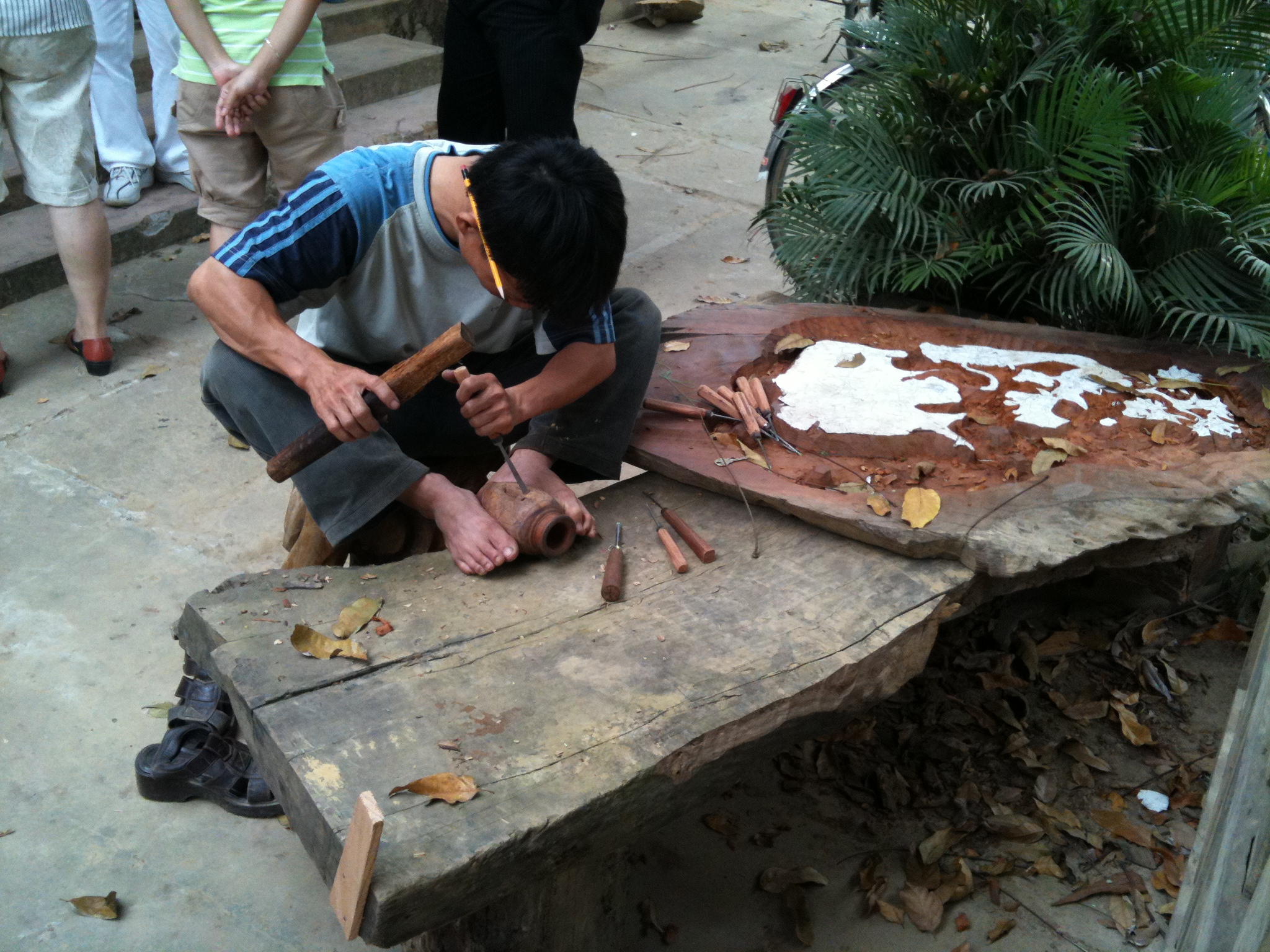 Photograph 2010 · Dragfyre · Wikimedia Commons · CC BY-SA 3.0
There was no school for it. A newcomer followed a master and learned by watching his hands. A fast learner took three to five years to become skilled. Becoming a true master took fifteen to twenty years more of steady grinding. Nobody rushed it.
Not a Single Nail
Most of the old shophouses still standing in Hội An today were raised by hands from Kim Bồng. Tấn Ký house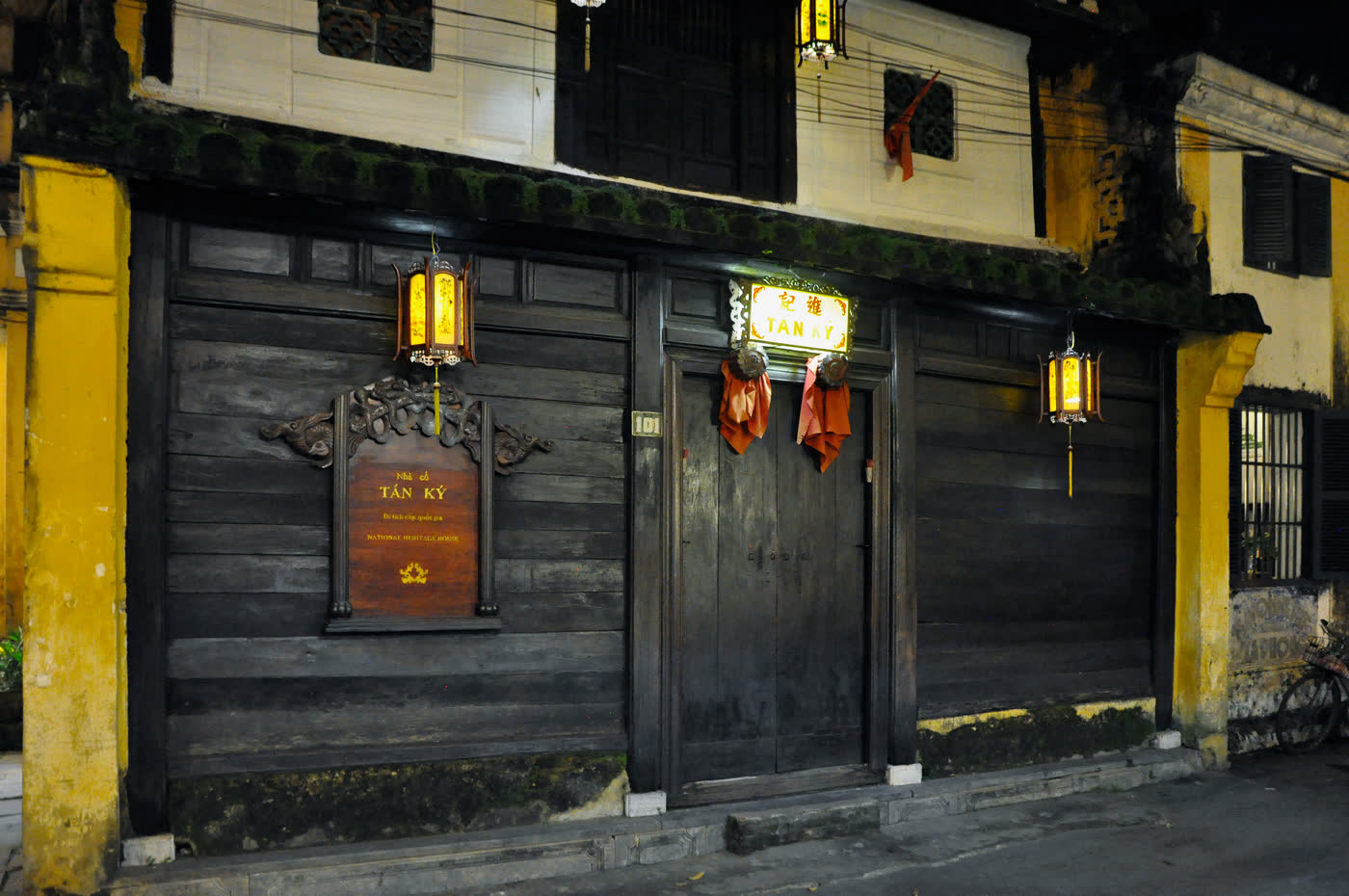 PLACE · MERCHANT HOUSETấn Ký Old HouseBuilt c. 1800–1820 · listed 1990A Minh Hương merchant family built this house before the street outside it existed. Nearly two centuries later, it still stands, its columns carrying the carved waterlines of every flood that has reached them., built around 1800 to 1820, is one of them. Kim Bồng carpenters fitted its entire timber frame together with mortise and tenon joints, without a single nail. They carved the beams with auspicious motifs: the eight treasures, plum and orchid and chrysanthemum and bamboo, dragon and unicorn and turtle and phoenix, zither and chess and poetry and wine. The same technique repeats across family shrines, communal halls, pagodas and temples through the old quarter, and in villages further out across Quảng Nam.
Fine carving is the most delicate of the four branches, the work that turns a bare beam into an ornament: sunk relief, raised relief, pierced relief, layer upon layer of it. The same motif comes out differently under every pair of hands, the heritage centre's own account of the craft notes, shaped as much by a carver's mood that day as by the pattern in front of him. No two carvers work quite the same way.
Called to Build the Capital
Not every carpenter from the village stayed at home. Village elders' accounts say the Nguyễn court recruited a good number of Kim Bồng carpenters to Huế, to raise palaces and royal tombs there. Those with the finest hands were granted the rank of tượng mục, master builder. Some rose further, to the court ranks Bát phẩm and Cửu phẩm — grades of official office, given in this case to men who worked in wood.
More than a century later, the same line of craftsmen found work on a project far larger, and far from Quảng Nam. Huỳnh Kim Hơn, a man of the village, is named among the carpenters who built President Hồ Chí Minh's mausoleum in Hà Nội. A trade that began with thatch houses on a riverbank reached the country's largest projects. Kim Bồng's hands were on all of it.
Brought Back to Life
The upheavals of the twentieth century slowed the trade at Kim Bồng to a stop. Carpenters at times had to set down the mallet and chisel and earn a living some other way. Huỳnh Sướng, a carver of the village, later recalled leaving home more than once and always coming back. By the close of the twentieth century, few masters were still holding on to the trade in the village.
In 1996, UNESCO and the Hội An city government together set out to rebuild the trade. In April 1997, a UNESCO-funded wood-carving training workshop opened at the house of master carver Huỳnh Ry. The wooden sign still hangs over the workshop door, the date cut into it in both Vietnamese and English.
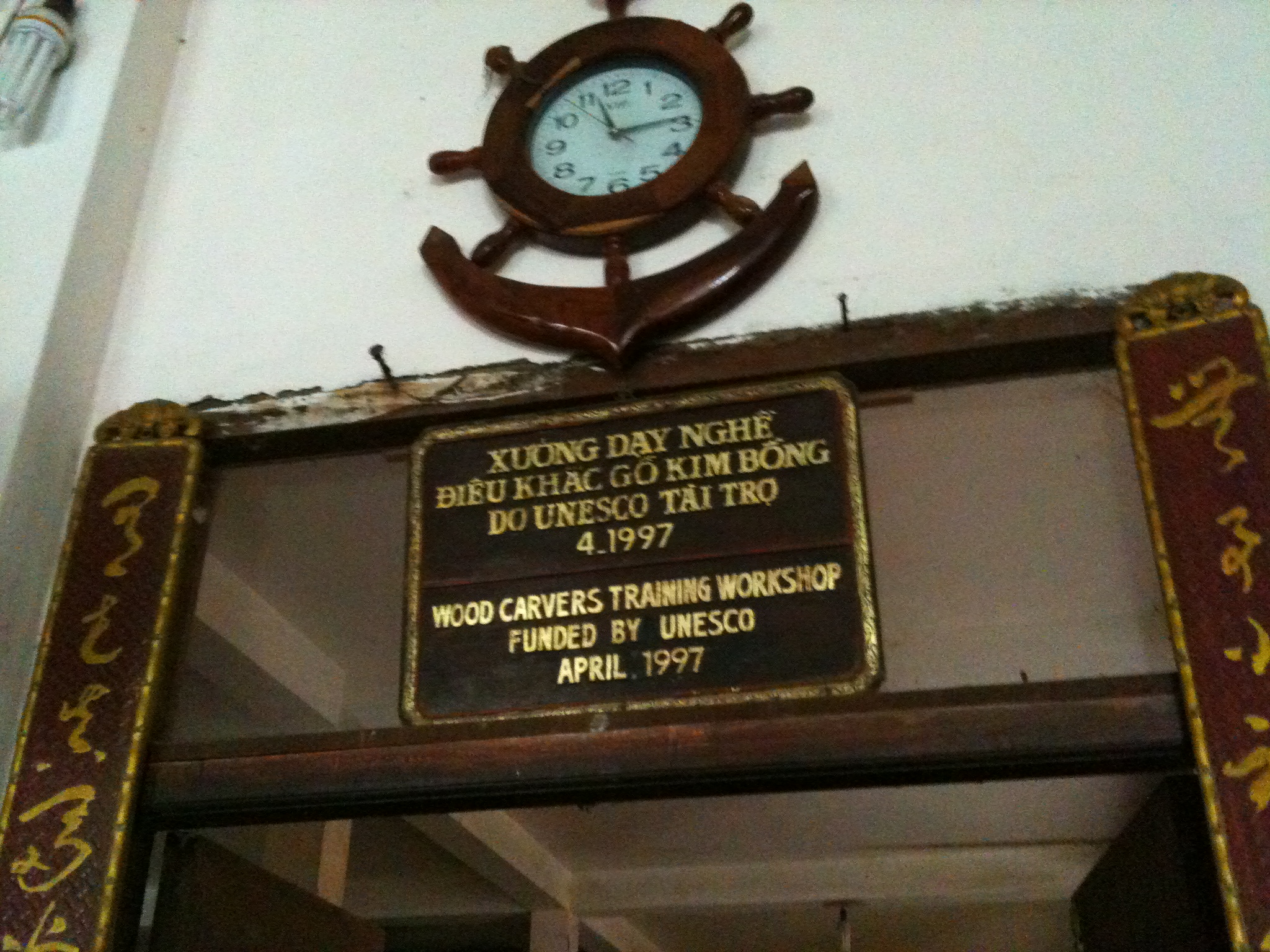 Photograph 2011 · Dragfyre · Wikimedia Commons · CC BY-SA 3.0
Huỳnh Sướng talked his own father, Huỳnh Ry, into stepping outside the old rule of teaching only within the family. Together they began teaching any young person with the will to learn the trade. In 1999, UNESCO placed Hội An's old quarter on its World Heritage list. Kim Bồng's carpenters had new work waiting: repairing the very houses their own ancestors had built two centuries before. From then on the village's carvers could also learn how to conserve and maintain an old house from Japanese artisans.
The Man Who Stayed with the Trade
Huỳnh Sướng was born in 1969, the thirteenth generation of the Huỳnh line to hold the trade. He was the only one in his family who chose to carry his father's work forward. He said the pull of it was never something he could cut loose from. He left more than once, and always turned back. His piece Cội Nguồn, Origin, won third prize at the seventh national handicraft competition in 2010.
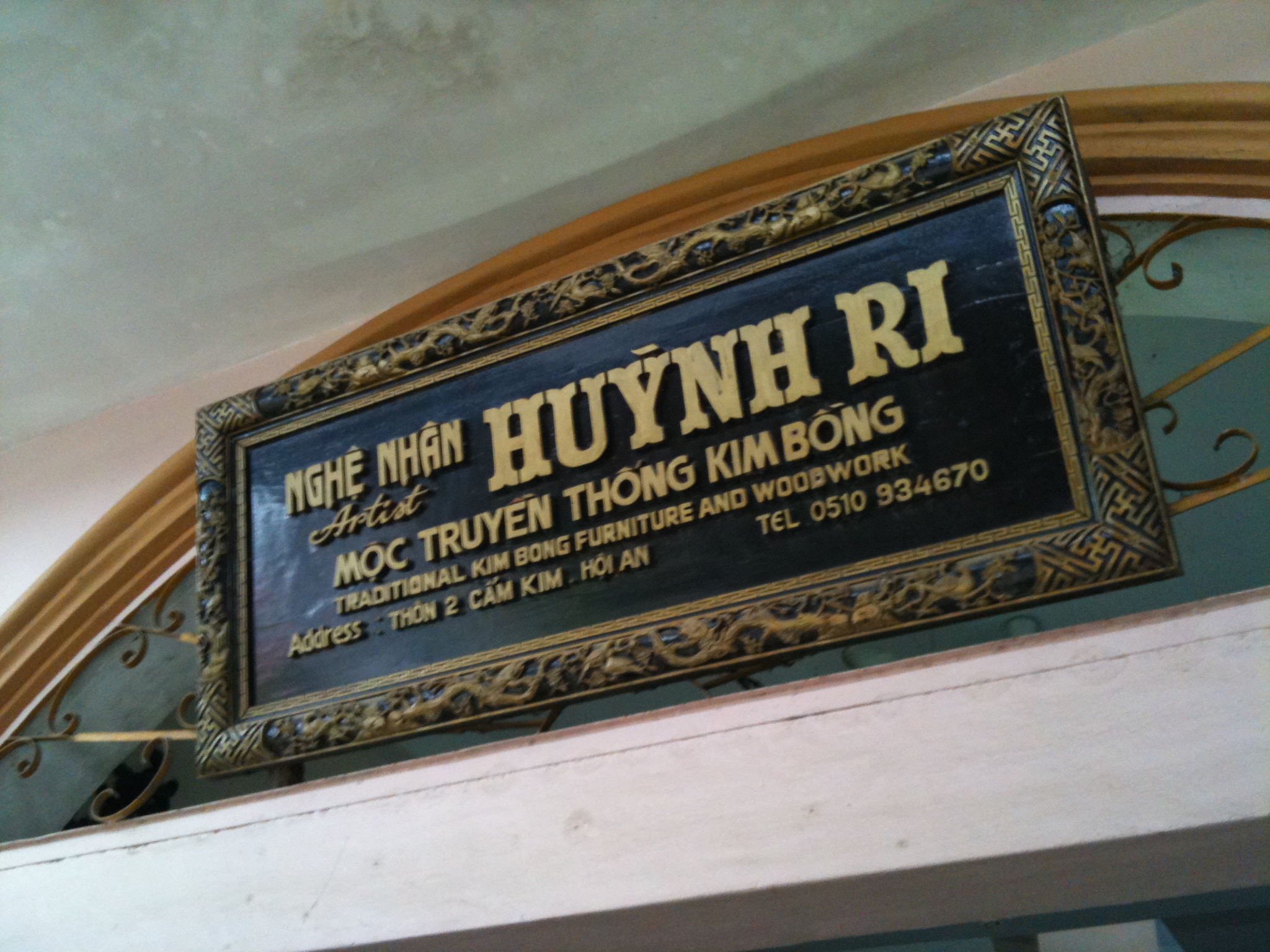 Photograph 2011 · Dragfyre · Wikimedia Commons · CC BY-SA 3.0
On 14 August 2014, on the President's authority, Quảng Nam province granted Huỳnh Sướng the title Excellent Artisan. His house today is workshop, viewing gallery and classroom all at once. Visitors watch a carver at work there. He teaches the next generation of hands, most of them outside his own bloodline — the very thing his father once hesitated over.
A Craft Becomes National Heritage
On 21 November 2016, Vietnam's Ministry of Culture, Sports and Tourism recognised Kim Bồng carpentry as a national intangible cultural heritage.
The listing spelled out why. The trade had done the main work of raising the shophouses, family shrines, communal halls, pagodas and temples of Hội An and villages across Quảng Nam. Its own history, the listing said, was one of the grounds on which the region's settlement history could be traced. From that day, Kim Bồng carpentry stood alongside the city's other listed heritage, no longer simply a way to earn a living but a piece of history the state had put its name to.
The Same Line of Care
Kim Bồng's fine-carving trade does not only raise new houses. It keeps old ones standing. An article from the Hội An heritage centre, published just as Chùa Cầu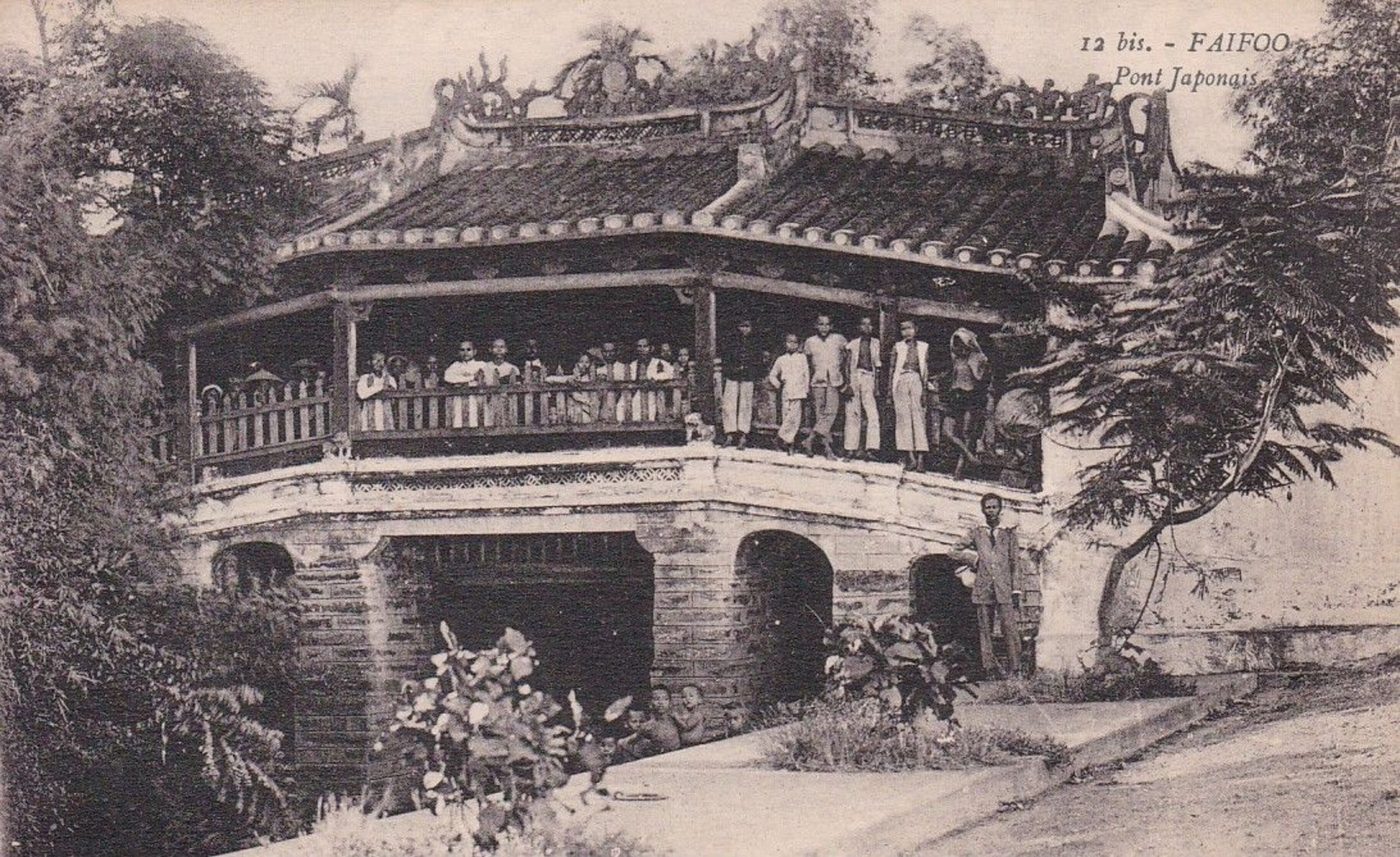 PLACE · ANCIENT TOWNThe Japanese Covered BridgeJapanese merchants paid for it, Vietnamese carpenters built it, a Chinese village kept it, and a Nguyễn lord gave it a name. After eight dismantlings, the part of the four-hundred-year-old bridge that is close to intact is the foundation. was being dismantled for repair, put it this way: today, the village's carvers play an important part in keeping them standingTHE ORIGINAL WORDSNgày nay, các nghệ nhân làng mộc đóng vai trò quan trọng trong việc bảo tồn chúngHoàng Phúc, "Nghề mộc chạm ở Hội An" — Trung tâm QLBT Di sản Văn hóa Hội An (2023).
That bridge began coming apart on 28 December 2022, every piece marked and numbered before it came down, so it could go back exactly where it stood. It opened the most thorough restoration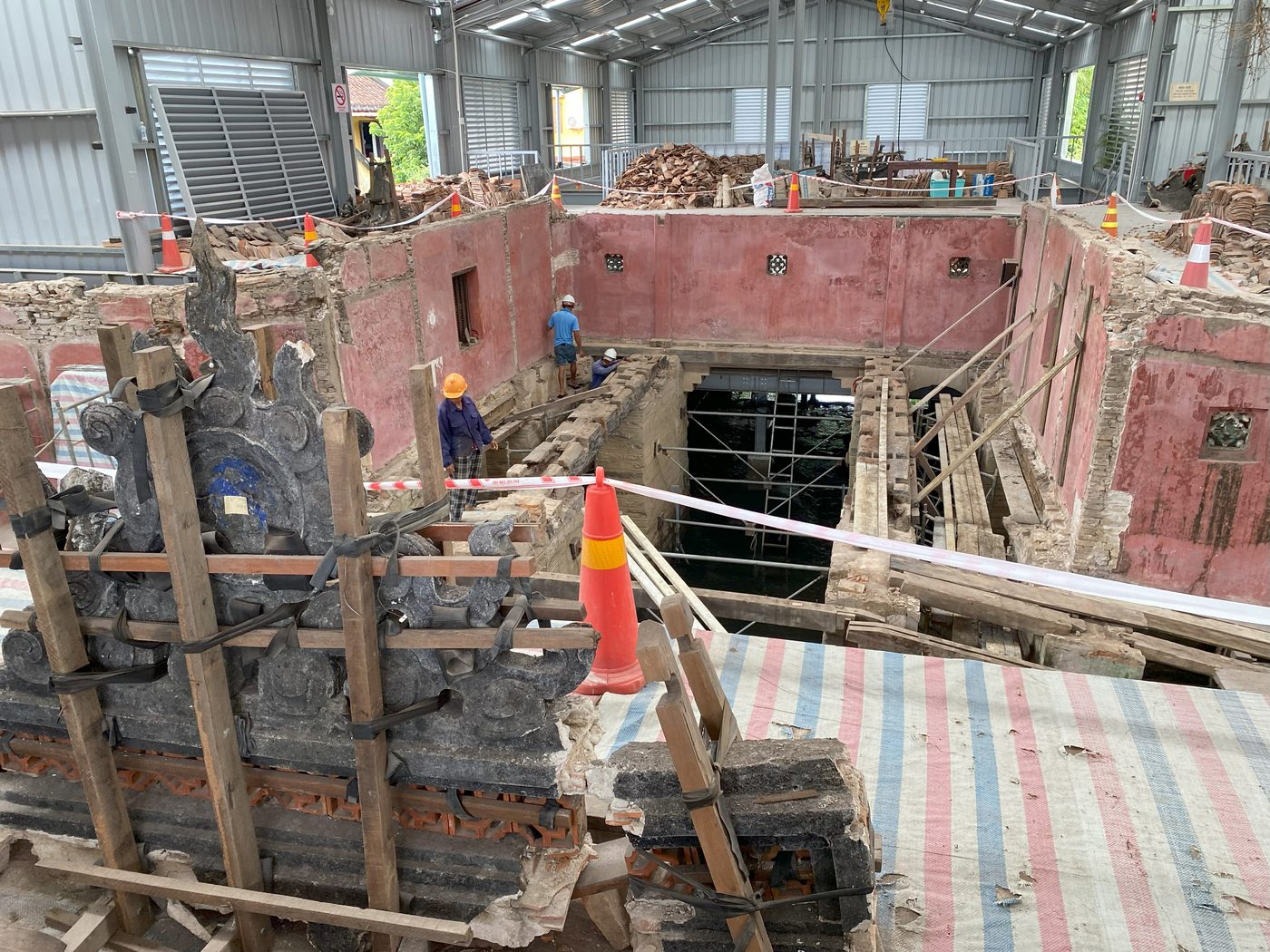 EVENT · CONSERVATIONThe Dismantling Restoration2022 – August 2024The most thorough intervention in the bridge's history — and the most argued about. in the bridge's history. The Japanese side signed on to supply advisory specialists, and funded the three-dimensional survey model of the bridge. The Chronicles found no names for that crew. But the trade that keeps it standing today is the same trade practised across the river, the one that has tended the old quarter's timber for more than two centuries.
A Village Reached by Boat
Kim Bồng today has around 200 people working the trade, out of some twenty workshops. Visitors reach the village two ways: a short ferry ride across the Thu Bồn, or the longer road route over the Cẩm Kim bridge. On the morning of 1 June 2024, Hội An officially opened a guided-visit programme at the village's craft centre, open 8h00 to 17h00 every day.
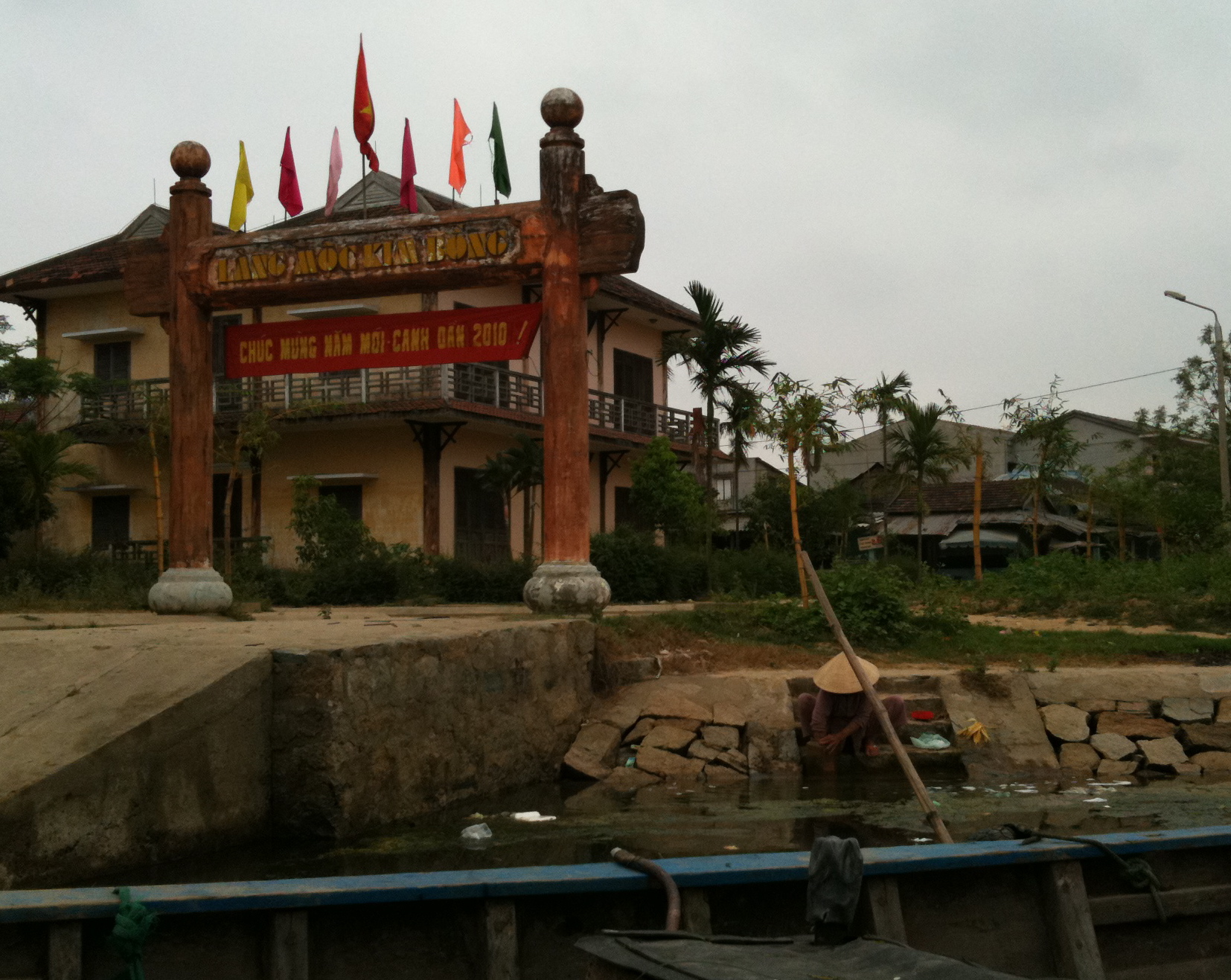 Photograph 2010 · Dragfyre · Wikimedia Commons · CC BY-SA 3.0
Visitors can watch fine carving, boat repair, mat weaving and basket weaving, then try a hand at it themselves. Huỳnh Ry's own workshop, which opened as a UNESCO-funded training ground nearly thirty years earlier, is still one of the stops on the route. His son Huỳnh Sướng still receives visitors and demonstrates carving most days, at a workshop of his own in the same village.
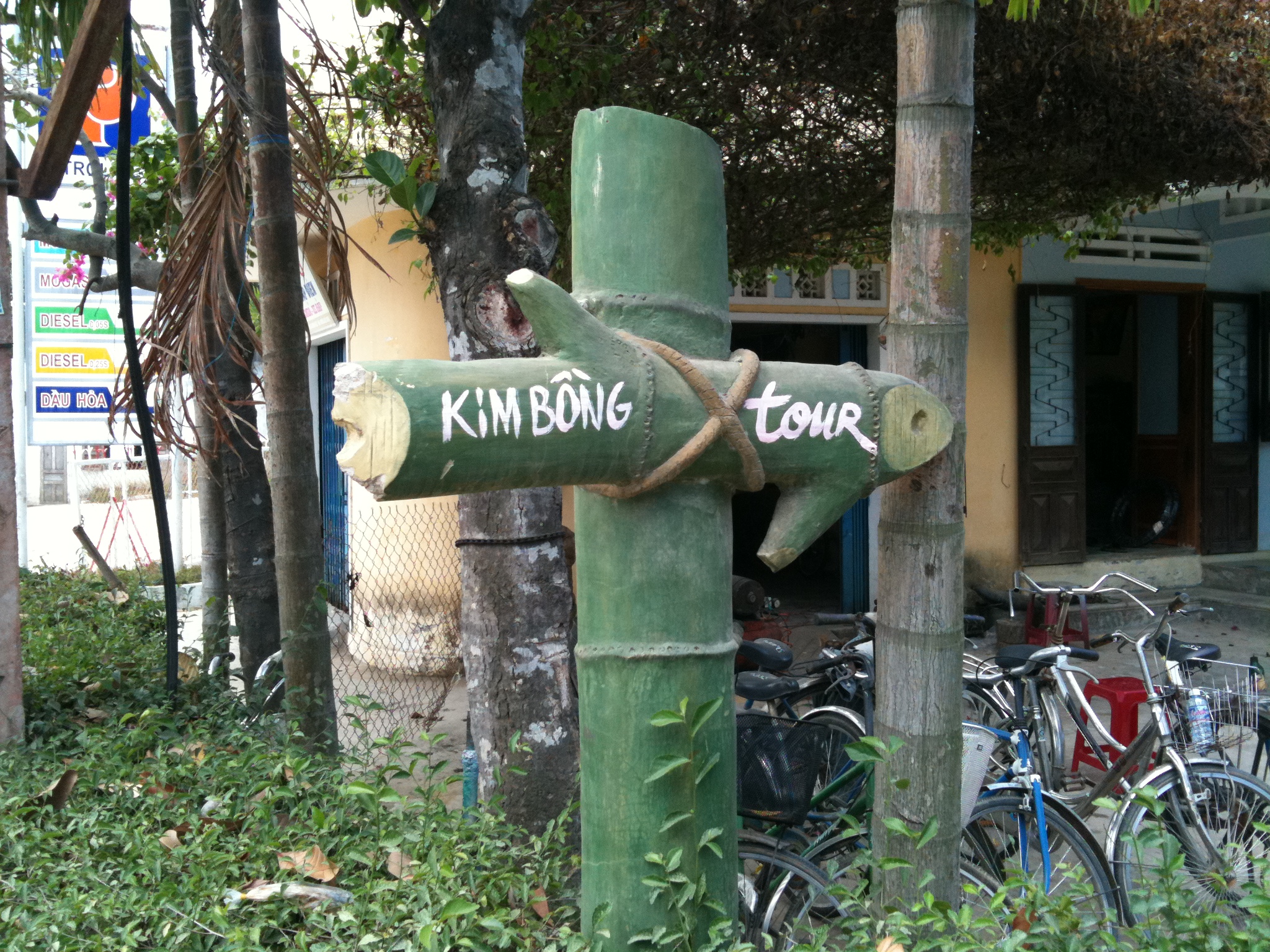 Photograph 2011 · Dragfyre · Wikimedia Commons · CC BY-SA 3.0
In the file Hội An submitted to join UNESCO's Creative Cities Network, the city government named Kim Bồng carpentry as a project of its own. It was not simply a trade kept alive for its own sake, but a bet on it as part of the city's future. Across the river, the sound of the chisel still starts up every morning, the way it has for centuries.
- Phạm Phước Tịnh, "Nghề mộc Kim Bồng" — Trung tâm Quản lý Bảo tồn Di sản Văn hóa Hội An (2015)
- Phước Tịnh, "Di sản văn hóa phi vật thể quốc gia nghề mộc Kim Bồng Hội An" — Trung tâm Quản lý Bảo tồn Di sản Văn hóa Hội An (2016)
- Hoàng Phúc, "Nghề mộc chạm ở Hội An" — Trung tâm Quản lý Bảo tồn Di sản Văn hóa Hội An (2023)
- Công Bính - Ngô Linh, "Nghệ nhân đau đáu với việc 'giữ hồn' nghề mộc ở làng nghề trăm năm tuổi" — báo Dân trí (2019)
- Xuân Mai, "Kim Bong village carves itself into history" — Vietnam+ (VietnamPlus, Thông tấn xã Việt Nam)
- "Kim Bồng woodworking village" — Wikipedia tiếng Anh
- "Thông tin khai trương hoạt động hướng dẫn tham quan tại làng mộc Kim Bồng" — Trung tâm Bảo tồn Di sản văn hóa thế giới Hội An (2024)
- Nguyễn Phước Tương, "Ngôi Nhà cổ" — trích Đô thị cổ Hội An và những di tích tiêu biểu, NXB Giáo dục (2007), đăng lại trên hoianheritage.net
- "Tu bổ di tích Chùa Cầu – Hội An trong 360 ngày" — Hội An Creative City
- "ベトナムで自律的な町並み保存を引き出した日本の協力とは" — nippon.com (2024)
- "Nhìn lại giải pháp trùng tu Chùa Cầu" — Báo Quảng Nam
- Kim Bong Ferry Hoi An.jpg — Dragfyre, CC BY-SA 3.0