
Rice, Clear Water, Ash
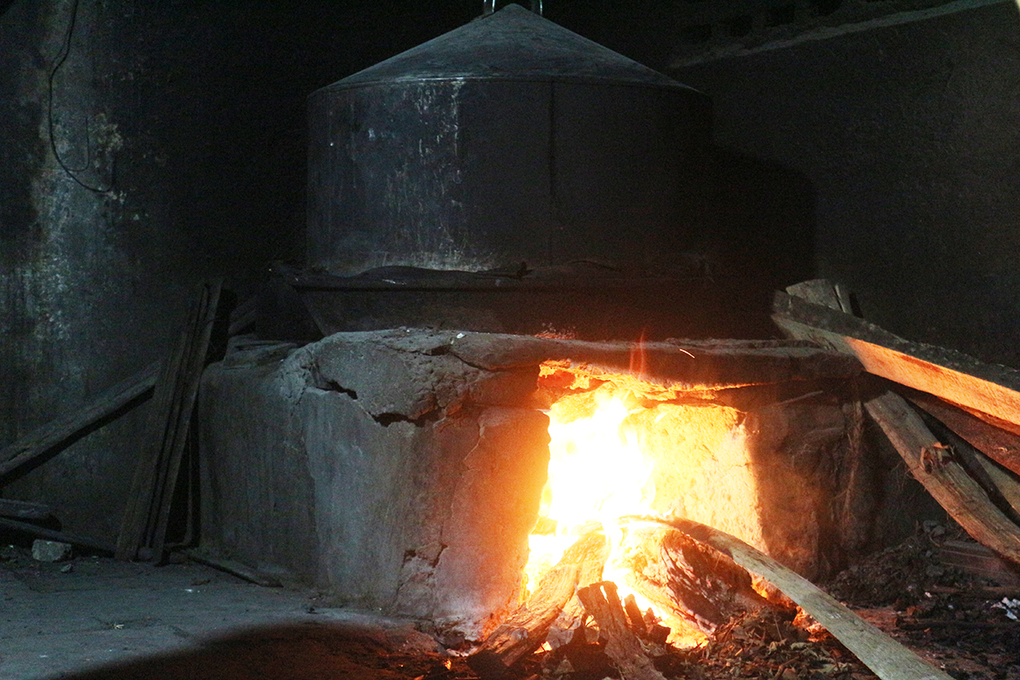
In 2013 the three households still making cao lầu noodles told the city's own heritage researchers the same short list: top-grade rice, ash water, strained clean. The ash came from casuarina wood, amaranth stalks, sesame stalks, or wood cut in the hills, sometimes several of those mixed together. Ten years later Tạ Ngọc Hồng, in Cẩm Châu, named nearly the same three things: hard-grained xuyệt rice, clear water free of alum, and ash water. Soaking the ash, he said, mattered most. Skip it and the noodle turns sour and will not keep.
Ash water cuts the sourness and lets the noodle keep a day or two without a refrigerator, and turns it a pale yellow, the colour of turmeric. What wood or plant went into that ash is where the sources stop agreeing. Casuarina, amaranth stalks, sesame stalks, hill wood.
The craft needs the right ash, the right water, the right hands to soak it. Beyond that, no household said any more.
One Sourced, One Not
The heritage centre's own folklore record tells the water story and the ash story in two different registers, in the same piece. Written in 2010 and reprinted in 2013, it states the water plainly: the rice has to be ground with water from Bá Lễ well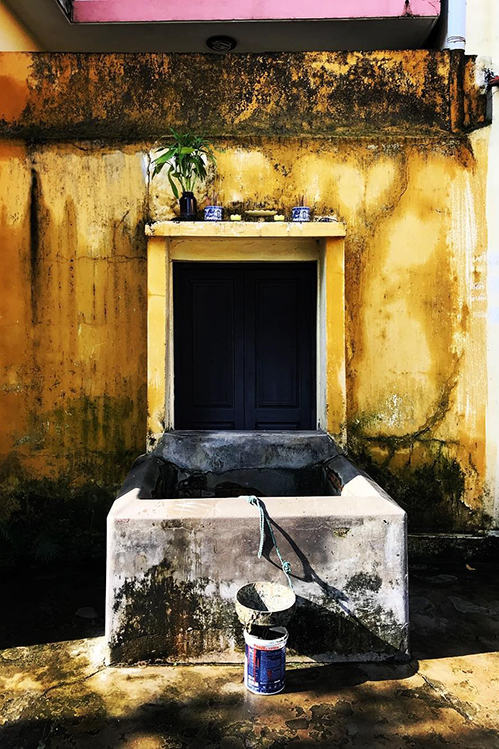 PLACE · ANCIENT WELLBá Lễ WellSaid to date to Champa times (8th–9th c.) · renamed early 20th c.No one in Hội An remembers what the square well in the Bá Lễ alley was called before the early twentieth century, when a woman paid a hundred piastres to have it rebuilt and the town began calling it after her., famous for being sweet, free of alum and cold. About the ash it hedges: the noodle needs firewood ash from Cù Lao Chàm
 PLACE · ISLANDSCù Lao ChàmInhabited from ~3,100 BP · biosphere reserve 2009Eight islands stand off Cửa Đại, screening the trading port of Hội An for centuries. Twenty kilometres out to sea, a fifteenth-century cargo ship lay undisturbed until fishermen's nets began pulling up plates still glazed whole., it says, and wonders aloud whether that might be the salt in the wood.
The water claim does not rest on one article. The Chronicles' own entry on Bá Lễ wellPLACE · ANCIENT WELLBá Lễ WellSaid to date to Champa times (8th–9th c.) · renamed early 20th c.No one in Hội An remembers what the square well in the Bá Lễ alley was called before the early twentieth century, when a woman paid a hundred piastres to have it rebuilt and the town began calling it after her. gives it a full chapter, quoting cooks in the old quarter who say no other water gives cao lầu or mì Quảng noodles quite the same taste. Other newspapers repeat the same thing.
The ash story is a different matter. One account calls it reed grass, another melaleuca wood, another leaves the tree unnamed, and all three tie it to Cù Lao Chàm. The one specialised research paper on this exact craft, built on what three working households said themselves, names only rice and wood ash as the main ingredients. It never names an island, and lists four different plants of its own: casuarina, amaranth stalks, sesame stalks, hill wood.
The water has a paper trail, newspapers behind it, and cooks willing to put their names to it. The ash does not, not even from the source that carries it. The two are often told in the same breath, as if evenly matched — they are not.
Cut Before It Steams
Noodle-makers soak the rice overnight, grind it into a wet batter, then let it settle so they can pour off the clear water on top. They set the thick batter over a wood fire and stir it by hand until nearly set, then pour in the strained ash water and keep stirring until it thickens, a step they call giáo bột, working the batter. They steam what sets, let it cool, beat it smooth, roll it flat and cut it into strands. Then they steam it again.
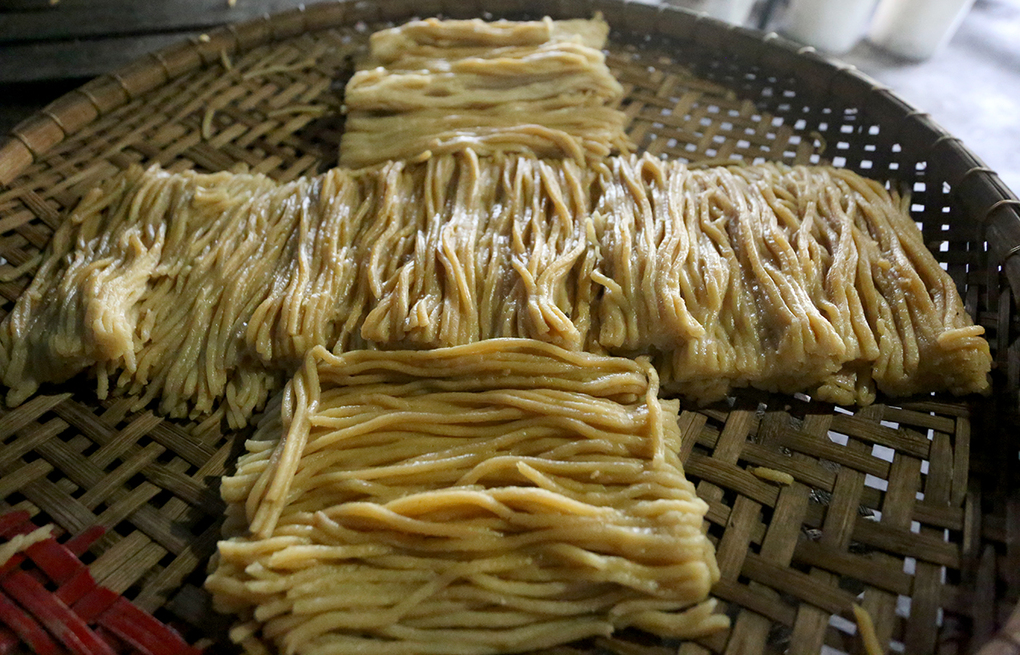
That last step is what makes the difference. Cooks steam an ordinary noodle whole and cut it afterward. They cut cao lầu first and steam it after. The strand keeps no mark of a blade or a press, and its slightly hollow centre soaks up the pork broth without falling apart. Fifty kilograms of rice, carried through all of that, comes out as seventy to eighty kilograms of noodle.
One household needs five or six people, each holding one step of the line. No single person carries the whole process alone.
A Name No One Claims
No one in Hội An is certain why the dish carries the name cao lầu. The story most often told says wealthy customers used to eat it upstairs, looking out over the street, and the name simply stuck to the habit.
But lầu can also be read lâu. Cao lâu was the term for the fine restaurants Chinese merchants kept in old Hà Nội, well known enough that the poet Trần Tế Xương once admitted that tea, wine and cao lâu were three things he could not give up. Cao Bá Quát once attended a night of singing in Hội An and ran into an old acquaintance, a singing girl from the north. Cao lâu, in his day, named an evening of entertainment as much as a meal.
An older name survives in local memory too: mì gỗ, wood noodle. It makes no claim about upstairs dining, only that this is a kind of noodle. The Chinese community in Hội An does not claim cao lầu as their own, and neither do the Minh Hương. A borrowed name that no community will own.
Four Hypotheses, No Winner
The anthropologist Nir Avieli, of Ben Gurion University in Israel, came to Hội An to study its food and meant to give cao lầu its own chapter. The more he asked, the less certain anyone in town turned out to be, not of when the dish appeared, not of how to make it properly. What he found instead were four competing explanations, which he called the Cham, Chinese, Japanese and indigenous hypotheses.
The Cham hypothesis rests on the noodle needing water from a Cham-style well. The Chinese hypothesis rests on the pork sauce, marinated in soy sauce rather than fish sauce, a technique that belongs to Chinese cooking, not Vietnamese. The Japanese hypothesis rests on the noodle's resemblance to soba, and one Japanese scholar had gone so far as to call cao lầu a dish of his own country. Japanese exchange students settled the question a simpler way: cinnamon, part of the five-spice used on the pork, never goes into a savoury Japanese dish.
A Quảng Nam newspaper columnist, writing about cao lầu on his own account in 2023, was just as blunt. No document or record has ever turned up to explain where the dish came from, he wrote, and then tried splitting it instead of choosing a side: the pork sauce belongs to Chinese cooking, the ash-soaked noodle to Vietnamese hands, since he had found rice noodles made this way nowhere else in the world.
The Shops at 71 and 80
Where the dish came from is unclear. Where people sold it is easier to trace. Elderly residents of the old quarter recall cao lầu shops standing at numbers 71 and 80 on Nguyễn Thái Học street sometime in the 19th century.
That is memory, not a document from the period. But it sets a floor: sometime in the 19th century cao lầu already had a fixed address in town, not a novelty.
Cao Lầu at Ông Cảnh's, Cao Lầu at Năm Cơ's
By the 1930s cao lầu had shops known by their owners' names: ông Bốn Niên at 92 Trần Phú street, ông Bốn Đờn on Trần Phú, ông Cảnh at 65 Trần Phú, ông Thử on Hoàng Văn Thụ street, and ông Trợ, known around town as ông Năm Cơ, also on Trần Phú. These were sit-down shops with wooden tables, not street carts.
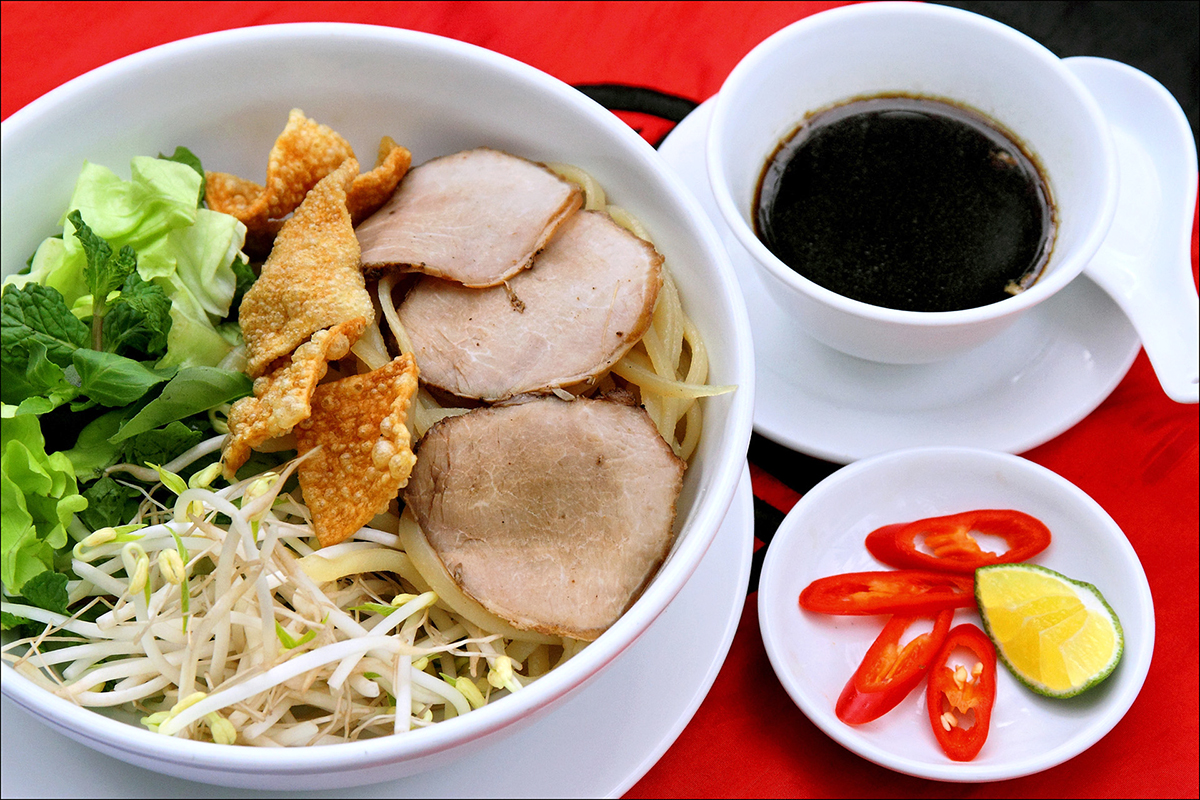 Photograph · Đặng Kế Đông · Báo Quảng Nam, via hoianheritage.net
Their names outlived the shops themselves, carried into folk verse still recited today: Hội An's specialty dish, cao lầu at ông Cảnh's, bánh xèo at Tam Tam's. Another line places cao lầu among the town's landmarks: Hội An has Hạ-uy-di, the Bridge Pagoda, Âm Bổn temple, cao lầu at Năm Cơ's. Traders working the junks along the Hoài river had a verse of their own: remembering the bustle at the wharf, rice at the Đà Nẵng stall, cao lầu at Hội An. Three verses, three ways to remember the same shops.
A dish of the market town, carried into the songs of river traders.
Four Generations at One Furnace
In 2013 only three households in Hội An still made cao lầu noodles for a living, turning out close to 300 kilograms a day between them, supplying both Hội An and Đà Nẵng. One of the three belonged to Trần Thị No, known locally as cụ Trái, of Trường Lệ block in Cẩm Châu ward. By the family's own account in 2015, theirs was the longest-running hand-made cao lầu business in town, more than 200 years old across four generations. She had sold her noodles at Hội An market for more than 60 years.
Also in Cẩm Châu, Tạ Ngọc Hồng, fourth generation in his family's trade, rose at 1am with his wife and two hired hands to light the wood fire and grind the rice, finishing by 7am with 200 kilograms of noodles to sell at 30,000 đồng a kilogram. His trade takes one day off a year, Tết's first day. His uncle, Tạ Ngọc Em, 64, ran his own furnace nearby, selling around 200 kilograms a day and drying extra noodles into cao lầu khô on good weather for travellers to carry home.
The hand mill gave way to a motor, the hand-kneading to a mixer. The steps stayed the same: soak, grind, work the batter, steam, roll, cut, steam again.
Machines Run, the Noodle Stiffens
The city's own heritage researchers put the worry plainly: the work is hard, family secrecy keeps the technique from spreading, and fewer young people want to take it up.
Machines let a furnace turn out more noodle, but pressed too hard they leave the strand stiff and dry, a Quảng Nam newspaper columnist wrote in 2023, noting that after several hundred years cao lầu still had not escaped Hội An.
In 2017 the Hội An Heritage Management Centre listed cao lầu noodle-making among the town's traditional crafts, alongside the bamboo-and-coconut-leaf building trade of Cẩm Thanh and the woodworking of Kim Bồng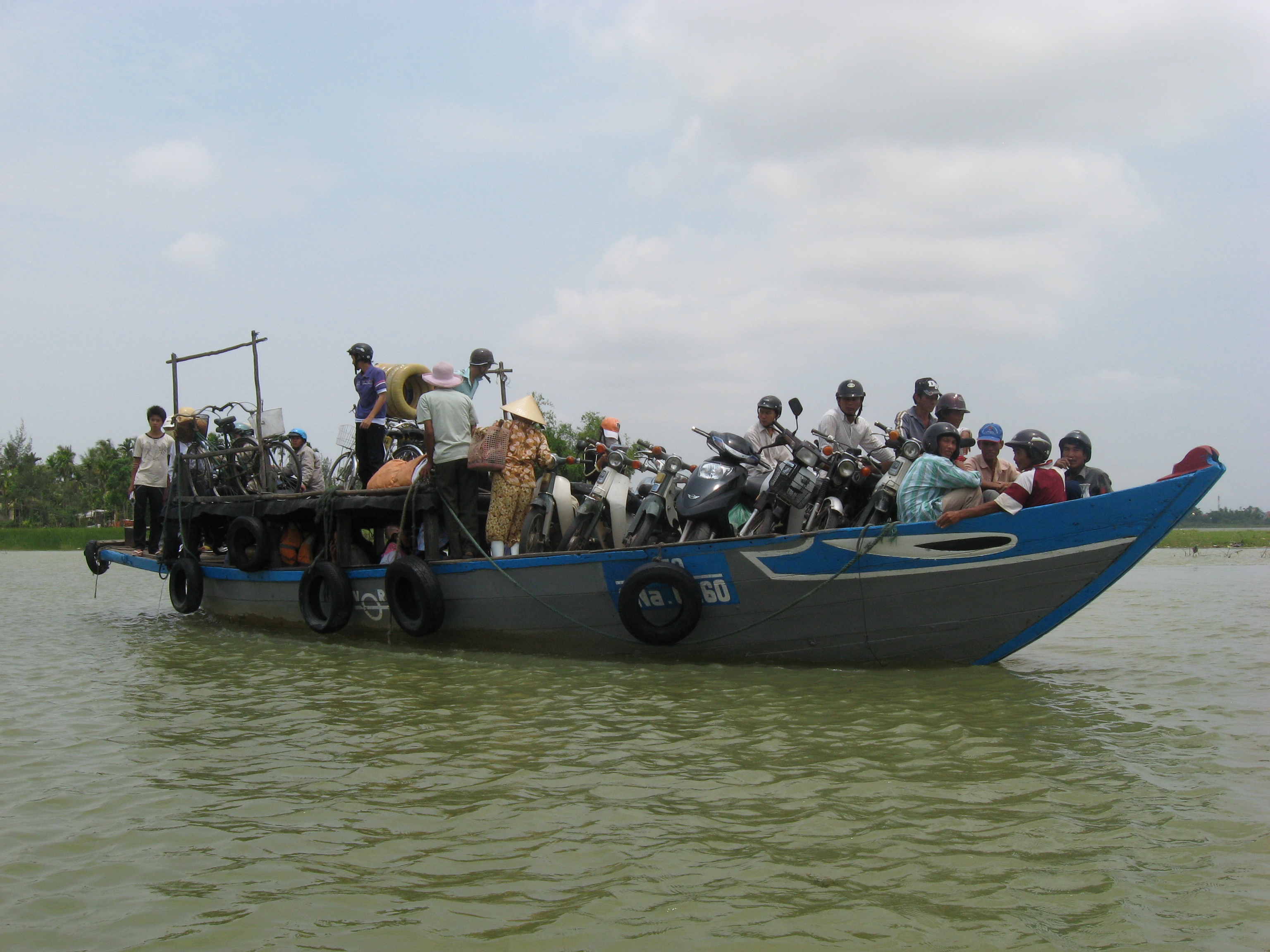 PLACE · CRAFT VILLAGEKim Bồng Carpentry VillageFormed 16th C · national heritage 2016From the sixteenth century, carpenters from this village across the river built most of Hội An's old town by hand-cut joints, no nails, and today the same trade is what keeps those roofs standing.. The Chronicles has found no decision by any provincial or national body formally recognising cao lầu as intangible cultural heritage in its own right, only a line on the centre's own internal list.
Carried Away, It Loses Its Taste
Word of the dish has carried it to Sài Gòn, Quảng Ngãi, Đà Nẵng, further still to France, Britain, Australia. Diners in all of those places say the same thing is missing, even when the kitchen follows the recipe exactly.
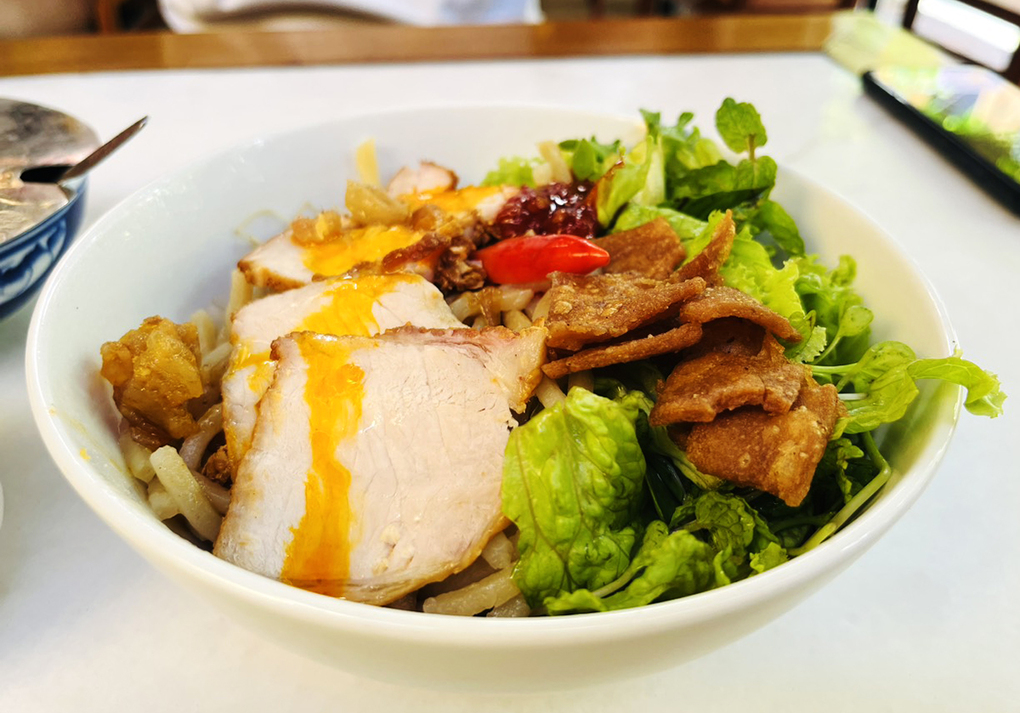
Explanations for why differ: the well water, the ash, or both together. No one has carried the exact water and the exact ash somewhere else to test it.
One order of steps reversed, cut before steaming, not after, one well with a name and a paper trail, and one kind of ash that no two tellings agree on — enough, together, to keep a dish standing in one place for more than a century, unable to follow the people who carry its name.
- Trần Thị Lệ Xuân, "Nghề chế biến sợi Cao Lầu ở Hội An" — Trung tâm Quản lý Bảo tồn Di sản Văn hóa Hội An
- "Cao Lầu" — Trung tâm Quản lý Bảo tồn Di sản Văn hóa Hội An
- "Cao lầu Hội An" — Phố cổ Hội An - Di sản văn hóa thế giới (2010)
- Lệ Xuân, "Cao lầu phố Hội" — Trung tâm Quản lý Bảo tồn Di sản Văn hóa Hội An
- Hồ Trung Tú, "Cao lầu, ăn đúng cách mới ngon" — báo Quảng Nam, qua Trung tâm Quản lý Bảo tồn Di sản Văn hóa Hội An
- "Di sản văn hóa phi vật thể" (mục Nghề chế biến Cao Lầu) — Trung tâm Quản lý Bảo tồn Di sản Văn hóa Hội An
- Hoàng Ngân, "Sản xuất sợi cao lầu thủ công ở gia đình cụ Trái" — Phố cổ Hội An - Di sản văn hóa thế giới
- Sơn Thủy, "Nghề làm sợi cao lầu ở Hội An" — báo VnExpress
- Trinh Nguyễn, "Bí ẩn nguồn gốc cao lầu Hội An" — báo Thanh Niên
- "Cao lầu" — Wikipedia tiếng Việt
- "Cao lầu" — English Wikipedia
- "高樓麵" — Wikipedia tiếng Trung
- Nghề làm sợi cao lầu ở Hội An — Sơn Thủy / Báo VnExpress, Bản quyền tác giả