
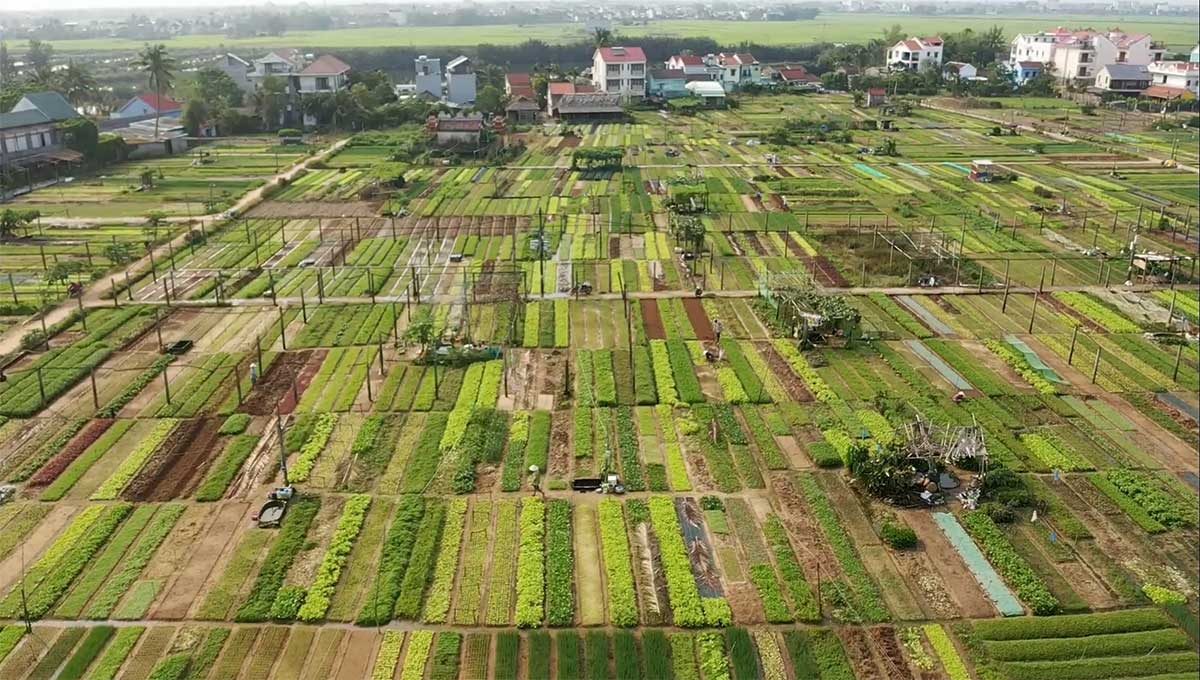
Ground Between Two Waters
Trà Quế lies about 2.5 km north of the centre of Hội An. The heritage centre that studies it calls the place a river island, enclosed by the Đế Võng river and the Trà Quế lagoon.
People were here early. The centre's file on the trade says archaeologists found traces of the Sa Huỳnh culture 2,000 years old at Trà Quế. A second centre article records a different find, at Đồng Nà, a hamlet of the same commune beside Vạn Đức pagoda on the south bank of the old Cổ Cò river. Two test digs there, in November 1993 and June 1994, opened up a dwelling site that the archaeologists dated from the 1st century AD to the 3rd or 4th, without naming a culture.
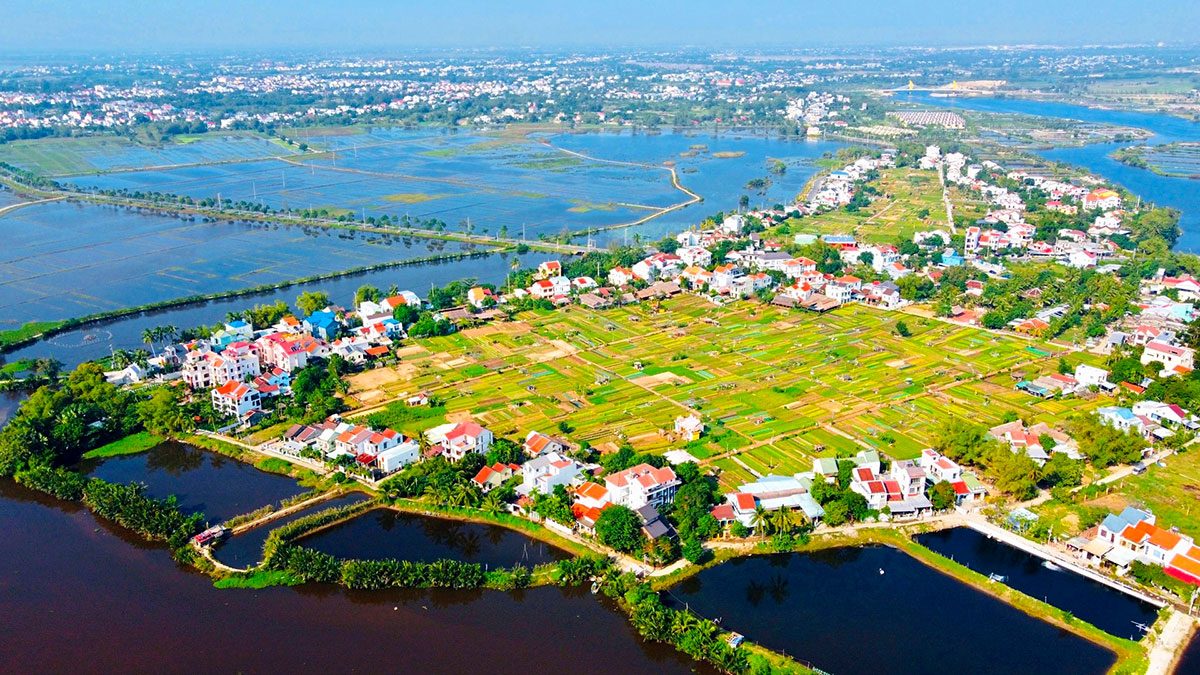 photo · H.S, published on hoianheritage.net, 2025
At the middle of the village stands a stone well, about 1 m across at the mouth and 4 m deep. Tradition says Champa builders made it, and researchers cited by the centre find the style Cham. The water is sweet and plentiful, and growers have drawn on it for their beds for generations.
The well stands close beside the Cổ Cò, the waterway that joined the trading ports of Hội An and Đà Nẵng up to the 18th century. The centre's page on the well supposes that it formed part of a chain of fresh-water stops along the coast, where merchant ships could take on water.
Nobody has dated the well. The Champa origin is tradition, and the centre passes it on as one.
Five Ages for One Village
Ask how old Trà Quế is and the sources give five answers. The centre's file on the trade says more than 300 years, counting from the first Vietnamese families to settle. A centre article on folk literature puts the founding around the 16th century, by settlers from the north of the Vietnamese realm of Đại Việt. The Industry and Trade Review says the 17th century. A tourism paper of 2026 says more than 400 years. The newspaper Báo Văn Hóa, in a piece of 2025, says more than 500 years.
The 300 years rests on community consultations with village elders, and the file footnotes it to a survey of 2004. None of the other four cites a source for its figure.
The earliest document the file cites is a land register. The register of Thanh Hà village, compiled in the 17th year of Gia Long (1818), already carries the name Trà, or Nhà, Quế. The centre concludes that the name existed by the early 19th century at the latest.
The name has other forms: Như Quế, Thanh Quế, Nhà Quế. A story handed down among the people has a king travelling the Đế Võng river around the 18th century and stopping to taste a green whose scent was of tea and whose bite was of cinnamon. He named the village Trà Quế, tea and cinnamon.
The shrine to the Five Elements in group 1 of the village still bears the first of those forms in its formal name, Như Quế miếu.
On the sources quoted here, Trà Quế has a paper date of 1818 and an oral date somewhere before it.
From Nets to Beds
Before the beds there were boats. The centre's account, drawn from consultations with village elders, says the first Vietnamese settlers, from the Phạm, Mai, Nguyễn and Lê families, lived by netting fish and shrimp in the Đế Võng river. The Trần and Hồ families came later.
They found a herb that tasted good cooked with shrimp, crab and fish, and carried the seed home to plant. Fishing grew harder, and some began to clear more land for vegetables and rice. Coriander came up first, then the basils, then shallots, mustard greens and chives. Local people give a second reason in the festival profile: the small river that ran through the village silted up, and the fishing went with it.
Until 1945 Trà Quế was not a village in its own right. It was one of 13 hamlets of Thanh Hà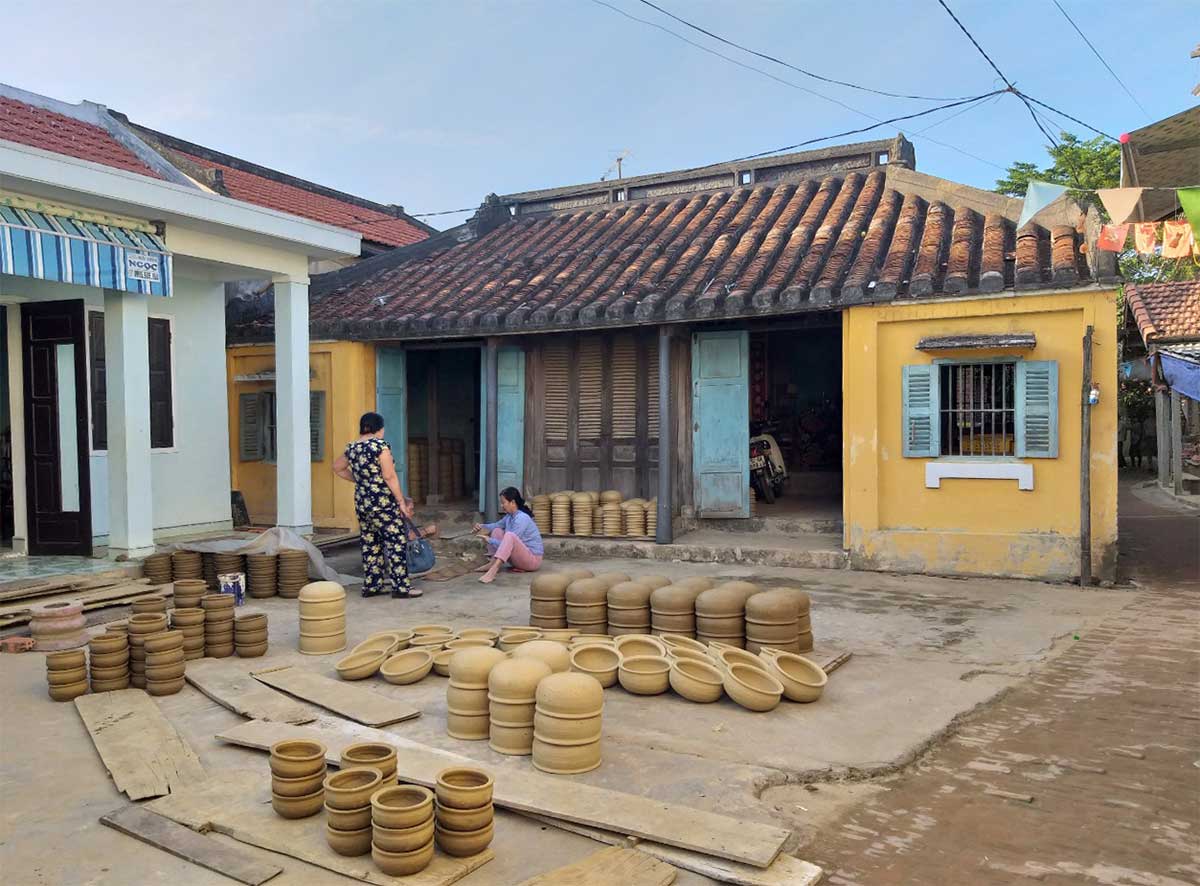 PLACE · CRAFT VILLAGEThanh Hà Pottery VillageFormed c. 16th century · national ICH 2019In the sixteenth century eight clans from Thanh Hóa and Nghệ An settled a bend of the Thu Bồn river and founded Thanh Hà village. Five hundred years later their descendants still sit at the same kind of wheel, and part of the old quarter's roofline still carries their name. village, in Phú Triêm Hạ canton, Diên Phước district, Điện Bàn prefecture.
In the early 1940s the École française d'Extrême-Orient surveyed the villages of Quảng Nam. Its gazetteer, now kept at the Hán Nôm Institute, lists Thanh Hà's trades as tile, brick and pottery, with slight fishing and farming on half the village. Among its foods, raw vegetables were the only ones sold outside. The others did not cover the village's own needs. The gazetteer describes Thanh Hà as a whole. The centre reads it as evidence that vegetable growing was close to being Trà Quế's main trade.
The gazetteer's trades were tile and pot. The one food it sent out was greens.
Weed, Spade and Bed
The 2020 account of the growers' knowledge, published by the heritage centre in November 2020 under Lê Thị Ngọc Hương's name, starts with the soil. The ground is dug 40 to 50 cm deep, the lower earth turned up and the weeds pulled under. Nut grass and couch grass are never buried. They are pulled out by hand. Then the plot is left to bake in the sun, a step called phơi ải, because the longer the soil rests the better the crop. When land was plentiful the rest lasted a month. Now it is 2 to 3 days, 10 at most.
While the soil rests, the grower gathers green manure from cut branches and leaves, and above all rong, the water weed of the Trà Quế lagoon and the Đế Võng river. Villagers name six kinds: chèo, vịt, mền, cây, lá hẹ and chồn. Chèo and cây work best. The account says rong generally rots away in the soil in 10 to 15 days, while rong vịt, with its stiff stalk, takes more than 20.
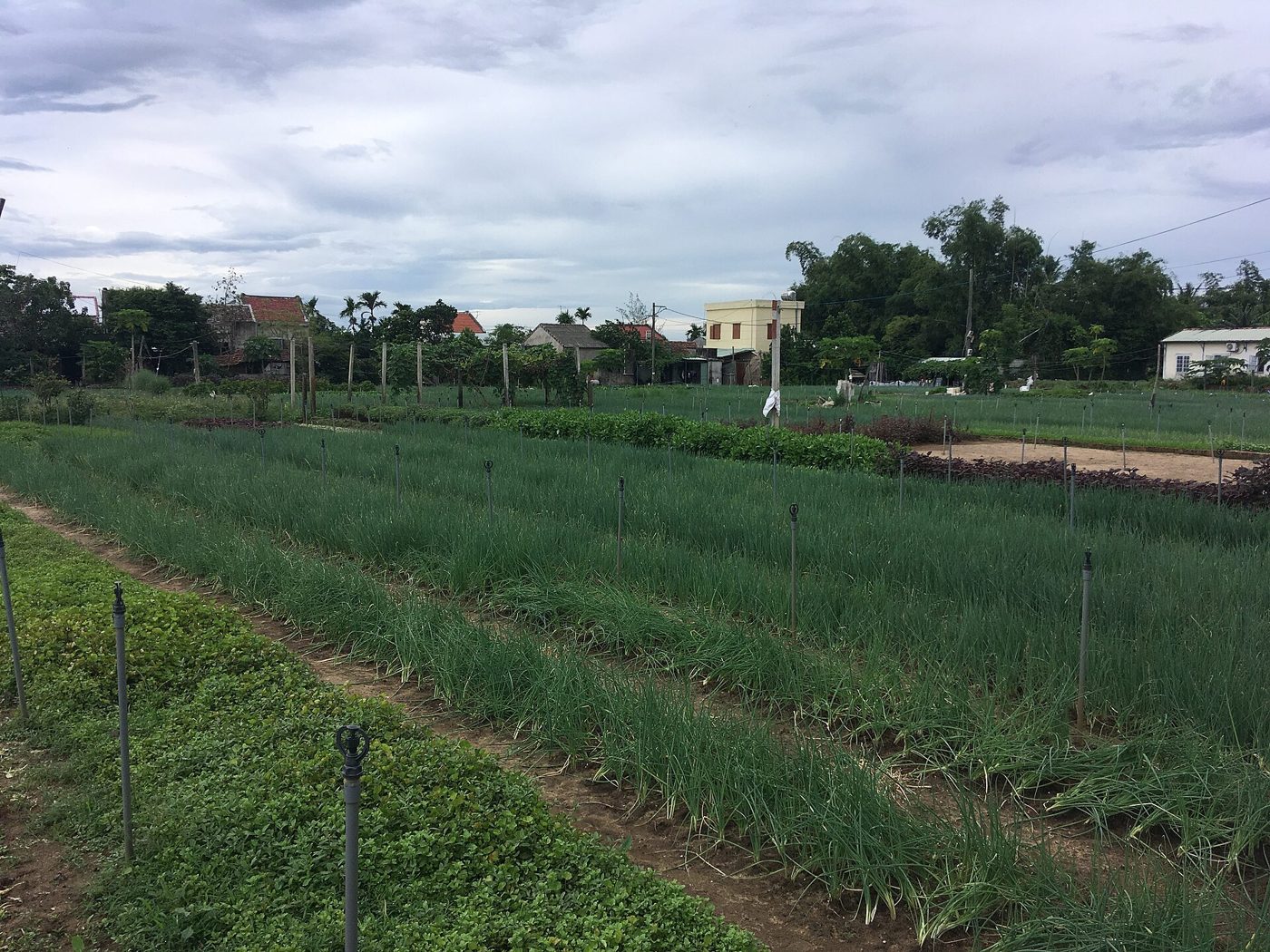 photo · Christophe95 · CC BY-SA 4.0 · Wikimedia Commons, 2018
The weed was hauled in by boat and carried home on the shoulder. Laid out for a day or two to wilt, it was rolled into long coils the width of the bed and set in a trench about 10 cm deep. The coil shades the roots and holds the damp, which the account says suits the dry season.
The beds are 70 to 80 cm wide with 30 cm between them, so that watering, tending and picking are easy. Levelling a bed takes a skill the account says is learnt from parents and elder siblings, by doing. It shows, in the account's reading, the character of the grower, of the household and in the end of the village's craft.
In the four or five years before 2020, the account says, the weed had grown scarce. Growers turned to goat and other animal manure mixed with oil cake, with lime and ash on the side.
A few chemical fertilisers are listed too, but sparingly, and only when the crop is taking root or about to be picked.
The festival profile, written earlier, lists a rong-fishing contest among the festival games.
Water and the Sky
Before 1990 the growers dug ponds, with 3 to 5 households sharing one. The day began at 2 a.m., when they went out to the pond to carry water to the beds.
Come to Trà Quế for a visit, then think what carrying water does to a shoulder.
In 1992 electricity reached the village and each household sank its own pump well and watered by hose. About four years before 2020 the whole village installed automatic sprinklers. In the dry season the beds are watered three times a day, at 6 and 10 in the morning and 5 in the afternoon, in the wet season twice.
The growers also read the sky. If an afternoon shower blows in from the sea, to the east, the leaves must be rinsed afterwards, because the vapour carries salt. If rain comes from inland, from the south-west, it is fresh water and needs no rinsing. They avoid planting when two stars of the farmers' calendar, Sao Rua and Sao Cày, appear, on the 14th day of the fourth lunar month and the 1st of the fifth, since a crop sown then spoils easily.
Even with sprinklers the dipper has not retired. After the system runs, the grower goes over the bed once more by hand, washing sand off the leaves so they do not spoil.
Greens for the Hội An Table
A heritage-centre article of 2013 begins at the market. Trà Quế greens are on sale there almost all year, in baskets of shallot, chive, white and green húng basil, rau răm, fish mint, young mustard greens, lettuce, coriander, banana flower, perilla and more.
A proper plate of raw greens in Hội An, the article says, has all five flavours. Pungency comes from quế, húng and rau răm, bitterness from rau đắng, a herb that grows wild in brackish wetland, sourness from fish mint, sweetness from mung-bean sprouts and astringency from banana flower and young banana stem. Each eater adjusts the mix.
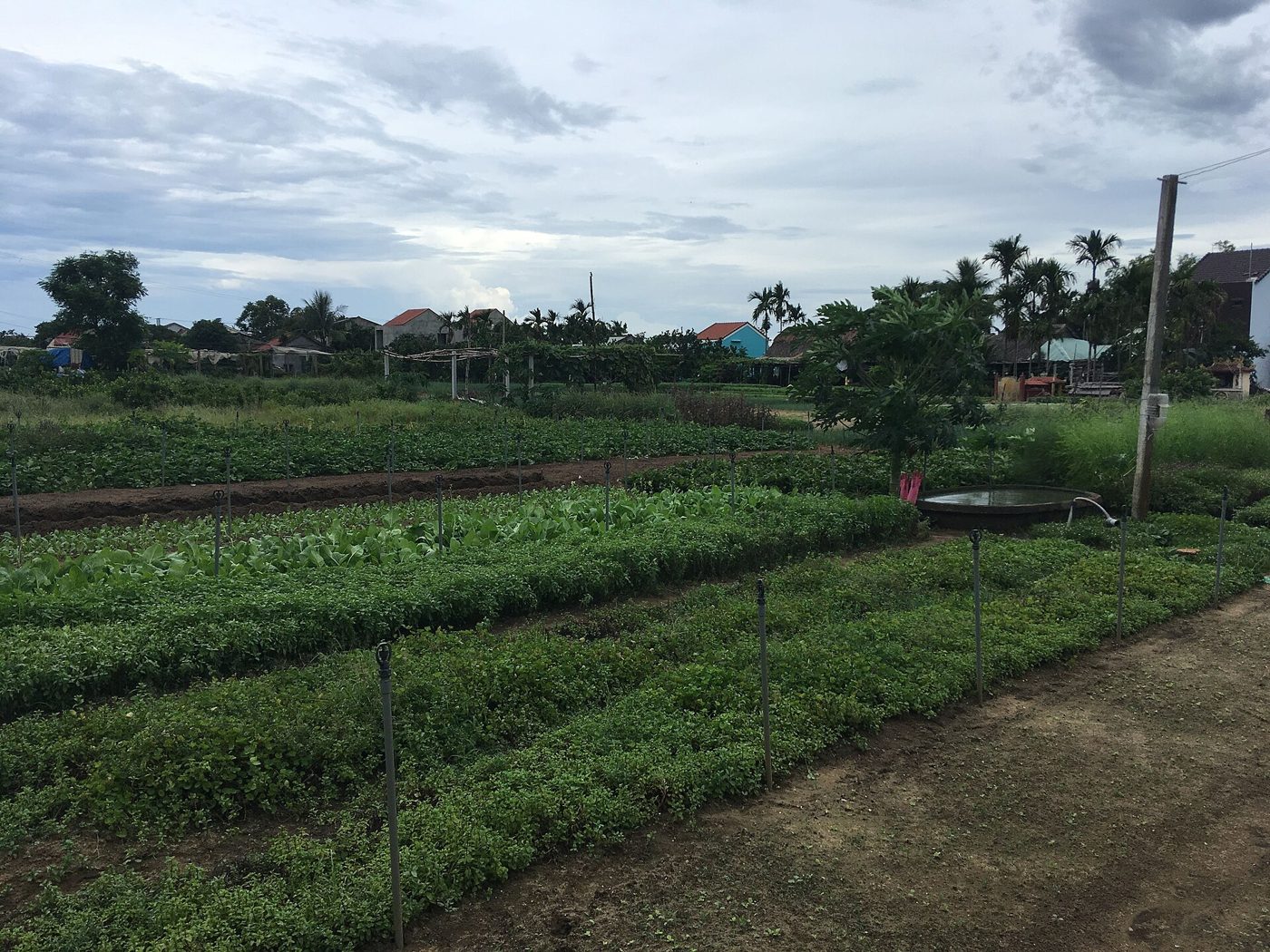 photo · Christophe95 · CC BY-SA 4.0 · Wikimedia Commons, 2018
The dish was ordinary and it also marked occasions. On death anniversaries and grave-tending days a platter of raw greens was ordered under the name món Trà Quế, the Trà Quế dish. At the end of the year almost everyone shopping bought a bunch for the three days of Tết.
Wrapped round pork, rolled with bánh xèo pancakes, mixed with bánh căn rice cakes, the greens go into the town's everyday cooking. The article asks whether mì Quảng and cao lầu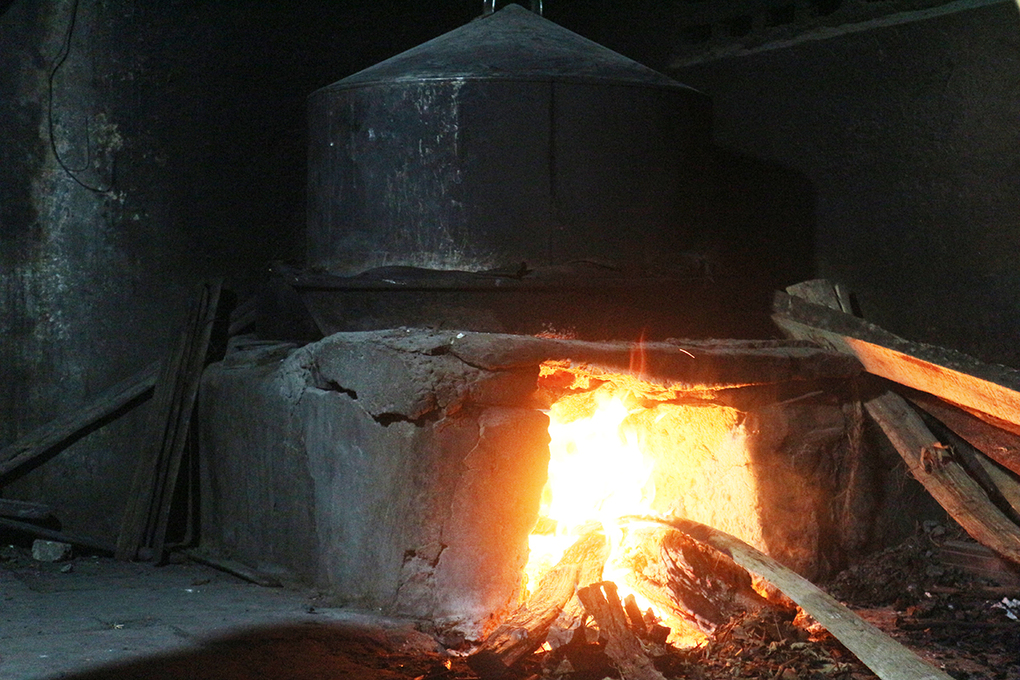 CRAFT · FOODCao LầuOrigin undetermined · earliest trace from the 19th centuryCao lầu noodle-making rests on three plain things: hard-grained rice, clear water, ash strained from the kitchen fire. It reverses one step almost no other noodle uses — cooks cut the strand before it steams, not after. would taste as good without them, and concludes that they give Hội An's dishes their spirit.
It makes one further claim, by hearsay: that in the time of the Nguyễn lords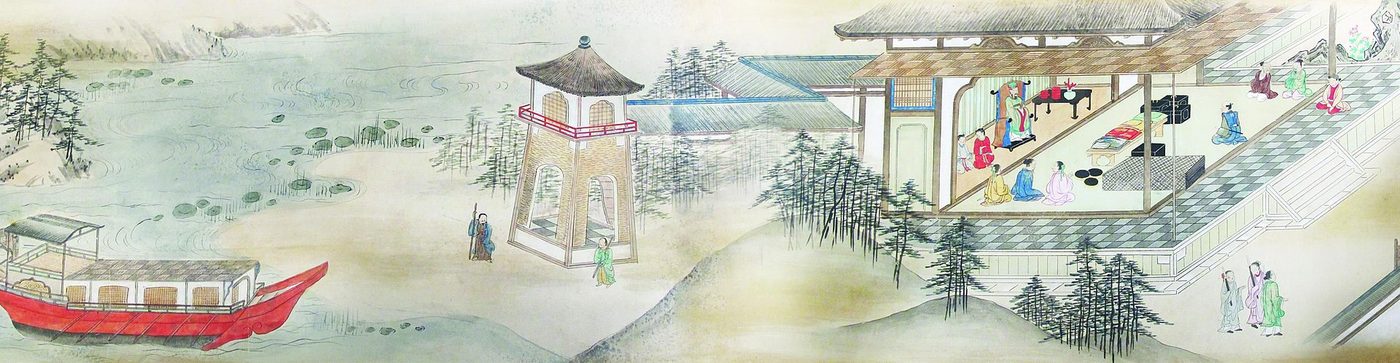 ERA · ĐÀNG TRONGThe Nguyễn Lords1558 – 1777Nine lords held the southern realm for more than two hundred years with a government that lived off the sea: a duty on every trading ship that put in, and each year seventy men in small fishing boats sent three days and three nights out to the islands to bring back what the water had given up. When the port could no longer keep it, the whole machinery fell in three years. the fragrance of these beds was known across Đàng Trong, the southern realm they ruled. No document is offered.
By the article's own day the greens went by road to Huế, Quảng Ngãi and Nha Trang, and once by air to Saigon, for Quảng Nam people far from home.
It ends on their longing: Muốn về Trà Quế ăn rau, I want to go back to Trà Quế for the greens.
The Seventh Morning
The seventh day of the first lunar month is the day Tết officially ends, when the New Year pole is taken down. In Trà Quế it is also the day of Cầu Bông, a prayer for blossom and fruit, the growers' festival. The pole itself goes up on the 24th of the last lunar month.
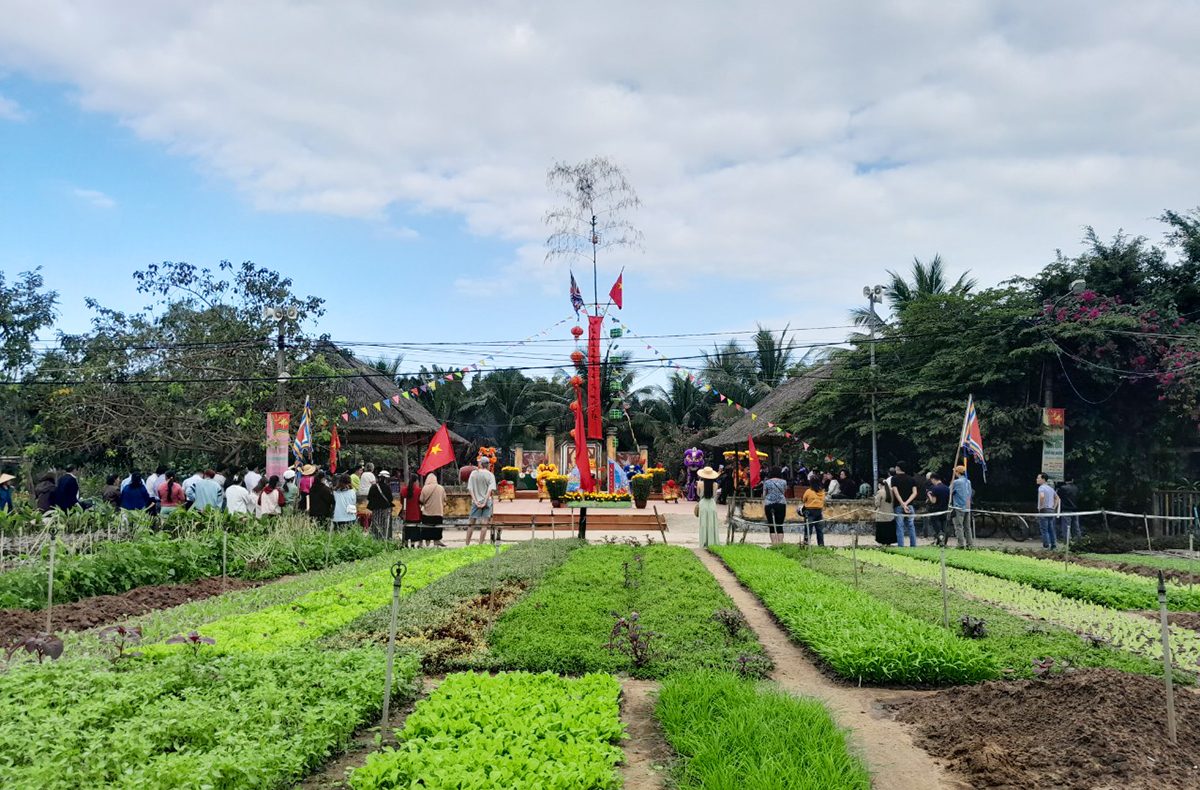 photo · Hội An Centre for Cultural Heritage Management and Preservation (hoianheritage.net), 2024
Almost every farming household first makes an offering at home. Some do it after the village rite instead, and some carry their offering to the garden in the afternoon, for the soil. At about 7 in the morning everyone gathers at the shared ground. The festival profile gives the purpose in four wishes: rain and wind in season, green leaves on the vegetables, fruit on the trees, and peace and prosperity for the people.
The offering is a tray of pink sticky rice coloured with kim long leaves and a rooster with a small bamboo knife stuck in its back, the blood, the innards and the pair of legs set on either side, with fruit, wine, tea, incense and paper money. The rooster, the profile says, stands for the farmer's morning, since its crow wakes growers to go out and pick.
A caller directs every step of the rite. A principal celebrant stands at the central altar with two assistants, pupils pour wine, two men beat gong and drum, a reader chants the prayer text and a band plays. The prayer is burned at the end. Then comes a custom the profile singles out at Trà Quế: the chicken's legs are read to forecast the year for each household and the village. The profile admits that few elders can still read them.
The place has moved. The rite was first held at the hamlet shrine. As the population grew it split between two communal houses, Phe Đông and Phe Tây. After 1975 the houses were in ruins, so families made their offerings at home. In recent years the village has held the rite on open ground in the middle of the vegetable village.
The festival has grown with tourism. In 2026, according to Báo Văn Hóa, it took place on the morning of 23 February, the 7th day of the lunar new year. Beside the rite there are contests in fishing up rong, preparing soil, sowing, planting and cooking tôm hữu, the village dish of shrimp, onion and húng, and visitors, foreign ones too, enter the planting contests.
When the pole comes down, the village goes out to the fields.
The Women's Shrines
Trà Quế has three shrines to female spirits: the Bà Dàng shrine in group 5 of the village, the Bà Chúa Ngọc shrine in group 4 and the Five Elements shrine in group 1.
The first two honour the same deity under two popular names: Thiên Y A Na, a goddess of Cham origin who is Poh Nagar, Mother of the Realm, in Cham belief. The name Bà Dàng comes from Yang, the Cham word for a god. Vietnamese settlers took up the cult selectively, as the centre puts it, and the Nguyễn court granted her decrees. Hội An holds 20 copies of such decrees, the earliest from the 7th year of Minh Mạng, 1826, the latest from the 9th year of Khải Định, 1924. On Champa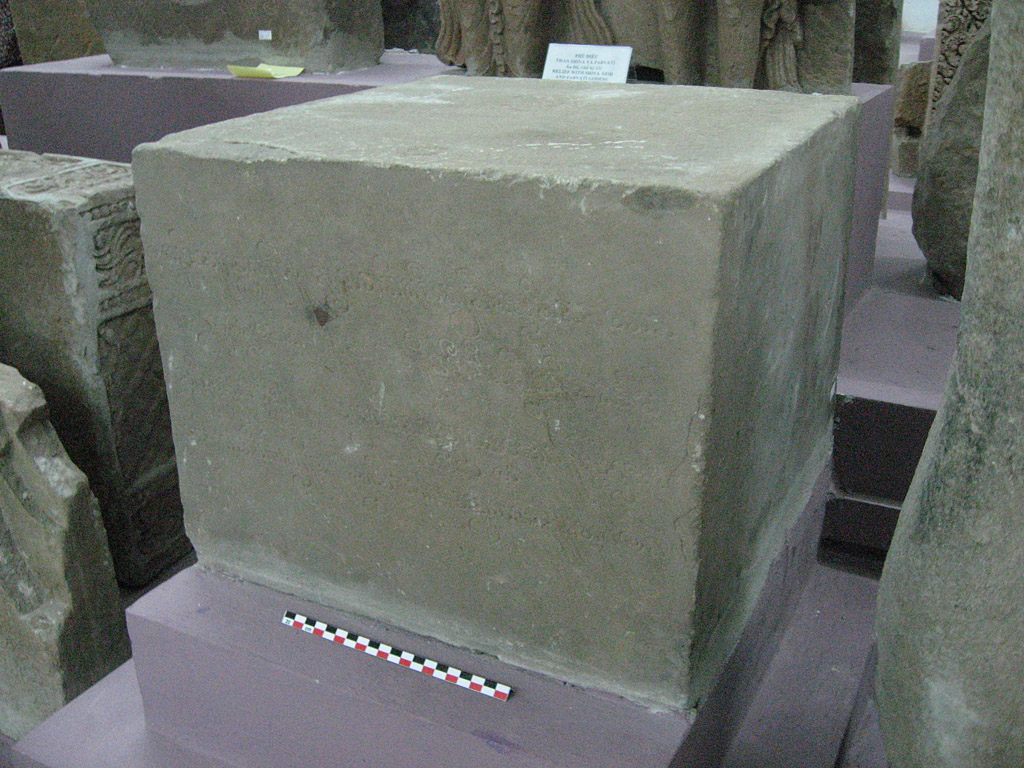 ERA · BEFORE THE VIETNAMESE PORTThe Champa Layer of Hội AnAbout 192 – 1471 CEA thousand years before anyone called this place Hội An, this bend of the Thu Bồn was a Champa river-port, with temples, stone inscriptions, and trade lines reaching to China and Java. in Hội An the Chronicles has its own entry.
No written record dates the Bà Chúa Ngọc shrine. The story comes from the village. It says that Nguyễn Văn Điển (1791 to 1852), a Minister of War whose home hamlet was Trà Quế, was warned in dreams by the goddess, which saw him through dangers and campaigns, and that around 1845 he built her a shrine in his home hamlet, The date comes from the petition by group 4 to have the shrine listed as a monument. The stone statue brought from Nam Định is recalled by Trần Lữ, born in 1930, a villager of group 3.
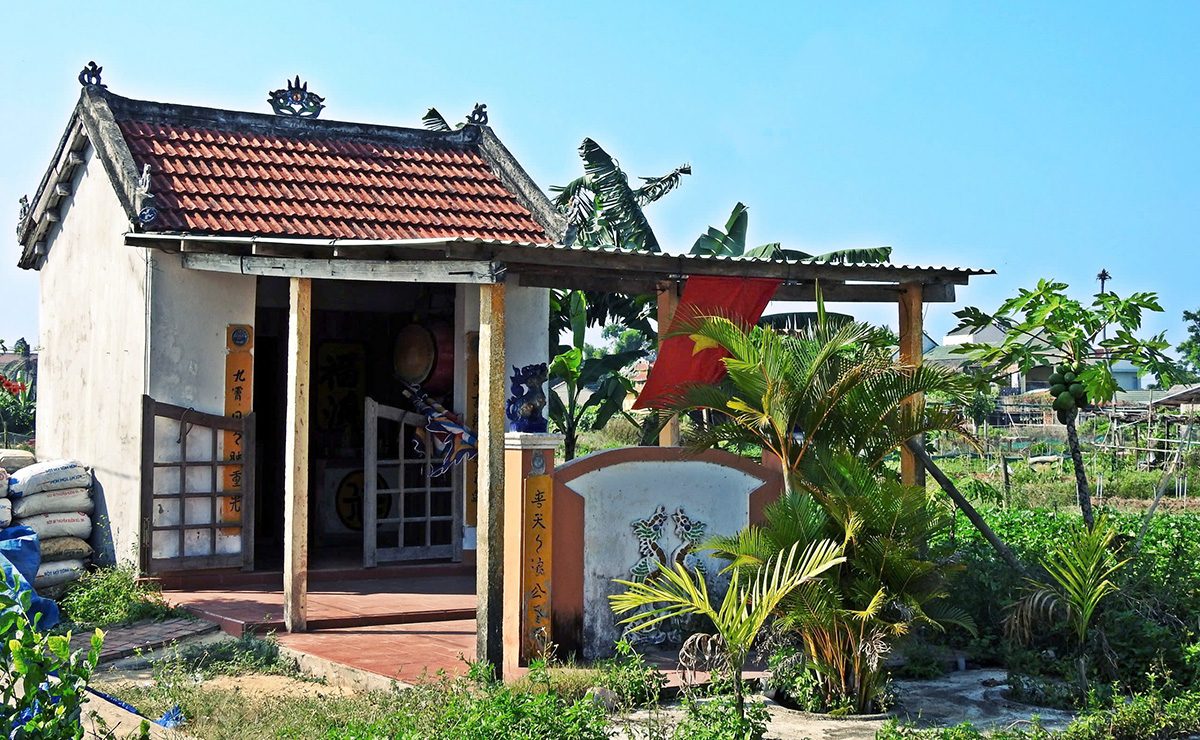 photo · Trần Phương, published on hoianheritage.net, 2024
War brought the shrine down in 1968. After 1975 villagers built a small niche on the site, and in 2000 they raised the present building by subscription. By custom the goddess's inner altar takes only vegetarian offerings. The shrine marks two days a year: the 16th of the first lunar month and the 21st of the eighth, her feast day.
The Bà Dàng shrine is the plainer. Elders say it is older than Bà Chúa Ngọc and was once large, in the traditional style, until war levelled it. It was rebuilt about 15 years before the centre's article of 2024, as three joined niches. Group 5 holds its rite there on the 16th of the first month. A society of village women, founded by the Trà Quế community as the Bà Chúa Ngọc society, once tended the incense and offerings. It no longer meets.
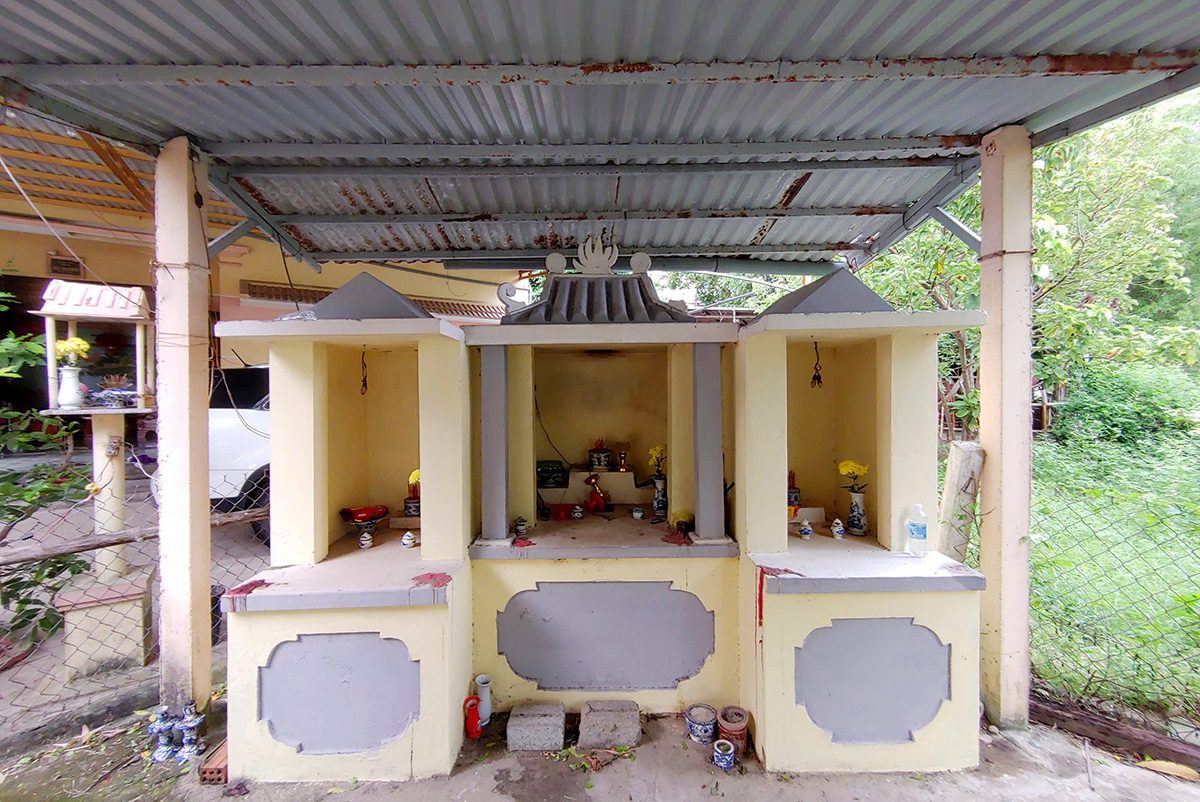 photo · Trần Phương, published on hoianheritage.net, 2024
The Five Elements shrine, named Như Quế miếu, honours five goddesses of the elements, metal, wood, water, fire and earth, and also the village's early settlers and its dead. No document dates it. Elders say it is old. War brought it down around 1947, villagers rebuilt it small and temporary, and in 2008 the city and the villagers paid for a major repair. The village gathers there on the 7th day of the first month.
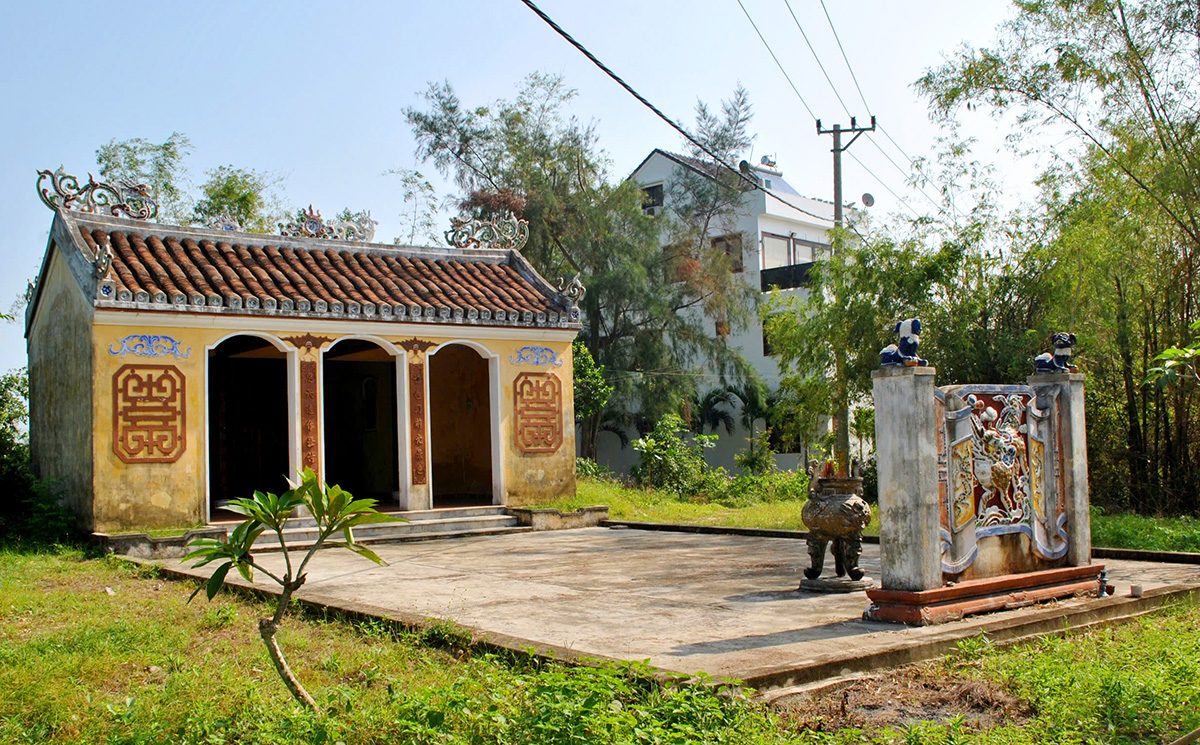 photo · Hội An Centre for Cultural Heritage Management and Preservation (hoianheritage.net), 2024
The name Như Quế is on the Five Elements shrine, and the Cham word Yang is in the name of Bà Dàng.
Entered on the List
The centre had studied the trade for years before it applied. In 1998 it published a volume on Hội An's food culture that introduced Trà Quế's raw greens. A survey of the trade followed in 2004 and a first profile for it in 2006. In 2013, under a ministry circular of June 2010, it inventoried the traditional crafts of Hội An, vegetable growing among them.
In 2020 the centre sought the city's approval to prepare a national file. The provincial department of culture agreed on 13 March 2020. A national file has nine parts: a profile, photographs, a documentary, sound recordings, a distribution map, field material, a pledge to safeguard the heritage, a transfer of rights and an index. The centre built it in a little over a year. It held a community consultation with the village's most experienced growers, recorded interviews that recall earlier times, and ran participatory appraisal sessions. The profile came to 40 pages and the documentary to more than 21 minutes.
On 4 April 2022 the Ministry of Culture, Sports and Tourism published its list of national intangible cultural heritage and entered Trà Quế vegetable growing under folk knowledge and traditional crafts. It was the fourth such entry for Hội An. Before it came the Thanh HàPLACE · CRAFT VILLAGEThanh Hà Pottery VillageFormed c. 16th century · national ICH 2019In the sixteenth century eight clans from Thanh Hóa and Nghệ An settled a bend of the Thu Bồn river and founded Thanh Hà village. Five hundred years later their descendants still sit at the same kind of wheel, and part of the old quarter's roofline still carries their name. pottery, the swiftlet-nest trade of Thanh Châu and the Kim Bồng PLACE · CRAFT VILLAGEKim Bồng Carpentry VillageFormed 16th C · national heritage 2016From the sixteenth century, carpenters from this village across the river built most of Hội An's old town by hand-cut joints, no nails, and today the same trade is what keeps those roofs standing. carpentry.
A ceremony to receive the title was announced for 16 July 2022 at the village. Báo Văn Hóa reported on 18 July 2022 that the city had held the ceremony, without giving the day. Two earlier labels are reported by one source each: a collective trademark for Trà Quế and Cẩm Hà greens, certified in March 2009 according to Báo Văn Hóa, and recognition as a traditional craft village in 2016 according to a journal paper of 2026.
The file puts the trade at more than 300 years old.
Keeping the Trade Among Visitors
In 2001 the town of Hội An set aside 15 ha for concentrated vegetable production. The commune's figures, quoted in the festival profile, show how the hamlet changed. In 2003 Trà Quế had 239 households. Of these, 229 households lived by farming, mostly vegetables, or 95.8 per cent. In 2013 it had 264 households, and 196 households lived chiefly by farming, or 74.2 per cent.
A commune report of 2018 counted 207 households growing vegetables full time, with 345 workers. The village management board puts the vegetable land at about 18 ha. The year's crop was 792 tonnes, worth 10.73 billion dong, and growers' average income, vegetables and services together, came to about 4.4 million dong a month. The centre counts around 55 kinds of vegetable, some of whose seed has been lost, among them a shallot, a lettuce and a long húng. Báo Văn Hóa counts about 40.
Tourism came early. A newspaper account says Trà Quế was the first farm-and-village tourism site in the province, early in this century, and that its one-day-as-a-farmer tour was loved by foreign visitors. After a dozen years the numbers sagged, touching bottom at times between 2015 and 2019. In September 2019 the city approved a community tourism plan. At the start of 2020 the village opened as a paid visit point. It received more than 25 thousand visits in 2023 and more than 30 thousand in 2024.
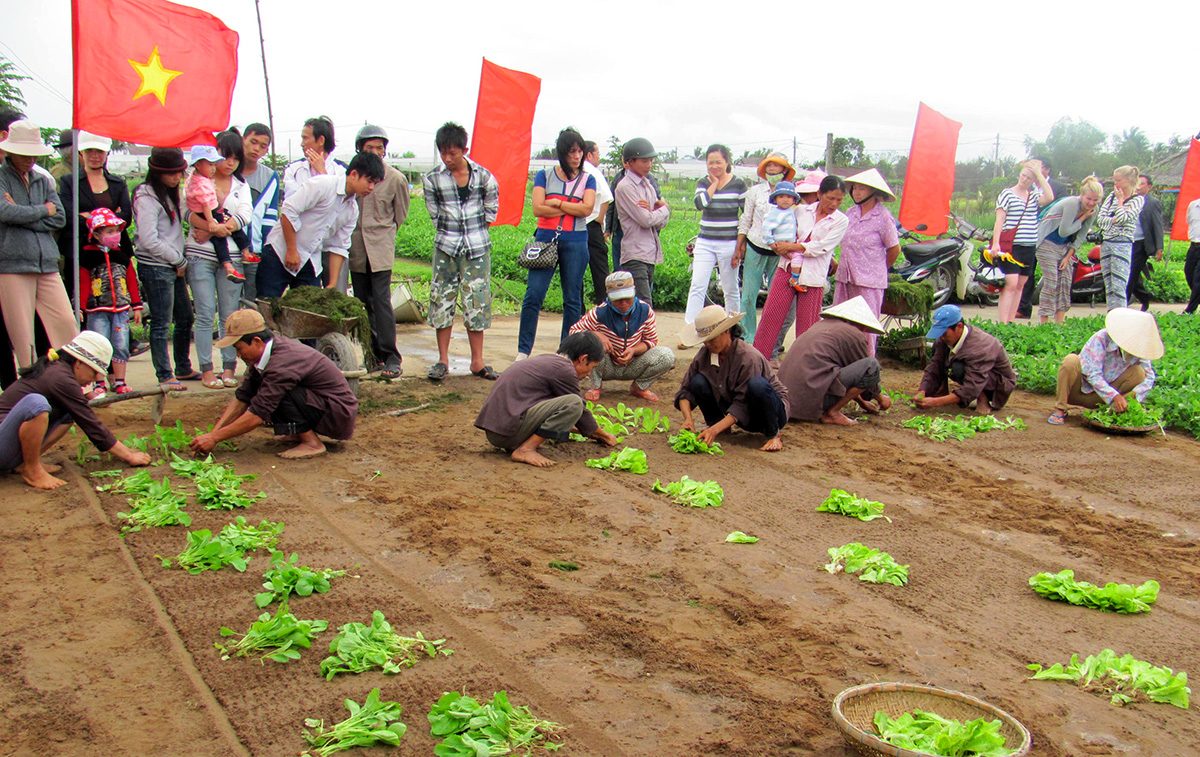 photo · Hồng Việt · hoianheritage.net, published 2024
On 15 November 2024 UN Tourism named its 55 Best Tourism Villages of the year. Trà Quế was the only Vietnamese village on the list. The certificate was presented in Quảng Nam on 10 December 2024.
A piece in Báo Văn Hóa of 2025 counted 16 restaurants and 23 places to stay in the village. A paper of 2026 counts 307 households in the village, and 204 households growing vegetables on 18 ha. Since July 2025 Quảng Nam province has been part of Đà Nẵng, and the village with it.
A grower aged 63, quoted in a newspaper piece republished on 7 January 2025, asked the authorities among other things to protect the groundwater, which he called the source of the taste, and to give growers a place to sell near Hội An market.
- Ngọc Hương, Trung tâm Quản lý Bảo tồn Di sản Văn hóa Hội An, "Nghề trồng rau Trà Quế - Quá trình xây dựng hồ sơ công nhận Di sản văn hóa phi vật thể Quốc gia" — hoianheritage.net, 2022
- Lê Thị Ngọc Hương, Trung tâm Quản lý Bảo tồn Di sản Văn hóa Hội An, "Tri thức dân gian về chọn giống, trồng và chăm sóc rau tại làng rau Trà Quế Cẩm Hà" — hoianheritage.net, 2020
- Trung tâm Quản lý Bảo tồn Di sản Văn hóa Hội An, "Lý lịch: Lễ cúng Cầu Bông ở làng rau Trà Quế, xã Cẩm Hà" — hoianheritage.net
- Trần Phương, "Tín ngưỡng thờ Nữ thần ở Trà Quế" — hoianheritage.net, 2024
- Khánh Vân, "Nghề trồng rau Trà Quế trong ngữ văn dân gian Hội An" — hoianheritage.net, 2022
- Liễu Chi, "Du xuân trong hương rau Trà Quế" — hoianheritage.net, 2024
- Trung tâm Quản lý Bảo tồn Di sản Văn hóa Hội An, "Hương rau Trà Quế" — hoianheritage.net, 2013
- Trung tâm Quản lý Bảo tồn Di sản Văn hóa Hội An, "Đặc điểm, giá trị của các di tích ở Cẩm Hà" — hoianheritage.net, 2021
- Trung tâm Quản lý Bảo tồn Di sản Văn hóa Hội An, "Giếng Đá Trà Quế - Thôn Trà Quế - Xã Cẩm Hà" — hoianheritage.net, 2015
- Trung tâm Quản lý Bảo tồn Di sản Văn hóa Hội An, "Ẩm thực Hội An qua ca dao tục ngữ" — hoianheritage.net
- Phước Tịnh, "Tổ chức tọa đàm và Lễ đón nhận danh hiệu Di sản Văn hóa phi vật thể Quốc gia Nghề trồng rau Trà Quế" — hoianheritage.net, 2022
- "Trà Quế, từ cú hích làng du lịch tốt nhất" — đăng lại trên hoianheritage.net (báo chí về di sản), 2025
- Báo Văn Hóa, "Kinh nghiệm từ một làng rau" — baovanhoa.vn, 2024
- Báo Văn Hóa, "Làng rau, làng nghề" — baovanhoa.vn
- Báo Văn Hóa, "Du lịch xanh tại làng rau hơn 300 tuổi" — baovanhoa.vn, 2023
- Báo Văn Hóa, "Làng rau Trà Quế đón nhận danh hiệu Di sản văn hóa phi vật thể cấp quốc gia" — baovanhoa.vn, 2022
- Báo Văn Hóa, "Rộn ràng lễ hội cầu bông Trà Quế" — baovanhoa.vn, 2026
- "Phát triển du lịch tại làng rau Trà Quế, TP. Đà Nẵng trong bối cảnh hiện nay" — Tạp chí Kinh tế - Tài chính, 2026
- Võ Văn Hoàng, "Vai trò của sông Cổ Cò với thương cảng Đà Nẵng – Hội An trong lịch sử" — hoianheritage.net
- UN Tourism, "UN Tourism Announces Best Tourism Villages 2024: 55 Rural Communities Shaping the Future of Sustainable Travel" — unwto.org, 15/11/2024
- Hạ Vĩ, "Quảng Nam: Làng rau Trà Quế được trao chứng nhận Làng du lịch tốt nhất năm 2024" — Tạp chí Công Thương, 10/12/2024
- Nghề trồng rau Trà Quế - Quá trình xây dựng hồ sơ công nhận Di sản văn hóa phi vật thể Quốc gia — Ngọc Hương, Trung tâm Quản lý Bảo tồn Di sản Văn hóa Hội An, chưa rõ, dùng có ghi công